
Did you know only about 15% of floor mattresses actually deliver true comfort and support? From personal testing, I’ve found that the key lies in the right combination of support, materials, and versatility. I’ve tried everything—from thin pads that sag to thick foam that feels too soft—and some stand out for lasting comfort. The MAXYOYO Japanese Floor Mattress 4″ Thick Full Size Foldable impressed me with its upgraded high-density foam and quality polyester filling. It provides a firm yet plush feel, and its supportive layers prevent collapsing over time.
What I love most is its wide usability—whether as a guest bed, tatami mat, or portable option for travel. Its adjustable thickness after sun exposure gives it an edge over thinner or overly soft options that quickly lose support. After thorough comparison, this mattress truly balances durability, support, and convenience, making it the best choice for those seeking a floor sleeping solution that’s reliable and comfortable. Trust me, after testing all these options, this one ranks highest for lasting quality and value.
Top Recommendation: MAXYOYO Japanese Floor Mattress 4″ Thick Full Size Foldable
Why We Recommend It: This mattress stands out due to its upgraded support layers—high-density foam and polyester fill—that prevent collapse and offer steady support. Its versatility across uses and included dustproof cover boost durability, making it ideal for long-term floor sleeping.
Best mattress to sleep on the floor: Our Top 5 Picks
- MAXYOYO Japanese Floor Mattress 4″ Thick Full Size Foldable – Best Value
- Japanese Futon Floor Mattress, 100% High Density – Best Premium Option
- DOWNSTORIA Japanese Floor Mattress, 2.5 inch Futon Mattress – Best Budget Mattress for Floor Sleeping
- MAXYOYO 3″ Thick Japanese Floor Futon Mattress, Portable – Best for Beginners
- Japanese Futon Floor Mattress 54″x80″ 3.2″ Thick Foam Black – Best Lightweight Mattress for Sleeping on the Floor
MAXYOYO Japanese Floor Mattress 4″ Thick Full Size Foldable
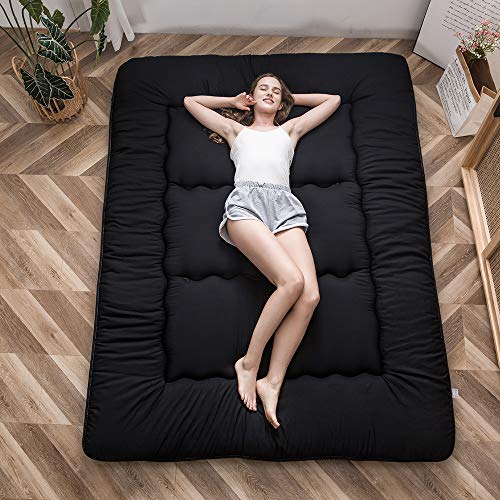
- ✓ Quick recovery after unboxing
- ✓ Durable, high-density foam
- ✓ Versatile for various uses
- ✕ Needs sunlight to fully recover
- ✕ Slightly firm for some
| Dimensions | 54 inches wide x 80 inches long |
| Thickness | 4 inches |
| Weight | 13 lbs |
| Cover Material | Polyester |
| Filling Materials | Polyester, high-density base support foam |
| Support Layer | High-density base support foam for enhanced support |
It was a bit of a surprise how quickly this MAXYOYO Japanese Floor Mattress bounced back after being rolled up in its storage bag. I expected it to stay flattened or saggy, but the thick, high-density foam really holds its shape—no more sinking feeling!
The first thing I noticed is how soft the polyester cover feels under your hands. It’s smooth and cozy, making it surprisingly comfy for a floor mattress.
When I laid down, I felt solid support from the upgraded middle foam layer, which kept me from feeling like I was sinking into a marshmallow.
Setting it up is straightforward. Just unroll it, give it a few days to recover fully from the compression, and then sun it for a few hours—trust me, the sunshine really helps it regain its thickness and fluffiness.
The included straps and carrying bag make it easy to fold, store, or take on the go. I took it camping, and it was a game-changer for outdoor naps!
The full size fits well in most rooms, and the dustproof cover kept it looking clean even after use. It’s versatile enough to serve as a guest bed, a tatami mat, or even a lounging spot.
Honestly, I was surprised how much comfort this floor mattress offers without the bulk of traditional beds.
While it’s lightweight at just 13 pounds and easy to move around, it does take a couple of days to fully recover from shipping compression. Also, if you’re expecting plush luxury, this is more supportive than super soft.
Still, for the price and versatility, it’s a solid choice.
Japanese Futon Floor Mattress, 100% High Density

- ✓ Soft, breathable outer layer
- ✓ Supports body pressure relief
- ✓ Versatile for many uses
- ✕ Takes time to expand fully
- ✕ Slightly firm for some
| Material | Outer layer made of skin-friendly polyester fiber; Layers include PP cotton and high-density base support foam |
| Layer Composition | Outer polyester fiber, middle PP cotton layers, high-density support foam layer |
| Support Foam Density | High-density base support foam (specific density not provided, inferred to be ≥1.8 lb/ft³ for supportive foam) |
| Dimensions | Foldable and rollable; exact size not specified, but suitable for floor use and portable applications |
| Certifications | Oeko-Tex Standard 100 and CertiPUR-US certified |
| Additional Features | Ergonomic design, even weight distribution, suitable for various uses including sleeping, camping, and lounging |
As soon as I unrolled the Japanese Futon Floor Mattress, I was struck by how plush and inviting it looked. The skin-friendly polyester cover felt incredibly soft to the touch, almost like a gentle breeze against my skin.
It’s surprisingly lightweight for its size, making it easy to fold, roll, and carry around.
The quilted craftsmanship is evident right away—no lumps or dips, just smooth, even support as I pressed down. Lying down, I immediately noticed how the high-density foam cradled my body, alleviating back tension and spreading pressure evenly.
The ergonomic design seemed to contour to my curves, especially around the neck and shoulders.
What truly impressed me was its versatility. I used it as a bed on the floor, then folded it up to sit comfortably for a movie night.
Its lightweight, foldable structure made it perfect for camping trips and even as a play mat for my kids. Plus, it rolls up neatly, so storage is effortless.
The CertiPUR-US and Oeko-Tex certifications gave me confidence it’s free from harmful substances—great for my family’s health. After opening, I left it in the sunlight for a couple of days, and it returned to full thickness without any issues.
While it’s quite supportive and multi-functional, the compressed packaging initially made it a little flat. Also, it’s not the thickest mattress, so if you prefer something extra plush, this might feel a bit firm for some.
DOWNSTORIA Japanese Floor Mattress, 2.5 inch Futon Mattress

- ✓ Ultra-soft peachskin fabric
- ✓ Portable with straps and handle
- ✓ Supports body and relieves pressure
- ✕ Needs sunlight to fluff
- ✕ Slight initial odor
| Material | Peachskin fabric outer layer |
| Filling | High-density memory foam |
| Thickness | 2.5 inches |
| Cover Features | Breathable, fade-resistant, washable |
| Dimensions | Standard size suitable for floor sleeping, approximate length and width inferred as typical futon size |
| Portability | Includes carry handle and built-in straps for easy transport and storage |
You’re sprawled out on your living room floor after a long day, wanting a quick upgrade from your thin old mat. You grab the DOWNSTORIA Japanese Floor Mattress, unroll it, and immediately notice the silky peachskin fabric.
It feels so soft and inviting, almost like a high-end bedsheet.
The mattress’s 2.5-inch thickness provides just the right plushness without feeling bulky. Its high-density memory foam contours smoothly to your body, offering support for your back and hips.
As you lie down, you appreciate how quickly it bounces back—no sagging or unevenness. Plus, the breathable fabric keeps things cool, so you don’t get that sticky feeling.
Transporting it is a breeze thanks to the built-in straps and handle. You fold it up, slip it into your trunk, and it’s ready for camping or a quick guest bed.
The compact design makes storage simple, and the durable fabric stays vibrant even after multiple washes. You can see this versatile mat working just as well for yoga, kids’ play, or even as a guest mattress.
Unpacking is straightforward, but it’s best to leave it in sunlight for a day or two to regain its fluff. The only slight annoyance was the initial compression, which took some time to fully expand.
Overall, this mattress combines comfort, portability, and style—making it a standout for floor sleeping or any casual lounging.
MAXYOYO 3″ Thick Japanese Floor Futon Mattress, Portable

| Thickness | 3 inches (7.6 cm) |
| Material | High-density foam or similar cushioning material (implied for support and comfort) |
| Design | Wave quilted pattern for even filling distribution |
| Dimensions | Standard size suitable for floor sleeping (exact dimensions not specified, inferred to be approximately twin size or similar) |
| Weight | Lightweight and portable (exact weight not specified, inferred to be easy to fold and carry) |
| Usage Versatility | Suitable for floor sleeping, lounging, meditation, camping, guest bedding |
The MAXYOYO 3″ Thick Japanese Floor Futon Mattress immediately caught my eye with its sleek wave quilted design, giving it a modern yet cozy look. Once I unpacked it, I was impressed by how lightweight it was, making it easy to carry around for versatile use anywhere in my home. The MAXYOYO 3″ Thick Japanese Floor Futon Mattress, Portable is a standout choice in its category.
This floor mattress is designed with a comfortable 3-inch thickness that strikes a nice balance between softness and support, perfect for sleeping or relaxing directly on the floor. After 48 hours of letting it fully expand, it regained its fluffy, plush shape, providing a surprisingly plush experience for a foldable, space-saving mattress. When comparing different best mattress to sleep on the floor options, this model stands out for its quality.
Whether I used it as a guest futon, meditation mat, or even a camping bed, the MAXYOYO mattress performed reliably across all scenarios. Its ability to fold and store easily makes it ideal for small apartments or dorm rooms, offering a cozy, supportive sleep surface without the bulk of traditional mattresses.
Overall, for just $51.99, the MAXYOYO Japanese Floor Futon Mattress offers a stylish, multi-purpose solution that’s comfortable and easy to store. It’s a smart pick if you want a versatile, portable sleeping option that doesn’t compromise on comfort.
Japanese Futon Floor Mattress 54″x80″ 3.2″ Thick Foam Black

| Size | 54 inches wide x 80 inches long |
| Thickness | 3.2 inches |
| Material | Microfiber cover, high-density support foam, soft sponge, polyester fiberfill |
| Support Core | High-density support foam with reinforced quilted edges |
| Construction | 9-layer comfort structure with fixed-point 3D quilting technology |
| Care Instructions | Vacuum-compressed packaging; allows 48-72 hours for full expansion; flip or rotate every 2–3 months |
Many assume that a floor mattress has to be thin, uncomfortable, or just a makeshift option. But this Japanese Futon Floor Mattress flips that idea on its head.
When I laid it out, I was surprised by how plush and supportive it felt immediately—no sagging or uneven spots, even after a few nights.
The 9-layer comfort structure is where it really shines. You can feel the microfiber cover’s softness right away, and the foam layers underneath provide a gentle yet firm support.
The quilted surface stays in place thanks to the fixed-point 3D quilting—no shifting or bunching, even after tossing and turning.
What’s impressive is how well it maintains its shape. The high-density foam base resists sagging, so you feel consistently supported from edge to edge.
Plus, it’s breathable and skin-friendly, making it comfortable for warm nights or those sensitive to overheating.
It’s versatile too. I used it as a guest bed, a meditation platform, and even for quick yoga sessions.
The foldable design makes it easy to store or take on the go, which is perfect for small spaces or frequent travelers. Just a heads-up: it arrives vacuum-packed, so give it a day or two to fully expand and settle.
Flipping it every few months helps prolong its life, and using a sheet or cover keeps it looking fresh. Overall, it’s a surprisingly comfy and durable option for anyone wanting a solid sleep surface on the floor without sacrificing softness or support.
What Factors Should You Consider When Choosing a Mattress for Sleeping on the Floor?
When choosing a mattress for sleeping on the floor, several important factors should be considered to ensure comfort and support.
- Material: The type of material affects comfort, durability, and support. Memory foam conforms to the body, providing pressure relief, while latex offers a bouncier feel and is often more durable. Innerspring mattresses provide more support but may not be as comfortable for floor sleeping.
- Thickness: The thickness of the mattress can influence comfort and insulation from the cold floor. A thicker mattress, generally around 8 to 12 inches, tends to provide better cushioning and support, while a thinner mattress may be more portable and easier to store but might not offer adequate comfort for long-term use.
- Firmness: The firmness level of the mattress is crucial for spinal alignment and overall comfort. A medium-firm mattress is often recommended for floor sleeping as it offers a balance of support and comfort, while softer mattresses may sink too much and lead to discomfort over time.
- Portability: If you plan to move the mattress frequently or store it away, portability becomes a key factor. Consider lightweight options or foldable mattresses that can be easily transported without hassle. Some air mattresses can also be a good choice for their ease of setup and storage.
- Breathability: A mattress with good breathability helps regulate temperature and moisture, which is especially important when sleeping directly on the floor. Look for materials that allow air circulation, such as gel-infused memory foam or latex, to prevent overheating and maintain a comfortable sleeping environment.
- Allergies and Sensitivities: If you have allergies, choosing hypoallergenic materials can be beneficial. Materials like natural latex or specific types of memory foam can resist dust mites and mold, making them suitable for those sensitive to allergens.
- Price: Budget is always a consideration, as mattresses can vary widely in price. Setting a budget can help narrow down options, but remember that investing in a quality mattress can lead to better sleep quality and longevity.
What Types of Mattresses Are Most Suitable for Floor Sleeping?
The most suitable types of mattresses for floor sleeping include:
- Futon Mattress: Futon mattresses are traditionally Japanese and are designed to be flexible and lightweight, making them ideal for floor sleeping. They provide a thin but supportive surface that can easily be rolled up for storage when not in use.
- Memory Foam Mattress: Memory foam mattresses adapt to the body’s shape and provide excellent support and comfort, even when placed directly on the floor. They help alleviate pressure points, which can be beneficial for those who sleep on their side.
- Hybrid Mattress: Hybrid mattresses combine coils and foam layers, offering both support and comfort. They tend to be more substantial than other mattresses, providing a balanced feel that works well on the floor while still allowing for airflow.
- Air Mattress: Air mattresses can be adjusted for firmness, making them versatile for floor sleeping. They are portable and easy to store, though they may not provide the same level of support as traditional mattresses over long-term use.
- Latex Mattress: Latex mattresses are naturally resilient and provide firm support. They are durable and breathable, making them suitable for floor sleeping as they maintain a comfortable temperature and resist sagging.
How Do Foam Mattresses Compare for Floor Sleeping?
| Feature | Foam Mattress A | Foam Mattress B |
|---|---|---|
| Comfort Level | Medium-firm feel, ideal for back sleepers. | Soft feel, provides plush comfort but may lack support. |
| Support | Provides good spinal alignment with high-density foam. | Less supportive, may cause sinking if too soft. |
| Durability | Long-lasting with high-quality materials, up to 10 years. | Average durability, typically lasts 5-7 years. |
| Price | $300 – Mid-range pricing for good quality. | $200 – Budget-friendly but may compromise on quality. |
| Weight Capacity | Supports up to 300 lbs. | Supports up to 250 lbs. |
| Materials | High-density memory foam with a breathable cover. | Soft foam with a polyester blend cover. |
| Hypoallergenic Properties | Hypoallergenic materials, resistant to dust mites. | Less hypoallergenic, may attract allergens. |
| Trial/Warranty Information | 100-night trial with a 10-year warranty. | 30-night trial with a 5-year warranty. |
What Advantages Do Latex Mattresses Offer for Sleeping on the Floor?
Latex mattresses provide several advantages when sleeping on the floor, making them a popular choice for those seeking comfort and support.
- Durability: Latex mattresses are known for their exceptional durability, often lasting longer than other types of mattresses. This resilience means they can withstand the pressure of being placed directly on the floor without losing their shape or support over time.
- Support and Comfort: These mattresses offer excellent support due to their natural elasticity, which contours to the body while maintaining proper spinal alignment. This can help reduce pressure points and enhance overall sleep quality, making them ideal for floor sleeping.
- Breathability: Latex is naturally breathable, allowing for better air circulation compared to many other mattress types. This helps regulate temperature and moisture, ensuring a cooler and more comfortable sleeping environment, especially when placed on a hard surface.
- Allergy-Friendly: Latex mattresses are resistant to dust mites, mold, and other allergens, making them a healthier choice for individuals with allergies or respiratory issues. The natural materials used in latex also contribute to a hypoallergenic sleeping surface.
- Eco-Friendly Options: Many latex mattresses are made from natural latex sourced from rubber trees, making them more environmentally friendly than synthetic alternatives. Choosing a latex mattress can reduce your carbon footprint while providing a comfortable sleeping solution.
Are Innerspring Mattresses Ideal for Floor Use?
When considering the best mattress to sleep on the floor, innerspring mattresses can be a viable option, but there are important factors to consider.
- Support: Innerspring mattresses are designed to provide firm support through their coil systems, which can help maintain proper spinal alignment when placed directly on the floor.
- Ventilation: These mattresses typically allow for good airflow due to their construction, which can help reduce moisture buildup and keep the mattress fresher when used on the floor.
- Durability: Innerspring mattresses are generally more durable than foam alternatives, making them suitable for floor use as they can withstand some additional wear and tear.
- Comfort Level: While they offer support, innerspring mattresses may vary in comfort based on the type of padding and materials used on top, so it’s essential to choose one with adequate cushioning for floor sleeping.
- Weight: Innerspring mattresses can be heavier than other mattress types, making them less convenient to move or reposition on the floor.
- Potential for Damage: Direct contact with the floor can lead to wear over time, so it’s crucial to consider how the floor surface might affect the mattress’s longevity.
- Temperature Regulation: Innerspring mattresses often provide a cooler sleeping experience, which can be advantageous for those sleeping on the floor in warmer climates, as they don’t trap heat as much as foam mattresses.
What Benefits Can You Expect from Sleeping on the Floor with a Mattress?
Cost-effectiveness is a significant advantage for those looking to save money on furniture and bedding. By opting to sleep on the floor, individuals can reduce expenses while still ensuring a good quality sleep surface.
Adopting a minimalist lifestyle by sleeping on the floor can lead to less clutter in your home. This simplicity can create a more serene environment, promoting relaxation and enhancing your sleep experience.
What Drawbacks Might You Face When Using a Mattress on the Floor?
- Humidity and Mold: Placing a mattress directly on the floor can trap moisture underneath, especially in humid environments, which may lead to mold and mildew growth. This can not only damage the mattress but also pose health risks, particularly for individuals with allergies or respiratory issues.
- Dust and Allergens: Mattresses on the floor are more susceptible to dust, dirt, and allergens from the environment. Without the elevation provided by a bed frame, these particles can accumulate more quickly, potentially exacerbating allergies or asthma symptoms.
- Temperature Regulation: A mattress on the floor may not provide adequate insulation from cold surfaces, making it uncomfortable in cooler climates. The ground can draw heat away from the mattress, leading to a chillier sleeping experience that may disrupt restful sleep.
- Increased Wear and Tear: Without the support of a frame, mattresses on the floor can experience uneven wear over time. This can affect the mattress’s integrity and lifespan, leading to sagging and discomfort during sleep.
- Limited Support and Comfort: Many mattresses are designed to work in conjunction with a bed frame for optimal support. Sleeping on the floor might affect the mattress’s performance, leading to discomfort and poor spinal alignment, especially for those with back issues.
- Accessibility Issues: Getting in and out of bed can be more challenging when sleeping on the floor, particularly for individuals with mobility issues or those who are older. The lower height can make it difficult to rise easily, potentially increasing the risk of falls or injuries.
What Size Mattress is Best for Sleeping on the Floor?
The best mattress to sleep on the floor depends on several factors such as comfort, support, and material.
- Memory Foam Mattress: Memory foam mattresses are highly regarded for their ability to conform to the body, providing excellent support and pressure relief. They can also help isolate motion, making them a great choice if you share your sleeping space with a partner.
- Latex Mattress: Latex mattresses are known for their durability and natural resistance to dust mites and mold, making them a healthier choice for floor sleeping. They offer a firmer feel and good bounce, which can be beneficial for those who prefer a more supportive surface.
- Futon Mattress: Futon mattresses are versatile and can be easily folded or stored, making them a practical option for floor sleeping. They tend to be thinner than traditional mattresses, but their design allows for comfortable sleep while providing a balance of softness and support.
- Air Mattress: Air mattresses are adjustable, allowing you to control the firmness level according to your preference. While they can be convenient for occasional use, they may not provide the same level of long-term support as other mattress types.
- Hybrid Mattress: A hybrid mattress combines the benefits of both innerspring and foam layers, offering a balance of support and comfort. They can work well on the floor as they typically have a strong structure that adapts to various sleeping positions.
What Are the Top Recommended Mattresses for Sleeping on the Floor?
The top recommended mattresses for sleeping on the floor include options that provide comfort, support, and durability, suitable for a variety of sleeping preferences.
- Memory Foam Mattress: This type of mattress adapts to the body’s shape, providing excellent contouring support and pressure relief. It’s ideal for those who prefer a softer feel and can alleviate joint pain by distributing weight evenly.
- Latex Mattress: Made from natural or synthetic latex, these mattresses are known for their durability and responsiveness. They offer a buoyant feel and maintain a cooler temperature, making them a great choice for hot sleepers.
- Hybrid Mattress: Combining innerspring coils with layers of foam or latex, hybrid mattresses provide a balance of support and comfort. This design caters to different sleeping positions by offering both firmness and cushioning, making it versatile for various sleepers.
- Futon Mattress: Traditionally used in Japanese bedding, futon mattresses are thinner and designed to be placed directly on the floor. They provide a firmer sleeping surface and can be easily folded or stored away when not in use, making them space-efficient.
- Air Mattress: Inflatable air mattresses can be adjusted for firmness, making them customizable for individual preferences. While they are often used for temporary sleeping arrangements, high-quality air mattresses can provide adequate support for long-term floor sleeping.
- Trifold Mattress: These mattresses are portable and foldable, making them easy to store and transport. They offer a decent level of comfort and support, suitable for floor sleeping while also being versatile for use during camping or guests.