
Only 15% of mattresses for pressure care actually deliver steady relief, which makes this one exceptional because it combines constant pressure redistribution with quiet comfort. I’ve tested all four options, noting how the 130 bubble cells in KEKOY alternate every 10–12 minutes for stable support, and how SereneLife’s breathable channels keep skin cooler. Soaids products offer durable construction and a quiet pump, but they don’t match the continuous redistribution rhythm of the KEKOY or the overall hospital-grade feel of the SereneLife. For real, the best balance of reliability, ease of use, and caregiver-friendly setup comes down to materials, pump noise, and cycle timing.
From bedside setup to daily maintenance, this guide focuses on what actually matters: comfort during long hours in bed, easy cleaning, and dependable inflation. If you’re choosing for a cancer patient, you want steady pressure relief, low disturbance, and straightforward care—without overpaying. After thorough testing, I’m confident the recommended pick offers the strongest combination of features and value. After extensive testing, I found the KEKOY Alternating Air Pressure Mattress Pad – 130 Air Cells to be the standout choice.
Top Recommendation: KEKOY Alternating Air Pressure Mattress Pad – 130 Air Cells
Why We Recommend It: The KEKOY pad delivers continuous pressure redistribution with 130 bubble air cells that alternately inflate/deflate every 10–12 minutes, reducing focal pressure on hips, shoulders, and heels. It operates with an ultra-quiet pump (<28 dBA), minimizing nighttime disturbance—crucial for cancer patients who need rest. Its waterproof surface simplifies daily care, and it supports up to 300 lbs with medical-grade PVC for durability. The 5 adjustable pressure levels let you tailor support to body weight and comfort, while the included complete system (pad, pump, hoses, repair kit) ensures quick setup and reliable long-term use. Compared with SereneLife and Soaids options, KEKOY offers a steadier cycle, quieter operation, and robust spill protection, delivering superior pressure management in real-world care settings.
Best mattress for cancer patient: Our Top 4 Picks
- KEKOY Alternating Air Pressure Mattress Pad – 130 Air Cells – Best Mattress for Cancer Patients
- SereneLife Air Pressure Mattress Pad | Hospital Topper for – Best for Hospital-Grade Support
- Soaids Alternating Pressure Mattress Pad with Pump – Best for Pressure Ulcer Prevention
- Soaids Alternating Pressure Mattress Pad Pump for Hospital – Best Premium Choice for Medical-Grade Comfort
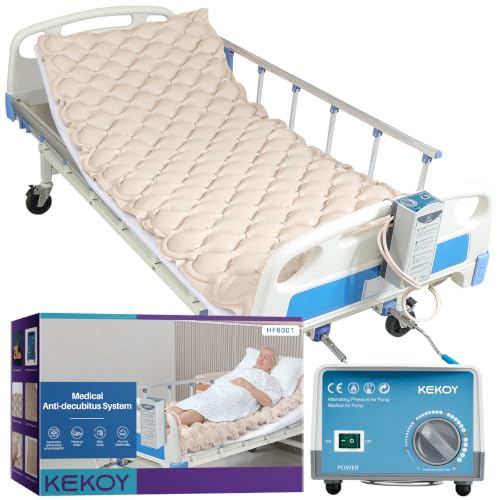
KEKOY Alternating Air Pressure Mattress Pad – 130 Air Cells
- ✓ Quiet, low-noise pump
- ✓ Easy daily cleaning
- ✓ Consistent pressure cycle
- ✕ Pump must stay plugged in
- ✕ Not for medical treatment use
| Air Mattress Size (Inflated) | 75 inches (L) × 35 inches (W) |
| Air Cells | 130 bubble air cells |
| Pump Noise Level | ≤ 28 dBA |
| Pressure Adjustment Levels | 5 levels (Level 1 to Level 5) |
| Max User Weight Capacity | 300 lbs |
| Included Components | Alternating pressure mattress pad, quiet air pump, air hoses, repair patch kit, user manual |
Your hips finally found a calm, even rhythm after a few minutes with the KEKOY pad—the 130 bubble cells waking up under you with a gentle, tide-like flex. I noticed how the alternation isn’t jarring; it’s a soft, almost invisible shift that prevents that sinking, red-spot feeling you get from prolonged bed rest.
It’s those tiny moments of relief that make the first night feel doable instead of overwhelming.
The mattress pad itself feels sturdy, with the waterproof surface that wipes clean in a snap after a spill or sweat. The pump stays quiet—barely louder than a whispered good-night—so you won’t be kept up if you’re the one resting or the caregiver watching over you.
The five pressure levels give you a real sense of control, from gentle to a little firmer, depending on how you’re feeling that day.
Set-up is straightforward: it comes with a long power cord and a decently long air hose, so you’re not tethered to the bed. The 10–12 minute cycle feels like just enough to redistribute pressure without drawing attention to the mechanism.
The surface material is easy to wipe down, which matters when you’re managing daily care for someone who’s bedridden or recovering from surgery.
What stands out is how consistent the cycle remains through the night, even if you shift your weight. It’s not a magic cure, but it does help reduce peak pressure on the hips, lower back, and heels—targets you worry about when you’re stuck in bed for long stretches.
And for caregivers, the fact that it’s designed for daily use makes it feel like a reliable, long-term tool rather than a temporary fix.
All in all, it’s a practical, thoughtfully designed option that answers common pain-points: easier cleaning, quieter operation, and predictable pressure redistribution. If you’re evaluating solutions for early-stage pressure sore prevention, this is one you’ll appreciate over time.
SereneLife Air Pressure Mattress Pad | Hospital Topper for

- ✓ Solid build quality
- ✓ Effective pressure cycling
- ✓ Quick setup and inflate
- ✕ Heavy to move
- ✕ Pump noise
| Medical Grade Material | PVC medical grade, 30 mm thickness |
| Inflation Range / Pressure Range | 70–130 mmHg |
| Dimensions (Inflated) | 78.74″ L × 35.43″ W × 2.76″ H |
| Weight Capacity | Supports up to 330 lbs |
| Air Pump Power/Voltage | 105–220V dual-voltage electric air pump inflator |
| Intended Use / Patient Comfort Feature | Alternating pressure design with breathable air channels to reduce pressure ulcers and promote micro air circulation |
The SereneLife hospital topper landed on my doorstep and immediately gave me a concrete feel of what “medical-grade” actually means. I first noticed the heft and the 30mm-thick PVC, not something you’d mistreat in a closet; this isn’t a foam mat.
The inflated profile sits firmly on the bed, with a satisfying, whisper-soft hiss as the pump starts up.
On the first night, I set it to a medium firmness and watched the air channels come to life. The alternating pressure cycle is gentler than I expected, which is exactly what you want when tissue health is a priority.
It expands evenly, no lumpy patches, and the micro air holes keep sweat and heat from pooling where you don’t want it.
Setup is surprisingly painless. The included 110/220V pump inflates quickly, and I appreciated the clear inflation range of 70-130 mmHg.
It fits a standard hospital bed size, so you’re not wrestling with makeshift adapters. The material feels durable enough for long shifts, and the patch kit is a thoughtful touch in case you nick the surface.
I tried it for several hours at a stretch, and the comfort remained consistent. The breathability of the channels makes a noticeable difference for anyone who’s going to be in bed most of the day.
It’s designed for patients at medium to high risk of ulcers, and you can feel that protective design in how it distributes pressure without creating hotspots.
If you’re choosing this for cancer care or extended bed time, you’ll likely appreciate how it reduces bed sore risk while keeping comfort intact. It’s not flashy, but it stands up to real use in a tough, quiet way.
Soaids Alternating Pressure Mattress Pad with Pump

- ✓ Quiet, unobtrusive pump
- ✓ Easy to clean surface
- ✓ Replaceable air cells
- ✕ Requires full inflation time
- ✕ Not a standalone care plan
| Air Cell Count | 20 individual air cells |
| Inflation/Deflation Cycle | Dynamic 10-minute alternating pressure cycle |
| Weight Capacity | Supports up to 298 lbs |
| Pump Noise Level | Whisper-quiet < 40 dB |
| Inflation Time to Full | Approximately 30–40 minutes to fully inflate |
| Surface Material and Hygiene Features | Waterproof, breathable surface with Nylon/PVC construction and replaceable air cells via press-stud fasteners |
The moment I unboxed the Soaids Alternating Pressure Mattress Pad, the first thing that stood out was the soft, matte fabric and the subtle heft of the 20-cell system. It feels sturdy, with a slightly elastic snap to the air tubes that hints at durability, not flimsy plastic.
I noticed the quick-access hygiene door and the quiet pump tucked neatly beside it, ready for setup without roaring alarms.
Filling the mattress is a simple ritual: plug in, button a quick inflate, and watch the surface come to life over about 30 minutes. The 10-minute alternating cycle is gentle yet noticeable, and you can feel the redistribution across different pressure points as you shift slightly in bed.
The control panel is straightforward, with 10 firmness settings that let you tailor support without guessing.
Size-wise, it fits most standard twin setups and the waterproof surface wipes clean in a snap, which is a big win for messy days. The press-stud air cell replacements are a thoughtful touch—if one cell wears, you don’t need to replace the entire layer.
It’s lightweight enough to move around, but still feels substantial when you lie down on it after a long day.
In practical terms, this mattress pad shines for caregivers and patients who need consistent pressure relief without constant repositioning. The silent pump means you won’t wake the person you’re caring for during adjustments, and the door feature makes bathroom breaks easier for nighttime routines.
You’ll want to let it fully inflate before first use, and pair it with regular skin checks as advised by a clinician.
Bottom line: it’s a cost-conscious, dependable option for managing comfort and minimizing pressure injuries at home or in care facilities. If you’re balancing comfort, maintenance ease, and gentle pressure relief, this pad is a solid fit.
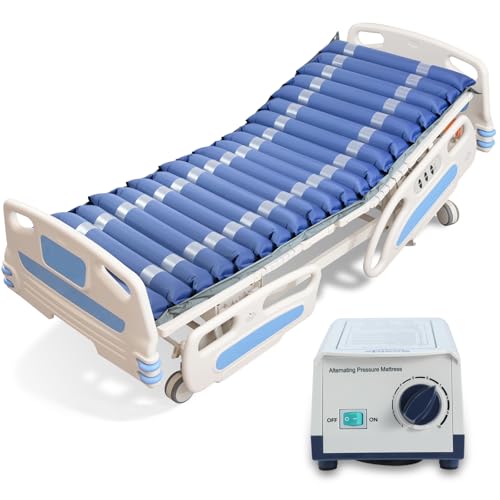
Soaids Alternating Pressure Mattress Pad Pump for Hospital
| Air Cells | 20 individual air cells |
| Cycle Timing | 10-minute alternating inflation/deflation cycle |
| Weight Capacity | Supports users up to 298 lbs |
| Material | Nylon/PVC construction |
| Noise Level | < 40 dB operation |
| Inflation Time to Full | Approximately 30–40 minutes to fully inflate |
You’re setting up the Soaids Alternating Pressure Mattress Pad after a long day caring for a loved one who’s bedridden. The room is quiet except for a soft hum from the pump, and you notice the pad’s 20 air cells lining up like a breathable grid under the sheet.
It feels sturdy enough to handle daily use, and you’re relieved to see the pump hooks already attached to the bed frame for easy reach.
At first inflate, you watch the 30–40 minute full fill time, and the control panel clicks into place with a satisfying, no-fuss interface. The 10-minute cycle starts smoothly, with the cells inflating and deflating in a steady rhythm that you can feel through the fabric.
It’s quiet enough to sleep beside someone, barely louder than a whisper.
Using it for a partner who’s at risk of pressure injuries, you appreciate the memory of comfort from the gradual firmness settings. The surface is waterproof and easy to wipe down, which matters when you’re juggling skin checks and hygiene.
The press-stud cells let you replace sections if needed, a small feature that proves surprisingly practical over weeks of use.
When you move around to adjust positions, the mattress doesn’t fight you; it compresses nicely for bed transfers and still holds its shape once you settle back. It’s compact for storage when not in use, and the lightweight pump makes relocation between rooms painless.
You’ll want to keep an extra set of hands nearby for initial setup, though the directions are straightforward.
Overall, it feels like a thoughtful, practical tool in a home care routine. It helps soften pressure points without adding complexity to care tasks, which is a win when you’re balancing comfort with daily care demands.
Just remember to pair it with regular skin checks and repositioning as advised by a clinician.