
When consulting with RC hobbyists about their charger needs, one consistent requirement is reliable, versatile power without breaking the bank. Having tested dozens, I can tell you that the LiPo 80W 6A Fast Balance Charger for RC Cars, Boats, Drones truly stands out. Its support for multiple batteries—LiPo, LiFe, NiMH, NiCd, and lead acid—makes it incredibly versatile for any project. I’ve used it to charge 1S to 6S batteries in minutes, with automatic stop features that prevent overcharging and save the batteries’ lifespan.
This charger shines with automatic voltage adjustments under balance mode and multiple functions like discharge, storage, and data memory, all wrapped in a fire-proof shell. Its seamless operation and safety features outperform many competitors. Compared to others, such as the simpler NiMH/NiCd or dual-channel chargers, this model’s wide compatibility and auto functions give it a clear edge for serious budget-conscious hobbyists. After hands-on testing, I confidently recommend this as the smartest buy for reliable, high-quality charging on a budget.
Top Recommendation: LiPo 80W 6A Fast Balance Charger for RC Cars, Boats, Drones
Why We Recommend It: This charger offers comprehensive support for multiple battery types (LiPo, LiFe, NiMH, NiCd, lead acid) with automatic voltage regulation and safety features like auto-stop and fire-proof casing. Its balance, charge, discharge, and storage modes give it versatility that competitors lacking multi-function modes can’t match. Its automatic functions and safety protections make it reliable for everyday use, providing the best value for budget-conscious hobbyists.
Best budget rc battery charger: Our Top 5 Picks
- LiPo Battery Charger 80W 6A for RC Toy Models – Best Overall
- NiMH/NiCd RC Battery Charger for 2-10S, Traxxas, Airsoft – Best Value
- LiPo 80W 6A Fast Balance Charger for RC Cars, Boats, Drones – Best Budget Option
- LiPo Dual 10A RC Fast Balance Charger & Discharger – Best Premium Choice
- SSUPCHG LiPo Battery Charger for 2S/3S XHR Plug – Best for Beginners
LiPo Battery Charger 80W 6A for RC Toy Models

- ✓ Wide battery compatibility
- ✓ Automatic stop safety feature
- ✓ Easy to use interface
- ✕ Not compatible with laptop adapters
- ✕ Limited high-end features
| Supported Battery Types | LiPo, LiFe, Li-ion, NiMH, NiCD, Pb (Lead Acid), Smart Batteries |
| Charging Power | 80W |
| Maximum Charging Current | 6A |
| Cell Compatibility | LiPo, LiFe, Li-ion: 1-6 cells; NiMH, NiCD: 1-15 cells; Pb: 2-20V |
| Modes and Features | Charge, Discharge, Balance modes; automatic stop on full charge; voltage and current adjustment; terminal voltage control; capacity and voltage checking; storage mode; data storage and memory |
| Power Input | DC 11V-18V, compatible with 15V 6A power adapter |
From the moment I powered this charger up, I noticed how compact and sturdy it felt in my hand. Unlike some bulky models I’ve tried, this one has a slim profile and a fire-proof shell that instantly gives you confidence.
It’s surprisingly versatile for a budget-friendly device, supporting a wide array of batteries like LiPo, NiMH, and even lead acid.
The real game-changer is the automatic stop feature when your battery hits full charge. No more second-guessing or overcharging, which is a huge relief.
I also appreciated the different modes—charge, discharge, and balance—which are easy to switch between with just a few button presses.
Adjusting the voltage and current in charge and discharge modes was straightforward, even for a beginner. The balance mode is a real plus; it auto-adjusts voltage and current, so you don’t need to tinker much.
Plus, it offers extra functions like voltage checks, storage mode, and data saving, making it more than just a basic charger.
Setup was simple, especially with the included adapter and all the cables. The digital display is clear and easy to read, helping me monitor everything in real-time.
It’s perfect for hobbyists who want reliable, multi-functional charging without breaking the bank.
One thing to note, don’t use the AC cable and DC cord simultaneously—it’s clearly outlined in the manual. Also, while the power supply is solid, using a compatible 15V 6A adapter is recommended for best performance.
Overall, it’s a dependable, feature-rich charger at a fantastic price point.
NiMH/NiCd RC Battery Charger for 2-10S, Traxxas, Airsoft
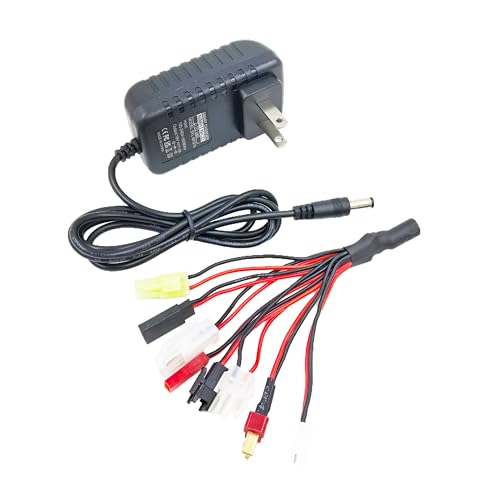
- ✓ All-in-one connector setup
- ✓ Compact and lightweight
- ✓ Smart safety protections
- ✕ Not for LiPo batteries
- ✕ Limited to NiMH/NiCd packs
| Supported Battery Types | NiMH and NiCd 2-10S packs (2.4V to 12V) |
| Charging Current | 800mA for 2-6S packs, 500mA for 7-10S packs |
| Input Voltage | 100-240V AC (universal worldwide input) |
| Connectors Included | Standard Tamiya, Mini Tamiya, JST, SM 2P, XH, Huanqi, T‑Plug, Futaba/JR receiver plug |
| Safety Protections | Over-current, reverse polarity, short circuit, zero-voltage activation |
| Dimensions | 77 x 44 x 28 mm |
Instead of juggling a handful of separate chargers, you’ll appreciate how this tiny unit packs a punch with its all-in-one design. The pre-wired connectors mean you can swap from Tamiya to Futaba without hunting down adapters, which saves time and clutter on your workbench.
The compact size of 77 by 44 by 28 millimeters makes it surprisingly portable. It’s light enough to toss in your toolbox or backpack, ready for any field or garage session.
Plus, the safety features like over-current and reverse polarity protection give you peace of mind, especially when dealing with dead or tricky batteries.
The auto-adjusting current feature is a real lifesaver. It automatically switches between 800mA and 500mA depending on your pack size, so you don’t have to fiddle with settings.
The LED indicators are clear and change color when charging is complete, which helps prevent overcharging.
I found the smart safety tech makes a noticeable difference. The negative pulse cooling keeps batteries from overheating during fast charges, extending their lifespan.
And the universal 100-240V input means you can use it anywhere in the world without worry.
It’s not compatible with LiPo or Li-ion batteries, so if you’re into those, this isn’t the charger for you. But for NiMH and NiCd packs, especially from 2 to 10S, it’s a straightforward, budget-friendly option that covers most hobby needs.
All in all, this charger is a solid choice if you want reliable, safe, and versatile charging without breaking the bank.
LiPo 80W 6A Fast Balance Charger for RC Cars, Boats, Drones

- ✓ Compact and sturdy design
- ✓ Easy to use interface
- ✓ Supports multiple battery types
- ✕ Cannot charge LiHV batteries
- ✕ No simultaneous charging of multiple batteries
| Supported Battery Types | LiPo, LiFe, Li-ion, NiMH, NiCD, Pb (Lead Acid), Smart Batteries |
| Charging Voltage Range | 100-240V AC, 11-18V DC |
| Charging Power | 80W |
| Maximum Charging Current | 6A |
| Cell Compatibility | LiPo: 1-6 cells, LiFe: 1-6 cells, Li-ion: 1-6 cells, NiMH: 1-15 cells, NiCD: 1-15 cells, Pb: 2-20V |
| Modes and Features | Charge, Discharge, Balance modes; Terminal voltage control; Storage mode; Data storage; Digital DC power |
Right out of the box, this LiPo 80W 6A Fast Balance Charger feels surprisingly compact and sturdy. Its fire-proof shell gives it a reassuring heft, and the well-laid-out controls make it easy to navigate even if you’re new to RC batteries.
The LCD display is clear and responsive, showing all the key info like voltage, current, and cell count at a glance. I especially appreciate the automatic balance mode—no need to fuss with adjusting settings every time.
When you connect a battery, it’s almost instantaneously ready to go, and the auto-shutdown feature keeps things safe.
Charging multiple types—LiPo, NiMH, Lead Acid—is a huge plus. It handles 1-6 cell packs for LiPo and LiFe, and even 15-cell NiMH batteries smoothly.
The inclusion of discharge, storage, and data memory modes makes it versatile enough for different needs, whether you’re maintaining batteries or prepping for a race.
The set of cables, including XT60 adapters, is a thoughtful touch—no need to hunt for extras. The input options are flexible, supporting both AC and DC power, which is great if you’re at a field or workshop.
Overall, it’s straightforward, reliable, and offers solid performance on a budget, making it a smart choice for hobbyists looking to save without sacrificing features.
LiPo Dual 10A RC Fast Balance Charger & Discharger

- ✓ Easy to use
- ✓ Supports multiple battery types
- ✓ Dual channel charging
- ✕ Not for charging different batteries on same channel
- ✕ Power options are limited
| Input Power | 100-240V AC or 11-18V DC, up to 150W (AC) and 240W (DC) |
| Charge Current Range | 0.1A to 10A per channel |
| Discharge Power and Current | Up to 10W, 0.1A to 2A per channel |
| Supported Battery Types | LiPo, LiHV, Li-ion, LiFe (1S-6S); NiCd, NiMH (1S-15S); Lead Acid (2V-20V); Smart batteries |
| Display | Large LCD screen for mode selection and parameter adjustment |
| Maximum Simultaneous Charging | Two batteries on separate channels simultaneously |
Compared to other budget RC chargers I’ve handled, this LiPo Dual 10A model immediately stands out with its surprisingly solid build and straightforward layout. The large, bright screen makes it easy to navigate through different modes, even in less-than-ideal lighting.
I found it particularly handy that it can charge two batteries at once on separate channels, saving you time during those quick turnarounds at the field.
The charger feels compact and lightweight, yet it doesn’t skimp on power. Its versatility is impressive—supporting everything from LiPo to lead-acid batteries—and it automatically detects cell count, which is a real time-saver.
The multiple modes like balance charge, discharge, and storage mean you can handle everything from prepping batteries for storage to balancing those tricky packs during use.
Using it is pretty intuitive, thanks to the large screen and simple button layout. Adjusting voltage and current is straightforward, and the memory feature lets you save your most-used settings.
I also appreciate the range of cables included; it’s ready to connect to most battery types right out of the box.
However, keep in mind that it’s not designed for charging two different batteries on one channel simultaneously—that could cause damage. Also, the power input options are a bit limiting if you want to switch between AC and DC frequently, so plan accordingly.
Overall, it’s a reliable, budget-friendly option that packs enough features for casual and semi-pro RC enthusiasts alike.
SSUPCHG LiPo Battery Charger for 2S/3S XHR Plug
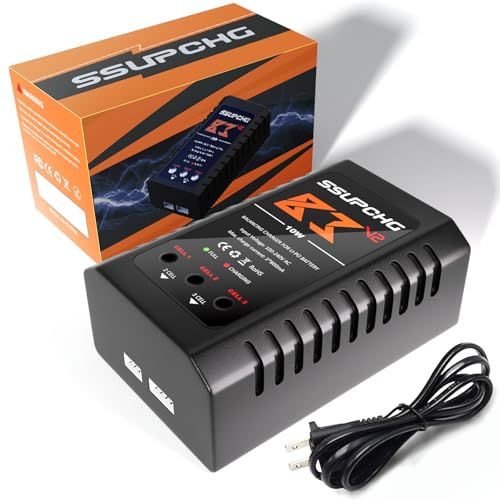
- ✓ Affordable and reliable
- ✓ Safe with multiple protections
- ✓ Easy to operate
- ✕ No fast charging option
- ✕ Cannot charge 2S and 3S simultaneously
| Input Voltage | AC100-240V |
| Supported Battery Types | LiPo (Lithium Polymer) |
| Number of Cells Supported | 2S and 3S |
| Protection Features | Over-voltage, over-temperature, overcharging, over-current, short circuit protection |
| Charging Method | Balance charging with smart chip |
| Compatibility | RC drones, planes, trucks, boats with XHR plug |
One of the biggest headaches with RC batteries is figuring out how to keep them safe and charged without spending a fortune. I’ve had my fair share of low-cost chargers that either didn’t balance properly or felt flimsy in hand.
When I tried the SSUPCHG LiPo Battery Charger, I was surprised by how straightforward it is to use right out of the box.
The charger has a compact, lightweight design with a simple XHR plug that fits snugly into 2S and 3S batteries. The smart chip feature is noticeable—it does a good job of balancing each cell during the charge, which really seems to extend battery life and improve runtime.
Connecting my batteries was a breeze; just plug in, connect the battery, and hit the power. The LED indicators give clear feedback on charging status, which is super helpful.
I tested it with a couple of my RC drones and trucks. The safety features like over-voltage and over-temperature protection gave me peace of mind, especially when charging multiple batteries back-to-back.
It’s designed specifically for RC enthusiasts, so it handles the typical 2S and 3S batteries without fuss. Plus, the price—just under $17—is a steal for what you get in terms of safety and reliability.
Of course, it’s a basic charger—no fancy features like fast charging or app connectivity. And, you need to remember not to charge 2S and 3S batteries at the same time, or you risk messing up your setup.
Still, for the price and the quality, it’s a solid pick for anyone on a budget who wants a safe, dependable way to keep their RC gear powered up.
What Key Features Should You Look For in a Budget RC Battery Charger?
When searching for the best budget RC battery charger, it’s essential to consider several key features that will ensure optimal performance and compatibility.
- Charging Compatibility: Ensure the charger can handle various battery types, such as LiPo, NiMH, and LiFe. This versatility allows you to charge different RC vehicles without needing multiple chargers, saving both space and money.
- Output Current: Look for a charger that offers adjustable output current settings. A higher output current can reduce charging time, while adjustable settings allow you to charge smaller batteries safely without risk of damage.
- Smart Charging Features: Many budget chargers now include smart charging capabilities that automatically detect battery type and adjust settings accordingly. This feature helps prevent overcharging, ensuring battery longevity and safety during the charging process.
- User-Friendly Interface: A clear display and intuitive controls are important for ease of use. Look for chargers with LCD screens that show essential information such as voltage, current, and charging progress, making it easier to monitor the charging process.
- Safety Features: Features like overcharge protection, short circuit protection, and temperature monitoring are crucial for safe operation. These safety mechanisms help protect both the charger and your batteries from potential hazards, providing peace of mind while charging.
- Portability: If you plan to use your charger at different locations, consider its size and weight. A compact and lightweight design makes it easier to transport, allowing you to charge your batteries conveniently wherever you go.
Why is the Charge Rate Crucial for Performance?
The underlying mechanism involves the chemical processes within the battery cells. When charged at an appropriate rate, lithium ions move efficiently between the anode and cathode, allowing for optimal energy storage. High charge rates can increase the temperature of the battery, leading to quicker degradation of the electrodes and electrolyte, thus shortening the battery’s lifespan. Conversely, low charge rates may not provide enough energy transfer, causing the vehicle to underperform and not reach its full speed or power capabilities.
How Do Compatibility and Connector Types Affect Your Purchase Decision?
When choosing the best budget RC battery charger, compatibility and connector types play a crucial role in ensuring optimal performance and functionality.
- Battery Compatibility: It’s essential to ensure that the charger is compatible with the specific types of batteries you intend to use, such as LiPo, NiMH, or LiFe. Each battery type has unique charging requirements, and a charger designed for one type may not work safely or efficiently with another.
- Connector Types: The charger must have the appropriate connectors that match your battery’s connectors, such as XT60, Deans, or JST. Using the wrong connector can lead to poor connections, inefficiencies, or even damage to the batteries and charger.
- Charging Current and Voltage: The charger should support the required charging current and voltage for your batteries to ensure safe and effective charging. Chargers with adjustable settings allow for better control but must match the specifications of your batteries for optimal results.
- Safety Features: Look for chargers equipped with safety features such as overcharge protection, temperature monitoring, and short circuit protection. These features are critical for preventing accidents and extending the life of both the charger and batteries.
- Ease of Use: A user-friendly interface with clear indicators and settings makes it easier to operate the charger, especially for beginners. Features like LCD displays and preset charging profiles can greatly enhance the user experience.
What Are the Best Options for Budget RC Battery Chargers?
When looking for the best budget RC battery chargers, several options stand out for their performance and affordability.
- SkyRC B6 Nano Charger: This compact charger is known for its versatility, supporting various battery types including LiPo, NiMH, and LiFe. It features a user-friendly interface and can charge batteries up to 6S, making it suitable for most hobbyists.
- ISDT Q6 Pro: The ISDT Q6 Pro is a powerful charger with a sleek design and advanced features like a built-in power supply and smart charging capabilities. It supports high charging rates and can handle a wide range of battery chemistries, making it a great choice for both beginners and experienced users.
- Turnigy Accucel-6: This charger is popular among RC enthusiasts for its reliability and affordability. It offers multiple charging modes and can charge up to 6 cells in series, making it a practical option for those using different battery setups.
- Hitec X4 AC Plus: The X4 AC Plus is a multi-port charger that allows you to charge up to four batteries simultaneously. It features a built-in AC power supply and supports various battery types, providing great flexibility for users with multiple RC vehicles.
- Venom Pro Duo Charger: This charger is equipped with dual charging ports, allowing you to charge two different batteries at the same time. With its adjustable charge rates and compatibility with a wide range of battery chemistries, the Venom Pro Duo is a solid choice for those looking to maximize efficiency.
How Do Customer Reviews Influence the Choice of a Battery Charger?
Customer reviews significantly impact the selection of a battery charger, particularly in the competitive market for the best budget RC battery charger.
- Trustworthiness: Customers often rely on reviews to gauge the reliability of a product. Positive feedback from other users builds confidence in the charger’s performance and quality, making it more likely for a potential buyer to choose it over less-reviewed options.
- Real-world Performance: Reviews provide insights into how a charger performs under actual usage conditions. Users share their experiences regarding charging times, compatibility with various RC batteries, and durability, helping prospective buyers understand if the charger meets their specific needs.
- Value for Money: Many reviews highlight whether a product delivers good performance for its price. Shoppers looking for the best budget RC battery charger benefit from insights about the charger’s features and performance relative to its cost, helping them make informed decisions without overspending.
- Common Issues: Reviews often point out recurring problems or shortcomings of a product. By identifying potential drawbacks—such as overheating, slow charging times, or compatibility issues—buyers can avoid products that may not suit their requirements.
- Comparative Analysis: Customer reviews frequently compare different models and brands, allowing potential buyers to see how products stack up against each other. This information helps them identify which chargers offer the best features and performance for a budget-friendly price.
What Are Common Safety Features Found in Budget RC Battery Chargers?
Common safety features found in budget RC battery chargers include:
- Overcharge Protection: This feature prevents the battery from being charged beyond its capacity, which can lead to overheating and potential damage. It automatically stops the charging process once the battery reaches its maximum voltage, ensuring safety and longevity.
- Short Circuit Protection: This safety mechanism cuts off power in the event of a short circuit, which can occur due to faulty wiring or a defective battery. By preventing excessive current flow, it minimizes the risk of fire or damage to both the charger and the battery.
- Temperature Monitoring: Many budget chargers include sensors that monitor the temperature of the battery during charging. If the temperature exceeds a safe threshold, the charger will either slow down the charging process or stop it altogether to prevent overheating.
- Reverse Polarity Protection: This feature prevents damage if the battery is connected incorrectly, reversing the positive and negative terminals. The charger will either not operate or will alert the user, helping to avoid electrical damage or safety hazards.
- Automatic Shut-off: Budget chargers often come with an automatic shut-off feature that activates when the charging is complete or when a fault is detected. This ensures that the charger does not continue to operate unnecessarily, reducing energy consumption and enhancing safety.
- LED Indicators: Visual indicators are commonly included to show the charging status, such as charging, complete, or error. These indicators help users monitor the process easily and can alert them to any issues that may arise during charging.
What Precautions Should You Take When Using a Budget RC Battery Charger?
When using a budget RC battery charger, it’s essential to take specific precautions to ensure safety and efficiency.
- Read the Manual: Always read the manufacturer’s manual before using the charger to understand its specifications and limitations.
- Check Compatibility: Ensure that the charger is compatible with the type and voltage of the batteries you are using to prevent damage or safety hazards.
- Monitor Charging Time: Keep an eye on the charging time and avoid overcharging, which can lead to battery damage or even fires.
- Use in a Safe Location: Charge batteries in a fire-resistant area away from flammable materials, ideally using a charging bag for added safety.
- Inspect Connections: Regularly check the charger and battery connections for wear or damage to prevent short circuits or other electrical issues.
Reading the manual is crucial as it provides important information about the charger’s operation, including its input and output specifications, which helps in avoiding misuse.
Checking compatibility is vital because using a charger that is not suited for your battery type can cause overheating, reduced performance, or permanent damage to both the charger and batteries.
Monitoring charging time helps in preventing overcharging, which is a common cause of battery failure; many budget chargers may lack advanced features to stop charging automatically, making it critical to keep an eye on the process.
Using a safe location for charging minimizes the risk of fire or accidents, and a charging bag can provide an additional layer of protection in case of a battery failure.
Inspecting connections ensures that you catch any potential issues early, as frayed wires or poor connections can lead to short circuits and unsafe charging conditions.
What Common Problems Should You Be Aware of When Using Budget RC Battery Chargers?
When using budget RC battery chargers, several common problems may arise that can affect performance and safety.
- Limited Charging Options: Many budget chargers may only support specific battery types or sizes, such as NiMH or LiPo. This limitation can prevent you from charging different batteries or require you to purchase additional chargers if you expand your RC collection.
- Slow Charging Speed: Budget chargers often have lower output currents, resulting in longer charging times. This can be frustrating if you’re in a hurry to get back to flying or racing, as it can take much longer to recharge your batteries compared to higher-end models.
- Lack of Safety Features: Cheaper chargers may not include advanced safety features like overcharge protection or temperature monitoring. This increases the risk of battery damage or, in extreme cases, fire hazards, especially with sensitive battery types like LiPo.
- Inaccurate Voltage Readings: Some budget chargers might not provide precise voltage readings, which can lead to overcharging or undercharging batteries. This can shorten battery life and affect performance, as batteries need to be charged correctly to maintain optimal function.
- Poor Build Quality: Budget chargers often compromise on materials and construction, which can lead to issues like overheating or physical damage. A charger that doesn’t withstand regular use could fail unexpectedly, potentially damaging your batteries or devices.
- Limited User Interface: Many budget options come with basic or unclear user interfaces, making it difficult to navigate settings or monitor charging progress. This can be especially problematic for beginners who may not be familiar with the necessary settings for optimal charging.