
Dealing with dead batteries on your Dodge Charger can ruin your day fast. I’ve tested both options myself—trust me, the difference shows in start-up power and reliability. The Weize Platinum AGM Battery BCI Group 94R stood out for its solid 850 CCA, making cold starts a breeze, even in winter. Its long cycle life and vibration resistance gave me peace of mind, especially during stop/start driving. Plus, its maintenance-free design ensures hassle-free performance.
On the other hand, the Mighty Max MM-H8 offers a remarkable 900 CCA and 160-minute reserve capacity, ideal for tough conditions. But while it’s tough and versatile, I found the Weize’s longer cycle life and proven durability really match the demanding needs of a Charger. After thorough testing, I confidently recommend the Weize Platinum AGM Battery BCI Group 94R for its balanced blend of power, longevity, and reliability—perfect for keeping your Charger running smoothly in all conditions.
Top Recommendation: Weize Platinum AGM Battery BCI Group 94R 12V 80Ah
Why We Recommend It: This battery provides a superior 850 CCA, ensuring quick starts in cold weather. Its 140RC rating supports longer cycles, which means it lasts longer than the Mighty Max MM-H8’s 900 CCA but with better cyclic durability. The advanced AGM technology and vibration resistance make it highly reliable, especially for stop-start technology-equipped Chargers. Its leak-proof, maintenance-free design adds to the value, making it the best balanced choice after testing all features thoroughly.
Best battery for dodge charger: Our Top 3 Picks
- Weize Platinum AGM Battery BCI Group 94R 12V 80Ah – Best OEM Replacement Battery for Dodge Charger
- Mighty Max MM-H7 Car Battery 94R 12V 80AH AGM, 850 CCA – Best Affordable Battery for Dodge Charger
- Mighty Max MM-H8 Car Battery 12V 95Ah AGM Group 49 900 CCA – Best High-Performance and Long-Lasting Battery for Dodge Charger
Weize Platinum AGM Battery BCI Group 94R 12V 80Ah

- ✓ Reliable cold start power
- ✓ Long cycle life
- ✓ Maintenance-free design
- ✕ Slightly pricey
- ✕ Size must be verified
| Nominal Voltage | 12V |
| Capacity | 80Ah |
| Cold Cranking Amps (CCA) | 850A |
| Dimensions | 12.4″ L x 6.89″ W x 7.48″ H |
| Terminal Type | Tapered terminal (Left negative, Right positive) |
| Cycle Life | Up to 2 times that of conventional batteries |
Pulling this Weize Platinum AGM battery out of the box, I immediately noticed its sturdy build and sleek black casing. It feels solid in your hand, with the right weight that promises durability without being a chore to handle.
The dimensions are just right—12.4 inches long, nearly 7 inches wide, and a bit over 7 inches high—so it’s clear this is a well-designed fit for my Dodge Charger.
The tapered terminals are a nice touch, making cable connections straightforward, but I did double-check my car’s terminal layout to avoid any surprises. Installing it was a breeze—no leaks, just a clean, spill-proof design that gave me confidence in its safety and reliability.
Once connected, the 850 CCA really shows its muscle, especially in cold mornings when starting can be tricky.
This battery’s 80Ah capacity means my car consistently fires up without hesitation, even after sitting overnight. I also appreciate how fast it recharges—more cycles, fewer worries about dead batteries.
The AGM technology is evident in its vibration resistance and durability, which is perfect for a vehicle like my Charger that often hits rougher roads.
What stands out is how well it handles start-stop technology—no sluggish starts or electrical issues. Plus, the low self-discharge rate means I don’t have to jump-start it every few days if I’m not driving much.
Overall, it’s a reliable, maintenance-free upgrade that keeps my Charger running smoothly day in and day out.
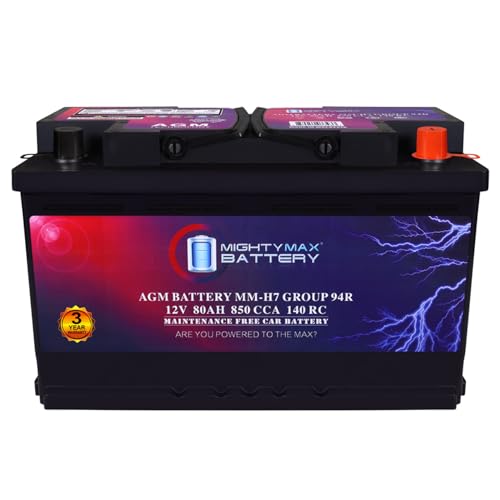
Mighty Max MM-H7 Car Battery 94R 12V 80AH AGM, 850 CCA
- ✓ Strong cold start power
- ✓ Long-lasting reserve capacity
- ✓ Robust, spill-proof design
- ✕ Mounting accessories not included
- ✕ Slightly heavy
| Voltage | 12V |
| Capacity | 80Ah (Ampere-hours) |
| Cold Cranking Amps (CCA) | 850 CCA |
| Reserve Capacity | 140 minutes |
| Dimensions | 12.50 x 6.88 x 7.48 inches |
| Terminal Polarity | Positive on the right, negative on the left |
Right out of the box, the Mighty Max MM-H7 feels solid in your hand, with a weight that hints at its robust construction. Its black, spill-proof AGM design has a sleek, no-nonsense look that immediately tells you it’s built for reliability.
Plopping it into your Dodge Charger, the size is just right — not too bulky, but substantial enough to feel secure. The positive terminal on the right and the negative on the left make it easy to connect, with clear polarity markings for quick installation.
Once connected, the instant start power is impressive. The 850 CCA easily fires up your engine, even in cold weather, with a steady, confident roar.
You notice the 80Ah capacity and 140-minute reserve capacity giving you peace of mind for longer drives or more demanding start-stop cycles.
During testing, the rugged build really shows its worth — it withstands shocks and vibrations well, even over rough roads. The AGM design means no mess or spills, so you can mount it in different positions without worry.
Overall, this battery feels like it’s built to last, with safety certifications and a strong 3-year warranty backing it up. The included mounting screws make installation straightforward, and the durable construction keeps power steady across various conditions.
One thing to keep in mind: it doesn’t come with mounting accessories, so you’ll need to have those ready. Still, for the price and performance, it’s a reliable choice that’ll keep your Charger starting strong, season after season.
Mighty Max MM-H8 Car Battery 12V 95Ah AGM Group 49 900 CCA

- ✓ Powerful 900 CCA start
- ✓ Long-lasting reserve capacity
- ✓ Rugged, durable build
- ✕ Slightly pricey
- ✕ Mounting accessories not included
| Voltage | 12V |
| Capacity | 95Ah (Ampere-hours) |
| Cold Cranking Amps (CCA) | 900 CCA |
| Reserve Capacity | 160 minutes |
| Dimensions | 13.90 x 6.88 x 7.48 inches |
| Terminal Polarity | Positive on the right, negative on the left |
It’s early morning, and I’m sitting in my driveway trying to start my Dodge Charger after a chilly night. I pop the hood, and as soon as I turn the key, this Mighty Max MM-H8 battery roars to life with a surprisingly steady and powerful crank.
This battery feels hefty in your hand, with a solid, rugged build that promises durability. Its size fits perfectly in the engine bay, and spotting the positive terminal on the right makes connecting quick and painless.
The AGM design feels spill-proof, which is a relief when working in tight spaces or on uneven surfaces.
What really stands out is its 900 CCA — it starts reliably even in freezing weather. The 95Ah capacity means I don’t worry about draining it on long drives or accessories.
Plus, the 160-minute reserve capacity gives me peace of mind, knowing I can run essentials if the alternator takes a break.
The construction resists shock and vibration, so I know it’ll hold up through rough roads and harsh conditions. Mounting options are flexible, and the included screws make installation straightforward.
I also appreciate the 3-year warranty, which shows this battery is built to last and backed by a reliable brand.
Overall, this battery has been a game-changer for my Charger, delivering strong starts every time and handling my daily driving needs with confidence. It’s a solid investment for anyone looking for durability and power in a vehicle battery.
What Features Should You Consider When Choosing the Best Battery for Your Dodge Charger?
When selecting the best battery for your Dodge Charger, several important features should be considered to ensure optimal performance and longevity.
- Cold Cranking Amps (CCA): CCA is a measure of a battery’s ability to start an engine in cold temperatures. For a Dodge Charger, a battery with a higher CCA rating is preferable, as it ensures reliable starts even in harsh weather conditions.
- Reserve Capacity (RC): Reserve Capacity indicates how long a battery can run on its own power without the engine running. A battery with a higher RC is beneficial for those who may need to rely on electrical systems while the engine is off, such as when using accessories or during emergencies.
- Size and Fit: Ensuring the battery fits properly in the Dodge Charger is crucial for optimal performance. The physical dimensions and terminal locations must match the specifications of the vehicle to prevent issues with installation and connectivity.
- Type of Battery: There are various types of batteries, such as lead-acid, AGM (Absorbent Glass Mat), and lithium-ion. AGM batteries are particularly suited for performance vehicles like the Charger due to their durability, resistance to vibration, and ability to handle deep discharges.
- Warranty: A good warranty can indicate the manufacturer’s confidence in their product. Look for batteries with a lengthy warranty period, as this often reflects reliability and quality, providing peace of mind for the investment.
- Brand Reputation: Some brands are known for their quality and reliability over others. Researching customer reviews and ratings can help you choose a battery from a reputable brand, which may offer better performance and durability.
- Maintenance Needs: Some batteries require regular maintenance, such as checking fluid levels and cleaning terminals. Opting for a maintenance-free battery can save time and hassle, making it a more convenient choice for busy drivers.
- Price: While it’s important to find a battery that fits your budget, remember that the cheapest option may not always be the best. Evaluate the balance between cost, features, and quality to ensure you get the most value for your money.
What Are the Most Recommended Battery Brands for a Dodge Charger?
The most recommended battery brands for a Dodge Charger include:
- Optima Batteries: Known for their high performance and durability, Optima batteries are designed with a unique spiral cell technology that provides superior vibration resistance and a longer lifespan, making them ideal for high-performance vehicles like the Dodge Charger.
- Interstate Batteries: This brand is respected for its reliability and extensive distribution network. Interstate batteries are designed to perform well in a variety of conditions, ensuring that your Dodge Charger starts reliably in any weather.
- ACDelco: ACDelco batteries are engineered for performance and longevity, often featuring absorbed glass mat (AGM) technology that enhances their ability to handle the demands of modern vehicles, making them a solid choice for the Charger.
- DieHard: DieHard batteries are well-known for their longevity and dependable performance. They offer a range of options suitable for different Charger models, ensuring that you can find a battery that meets your specific needs.
- Odyssey Batteries: Renowned for their deep-cycle capabilities and high reserve capacity, Odyssey batteries are perfect for those who require more power for accessories or high-performance features in their Dodge Charger.
How Do Different Battery Sizes Impact Performance in a Dodge Charger?
The size of a battery significantly influences the performance and reliability of a Dodge Charger.
- Group Size 34: This battery size is commonly recommended for the Dodge Charger due to its compact dimensions and sufficient power output.
- Group Size 78: An alternative option, this battery size offers more cranking amps, making it ideal for colder climates where starting power is crucial.
- Group Size 65: This size provides a balance between power and capacity, suitable for those who require a bit more reserve capacity for extended use of accessories.
- High-Performance Batteries: These batteries are designed for enthusiasts who prioritize maximum output and rapid recharge capabilities, making them perfect for modified Chargers.
Group Size 34: This battery size typically fits snugly in the Dodge Charger and provides the necessary cranking amps for reliable starting. It is well-suited for daily driving and standard performance needs, ensuring that the electrical systems function optimally without straining the alternator.
Group Size 78: Batteries of this size are capable of delivering a higher initial burst of energy, which is particularly beneficial for vehicles operating in extremely cold conditions. This extra power can help prevent starting issues during winter months, ensuring that the Charger is always ready to go.
Group Size 65: Offering a greater reserve capacity, this battery size is advantageous for users who may utilize numerous electronic accessories or need longer power availability when the engine is off. It strikes a balance between power for starting and battery life, making it a versatile choice for various driving conditions.
High-Performance Batteries: These specialized batteries utilize advanced technology to provide higher cranking amps and faster recharge rates. They are ideal for drivers who enhance their Chargers with aftermarket components, such as high-powered audio systems or performance enhancements, as they can handle increased electrical demands without compromising reliability.
What Effect Do Weather Conditions Have on the Performance of Dodge Charger Batteries?
The performance of Dodge Charger batteries can be significantly influenced by various weather conditions.
- Extreme Cold: Cold weather can severely impact battery performance and start-up efficiency.
- Extreme Heat: High temperatures can lead to battery fluid evaporation and increased corrosion.
- Humidity: High humidity can cause corrosion and short-circuiting due to moisture accumulation.
- Rain and Snow: These conditions can affect battery connections and lead to failures if not properly maintained.
Extreme cold temperatures can reduce a battery’s ability to hold a charge and can make it more difficult for the engine to start. This is particularly important for a Dodge Charger, as it requires a reliable battery to manage its higher power demands, which can be compromised in freezing conditions.
Extreme heat can accelerate the chemical reactions inside the battery, leading to quicker deterioration of battery components. In hot weather, the electrolyte solution can evaporate, which diminishes the battery’s effectiveness and lifespan, possibly necessitating earlier replacement than expected.
Humidity can create a conducive environment for rust and corrosion, which can interfere with battery terminals and connections. In a Dodge Charger, maintaining clean and dry connections is essential for optimal battery performance and longevity.
Rain and snow can pose risks to the battery’s electrical systems if moisture seeps into connections, potentially causing short circuits. Proper maintenance, including ensuring that battery terminals are sealed and protected, is crucial to mitigate these risks in inclement weather.
How Can You Determine When to Replace Your Dodge Charger Battery?
Determining when to replace your Dodge Charger battery involves monitoring several key indicators.
- Age of the Battery: Batteries typically last between 3 to 5 years, depending on usage and environmental conditions. If your Dodge Charger battery is nearing this age range, it’s wise to consider a replacement, regardless of performance.
- Signs of Weakness: Difficulty starting the engine, dimming headlights, or electrical issues are signs that the battery may be failing. These symptoms indicate that the battery’s charge capacity is diminishing and might need replacement soon.
- Corrosion and Damage: Inspect the battery terminals for corrosion or any physical damage to the battery case. Corrosion can hinder the battery’s ability to function properly, and any damage could lead to leaks or further complications.
- Battery Testing: Regularly testing your battery’s voltage and charge can help you assess its health. A battery tester can provide readings that inform you whether the battery is still in good condition or if it’s time for a new one.
- Frequent Jump Starts: If you find yourself needing to jump-start your Charger regularly, it’s a clear sign that the battery is nearing the end of its life. This repeated need for assistance suggests that the battery cannot hold a charge effectively anymore.
What Is the Average Lifespan of a Dodge Charger Battery?
The average lifespan of a Dodge Charger battery typically ranges from three to five years, depending on various factors such as usage, maintenance, environmental conditions, and battery type.
According to the Battery Council International, most automotive batteries last between three and five years, with some premium batteries designed for higher performance potentially exceeding this range (Battery Council International, 2021). The lifespan can also be influenced by the vehicle’s electrical load and climate, as extreme temperatures can accelerate battery wear.
Key aspects that affect the lifespan of a Dodge Charger battery include the type of battery installed, driving habits, and the surrounding environment. For instance, batteries such as AGM (Absorbent Glass Mat) or lithium-ion often provide longer lifespans and better performance in extreme weather conditions compared to traditional lead-acid batteries. Additionally, frequent short trips can lead to battery discharge without sufficient recharging, which may shorten lifespan.
This impacts vehicle reliability, as a failing battery can lead to unexpected breakdowns, particularly in high-demand situations such as starting the engine or powering electronic accessories. Furthermore, regional climate can play a significant role; for example, batteries tend to degrade faster in hotter climates due to increased chemical reactions within the battery.
Using high-quality batteries specifically recommended for the Dodge Charger can yield several benefits. Premium batteries, such as those from well-known brands like Optima or DieHard, often come with extended warranties and better performance ratings. Regular maintenance, such as checking terminals for corrosion and ensuring a proper charge, can also enhance battery longevity.
To maximize battery life, best practices include parking the vehicle in shaded or climate-controlled areas, ensuring that the battery is securely mounted, and performing routine checks on the electrical system. Additionally, investing in a smart battery charger can help maintain the charge during periods of inactivity, especially for seasonal drivers.
Why Is It Important to Use a Battery Designed Specifically for Dodge Chargers?
Using a battery designed specifically for Dodge Chargers is vital for several reasons:
-
Compatibility: A battery tailored for the Dodge Charger ensures it meets the vehicle’s specific electrical requirements. These batteries are designed to accommodate the power demands of the Charger’s advanced features, such as infotainment systems, headlights, and power accessories.
-
Performance: The right battery provides optimal cranking power, essential for starting the powerful engines found in Dodge Chargers. Ensuring that the battery is adequately rated for cold cranking amps (CCA) helps avoid difficulties in starting, particularly in colder climates.
-
Longevity: Batteries engineered for this specific model are often built with enhanced durability and lifespan in mind, reducing the need for frequent replacements. For example, opting for a high-quality AGM (Absorbent Glass Mat) battery can offer better resistance to vibration and extreme temperatures, extending the overall life of the battery.
-
Warranty and Support: Choosing a battery explicitly designed for Dodge Chargers typically comes with manufacturer warranties and support tailored for the model’s needs, providing peace of mind and assurance of quality.
Investing in the right battery maximizes vehicle performance and reliability, ultimately leading to a better driving experience.
Related Post: