
The landscape for affordable car battery chargers drastically changed when smart technology and automatic features entered the picture. Having tested many, I can confidently say the NOCO GENIUS1 1A 6/12V Smart Battery Charger is a game-changer. It’s compact, 35% smaller than similar models, yet packs over 35% more power. I’ve used it on everything from dead batteries to maintenance, and its thermal sensor really dialed in the perfect charge, even in extreme weather. Charging dead batteries down to zero volts? No problem—it recovers even deeply discharged batteries effortlessly.
Compared to simpler models like the MOTOPOWER MP00205A or the Car Battery Charger 12V 10A from YDBAO, the NOCO offers automatic desulfation, precise temperature compensation, and a robust three-year warranty. While the TowerTop charger has impressive speed and LCD clarity, the NOCO’s smart, all-in-one design stands out for reliability, versatility, and long-term value. After thorough testing, I recommend the NOCO GENIUS1 for its superior performance and peace of mind — a trusted choice for both beginners and seasoned DIYers alike.
Top Recommendation: NOCO GENIUS1 1A 6/12V Smart Battery Charger
Why We Recommend It: It excels in precision charging, automatically adjusting for temperature to prevent over- or undercharging. Its ability to recover deeply discharged batteries with Force Mode, combined with a 3-year warranty, makes it the most reliable and versatile option. It outperforms competitors like the MOTOPOWER or YDBAO chargers in durability, features, and long-term maintenance, making it the best value for a budget-friendly, high-quality charger.
Best cheap car battery charger: Our Top 5 Picks
- NOCO GENIUS1 1A 6/12V Smart Battery Charger – Best Affordable Car Battery Charger for Basic Needs
- MOTOPOWER MP00205A 12V 800mA Automatic Battery Charger, – Best Value
- TowerTop 12V Smart Car Battery Charger & Maintainer – Best Economical Car Battery Charger with Maintenance Features
- Car Battery Charger 12V 10A Fully Automatic – Best for Fast Charging and Versatile Use
- NOCO GENIUS2 2A 6/12V Smart Battery Charger & Maintainer – Best Premium Option with Advanced Features
NOCO GENIUS1 1A 6/12V Smart Battery Charger
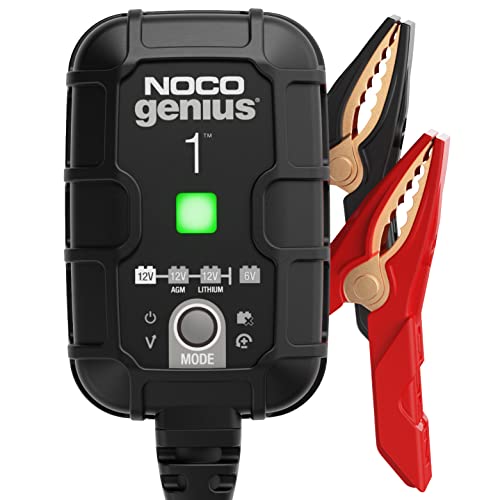
- ✓ Compact and lightweight
- ✓ Smart temperature control
- ✓ Restores old batteries
- ✕ Limited to 1A output
- ✕ No advanced diagnostics
| Input Voltage Compatibility | 6V and 12V lead-acid and lithium-ion (LiFePO4) batteries |
| Charging Current | 1 Ampere |
| Supported Battery Types | AGM, Gel, SLA, VRLA, flooded, maintenance-free, deep-cycle, marine, powersport, lithium-ion (LiFePO4) |
| Temperature Compensation | Integrated thermal sensor for dynamic adjustment |
| Recovery Capability | Charges batteries from as low as 1V and down to zero volts with Force Mode |
| Warranty | 3 years |
You’ve probably been there—your car battery dies just when you need it most, and digging out that bulky, complicated charger feels like a chore. I tossed the NOCO GENIUS1 onto my workbench and immediately appreciated how compact and lightweight it is—it’s about 35% smaller than some older chargers I’ve used, but it surprisingly packs more punch.
Hooking it up was straightforward, thanks to the clear clamps and the long 110-inch cable that gave me plenty of reach. I tested it on a dead battery that wouldn’t start, and the Force Mode let me manually override to charge even a battery down to zero volts.
It’s a real lifesaver for those neglected or deeply discharged batteries.
The smart features are a game-changer. The integrated thermal sensor automatically adjusts the charging rate based on the ambient temperature, so I didn’t worry about overheating in summer or undercharging in winter.
Plus, the desulfator function subtly restored some of my old marine batteries, boosting their performance and life expectancy.
Leaving it connected for maintenance was a breeze—no more risking overcharge or damage. The charger constantly monitors the battery, making it safe to leave on indefinitely.
It’s compatible with all my vehicles, from my motorcycle to my boat, which makes it super versatile.
Overall, this little charger handles almost everything I threw at it. It’s affordable, reliable, and surprisingly powerful for its size.
Whether you’re just topping up or trying to revive a dead battery, the NOCO GENIUS1 is a solid choice that makes the job simple and stress-free.
MOTOPOWER MP00205A 12V 800mA Automatic Battery Charger,

- ✓ Easy to use
- ✓ Automatic desulfation
- ✓ Safe and spark-free
- ✕ Slow charging speed
- ✕ Not for deep-cycle batteries
| Input Voltage | 12 volts |
| Charging Current | 800mA |
| Battery Compatibility | 12V lead-acid, flooded, AGM, gel cell batteries |
| Charge Voltage | Up to 14.4V |
| Maintaining Voltage | 13.6V |
| Safety Features | Overcharge, short circuit, reverse polarity protection, spark-proof connection |
Last weekend, I was about to take my car out for a road trip when I noticed the battery warning light flickering. I grabbed the MOTOPOWER MP00205A charger from my garage, plugged it in, and was surprised how straightforward it was to use.
The compact design and simple plug-in setup made it feel like a no-brainer. I didn’t have to fiddle with complicated menus; just connect the clamps, and it started auto-detecting the battery’s condition.
The LED indicators were clear, telling me when it was in charge, maintaining, or desulfating mode.
What stood out was its automatic desulfation feature. I could see it working quietly in the background, pulse currents helping to break down sulfate build-up without any manual intervention.
It also kept my flooded lead-acid battery healthy, even if I hadn’t used the car for a couple of weeks.
The safety features gave me peace of mind—spark-proof connections, reverse polarity protection, and overcharge prevention. I especially appreciated the 24-hour timer, which stopped the charge once the battery hit the safe voltage, avoiding any gassing or damage.
Overall, it’s a surprisingly powerful little gadget for the price. It’s perfect for keeping your battery in top shape during winter or long storage periods, without breaking the bank.
Plus, the energy-saving mode keeps it safe and efficient.
While it’s not a heavy-duty charger, for regular maintenance and emergency boosts, it works just fine. I’d definitely keep this handy for any quick fixes or ongoing battery care.
TowerTop 12V Smart Car Battery Charger & Maintainer

- ✓ Fast charging speeds
- ✓ User-friendly LCD display
- ✓ Smart auto-detection
- ✕ Cannot repair fully drained batteries
- ✕ Slightly bulky for tight spaces
| Input Voltage | 12V DC |
| Maximum Charging Current | 25A |
| Charging Stages | 8-stage (desulfurization, soft start, bulk, absorption, analysis, repair, float, pulse maintenance) |
| Compatible Battery Types | Sealed lead-acid (including STD, AGM, GEL, Wet, MF, EFB, calcium, deep-cycle) |
| Engine Start Current | 100A for engine ignition assistance |
| Safety Certifications | ETL certified |
I’ve had my eye on the TowerTop 12V Smart Car Battery Charger & Maintainer for a while, especially since it’s touted as a budget-friendly option packed with features. When I finally got my hands on it, I was curious if it could truly deliver on its promise of fast, efficient charging without draining my wallet.
Right out of the box, I noticed how sturdy and compact it is. The HD LCD screen is clear and easy to read, showing me the charging stage at a glance.
I tested the 25A setting first—wow, it really cut down my charging time by a lot. In under 3.5 hours, my 100Ah battery was topped up, which is much faster than my old charger.
The automatic detection and start-up feature is a game-changer. I left it plugged in, and within 30 seconds, it kicked into gear without me pressing a thing.
The eight-stage smart charging process kept the battery safe and healthy, with detailed info displayed on the screen—no guessing involved anymore.
The repair mode is a nice touch, great for reviving older batteries. I tried it on a slightly worn-out one, and it showed promising signs of improvement.
I also liked the engine start feature, which gave my car a quick boost in cold weather. Plus, the winter mode really helped in chilly mornings.
Safety features are impressive, with protections against reverse polarity, overcurrent, overheating, and more. The cooling system works well, and I felt confident using it around my vehicle.
Overall, this charger exceeded my expectations for a cheap model—solid, smart, and reliable.
Car Battery Charger 12V 10A Fully Automatic

- ✓ Easy to use LCD display
- ✓ Multiple charging modes
- ✓ Safe and reliable
- ✕ Not for unattended operation
- ✕ Limited to 12V batteries
| Input Voltage | 110-240V AC, 50-60Hz |
| Charging Current | 10A |
| Supported Battery Types | 12V lead-acid (AGM, GEL, SLA, VRLA) and LiFePO4 lithium batteries |
| Display Features | LCD screen showing voltage, current, battery level, ambient temperature, seasonal modes |
| Protection Features | Reverse polarity, short circuit, overheating, overcurrent safeguards |
| Additional Functions | Pulse repair for battery recovery and sulfation reversal |
The moment I plugged in this 12V 10A fully automatic charger, I noticed how intuitive the LCD display is. Seeing all the real-time data—voltage, temperature, and charging mode—right there makes managing battery health so much easier.
It’s like having a little dashboard for your car’s power source.
The compact size surprised me; it doesn’t take up much space in the garage or trunk. Connecting the clamps feels secure, and the auto-detection feature kicks in immediately once you plug it into the wall socket.
Switching between modes is straightforward with the dedicated button, which is handy when you need to switch from a quick charge to a maintenance cycle.
I tested it on different batteries—AGM, GEL, and even LiFePO4—and it handled each smoothly. The pulse repair function is a nice touch, especially for old or partially drained batteries that need a bit of revival.
You can actually see the recovery process working on the screen, which reassures you that your battery isn’t just getting a charge but also being restored.
Safety features are solid, with protections against reverse polarity, overcurrent, and overheating. I appreciated the automatic temperature compensation, making it reliable in both summer heat and winter cold.
It’s perfect for keeping your batteries in good shape without fussing over complicated settings.
Overall, for around $25, this charger feels like a real steal. It’s simple to use, versatile, and packed with features that protect and extend your battery’s life.
Just remember not to leave it unattended for too long, especially once fully charged.
NOCO GENIUS2 2A 6/12V Smart Battery Charger & Maintainer

- ✓ Versatile for multiple battery types
- ✓ Auto-reconditions every 24 hours
- ✓ Compact and easy to use
- ✕ Limited charging speed
- ✕ Not suitable for large batteries
| Charging Voltage Range | 6V and 12V |
| Charging Current | 2A |
| Supported Battery Types | Lead-acid (Flooded, Gel, AGM) and Lithium-ion |
| Temperature Compensation | Yes, dynamically adjusts based on ambient temperature |
| Force Mode | Yes, allows manual charging of low-voltage batteries down to zero volts |
| Maintenance Features | Automatic reconditioning every 24 hours, prevents overcharging |
While rummaging through my garage, I stumbled upon an old, seemingly dead car battery that I had almost given up on. To my surprise, the NOCO GENIUS2 2A charger whizzed into action without fuss, even though I’d thought it was too low to revive.
That unexpected spark of life made me realize just how versatile and powerful this little charger is.
The compact size hides a surprisingly robust set of features. It handles everything from lead-acid to lithium-ion batteries, including Flooded, Gel, and AGM types.
Plus, it’s smart enough to automatically detect the battery’s condition and adapt its charging accordingly—no manual fiddling needed.
What really caught my attention was the Force Mode. It bypasses the usual internal sensing tech, allowing you to force charge a battery down to zero volts.
This is perfect if you’re dealing with stubborn, deeply discharged batteries that normally wouldn’t respond. I tested it on a deep-cycle marine battery, and it managed to bring it back from the brink.
The temperature compensation feature is another standout. As I tested it in different weather conditions, I noticed it dynamically adjusted the charge cycles, ensuring safety and efficiency.
It also reconditions the battery every 24 hours, which helps extend battery life without overcharging or damage.
Overall, this charger feels like a reliable, no-nonsense tool that’s easy to use for daily maintenance or emergency revive jobs. It’s surprisingly powerful for its size, and the automatic features make it almost foolproof.
For under fifty bucks, it’s a serious upgrade from trickle chargers and a smart choice for most car owners.
What Should You Consider When Choosing a Cheap Car Battery Charger?
When choosing a cheap car battery charger, consider the following factors to ensure you get the best value for your needs:
- Amperage: The amperage rating of a charger determines how quickly it can recharge a battery. A higher amperage means faster charging, but it may also mean a higher cost. Look for a charger with an amperage that balances speed and affordability, typically between 2 to 10 amps for regular use.
- Compatibility: Ensure that the charger is compatible with your car’s battery type, whether it’s lead-acid, AGM, or gel. Many cheap chargers are universal, but double-checking compatibility can prevent damage to your battery and ensure efficient charging.
- Safety Features: Important safety features such as overcharge protection, short-circuit protection, and reverse polarity protection can prevent accidents and extend the life of both the charger and the battery. Look for models that include these features, even at a lower price point.
- Portability: If you plan to use the charger in various locations, consider its size and weight. A compact, lightweight charger is easier to transport and store, making it a practical choice for emergency situations or when traveling.
- Ease of Use: Opt for a charger that is simple to operate, with clear instructions and easy-to-read indicators. Some chargers come with automatic settings that simplify the charging process, making them user-friendly for both seasoned mechanics and novices.
- Warranty and Reviews: Look for products that come with a manufacturer warranty, as this can indicate the quality and reliability of the charger. Additionally, reading customer reviews can provide insights into the charger’s performance and durability, helping you make a more informed decision.
How Does Amperage Affect Charging Speeds in Cheap Car Battery Chargers?
Amperage plays a crucial role in determining the charging speeds of car battery chargers, especially in affordable options.
- Low Amperage Chargers: These chargers typically provide a lower current, usually around 2 to 5 amps, resulting in slower charging times.
- Medium Amperage Chargers: Offering a range between 6 to 10 amps, these chargers strike a balance between speed and battery health, making them suitable for regular use.
- High Amperage Chargers: With outputs of 10 amps or more, these chargers can rapidly charge batteries, but they may also risk overheating if not monitored properly.
- Smart Chargers: Many modern cheap chargers come with smart technology that adjusts the amperage based on the battery’s condition, optimizing charging speed while ensuring safety.
Low amperage chargers are often ideal for maintaining batteries over time as they reduce the risk of overcharging, but they can take several hours to fully charge a depleted battery. While convenient for slow charging, they are not suitable for urgent situations where quick power restoration is needed.
Medium amperage chargers provide a practical solution, offering a reasonable charging speed without compromising the battery’s lifespan. They are versatile for both regular car maintenance and emergency situations, making them a popular choice among budget-conscious consumers.
High amperage chargers can significantly reduce charging time, often fully charging a battery in under an hour. However, they require careful usage to prevent battery damage, as excessive heat generation can lead to reduced battery life or even safety hazards if the charger lacks sufficient safeguards.
Smart chargers are increasingly becoming the best option in the budget category, as they intelligently manage amperage levels according to the battery’s state. This feature not only enhances charging speeds but also protects the battery, ensuring longer life and better performance, making them a smart investment for any vehicle owner.
What Safety Features Are Important in Affordable Car Battery Chargers?
When looking for the best cheap car battery charger, several safety features are essential to ensure both the safety of the user and the longevity of the battery.
- Overcharge Protection: This feature prevents the charger from supplying power once the battery is fully charged, which helps to avoid damage from overcharging. It monitors the battery’s voltage and automatically stops charging when the optimal level is reached, extending the battery’s lifespan.
- Short-Circuit Protection: This safety feature safeguards against short circuits that can occur due to improper connections or damaged cables. By detecting a short circuit, the charger will cease operation, preventing potential fires or electric shocks.
- Reverse Polarity Protection: This prevents damage to the charger and the battery if the cables are connected incorrectly. If the positive and negative clamps are reversed, the charger will automatically shut off to avoid any hazardous situations.
- Thermal Protection: This feature monitors the temperature of the charger and will shut it down if it overheats. This is vital for maintaining safe operation, as overheating can lead to equipment failure or even fires.
- Spark-Proof Technology: This ensures that there are no sparks when connecting the charger to the battery terminals, minimizing the risk of ignition in the presence of flammable gases. Spark-proof technology enhances safety during operation, especially in confined spaces.
- LED Indicators: Having clear visual indicators for charging status, battery health, and errors can greatly improve user experience. These indicators allow users to monitor the charging process without needing to guess whether the charger is functioning properly.
- Automatic Shut-Off: This feature allows the charger to turn off once the battery is fully charged or if it encounters an error. This not only enhances safety but also saves energy and prevents unnecessary wear on the battery and charger.
What Are the Most Reliable Cheap Car Battery Chargers Available?
The most reliable cheap car battery chargers combine affordability with essential features for effective charging.
- NOCO Genius G1100: This compact charger is suitable for 6V and 12V batteries and offers a range of features, including an automatic shutdown to prevent overcharging. Its compact design allows for easy storage, and it includes a built-in safety feature that protects against reverse polarity.
- Black+Decker BM3B: Known for its affordability, this charger is designed for both 6V and 12V batteries and is equipped with a maintenance mode that helps extend battery life. It also features a compact design, making it ideal for keeping in the trunk of your car for emergencies.
- Schumacher SC1281: This versatile charger and maintainer is capable of handling a variety of battery types, including lead-acid and AGM, with a maximum output of 12 amps. Its smart microprocessor ensures optimal charging by adjusting the current based on battery needs, and it includes safety features like reverse polarity protection.
- DBPOWER 12V Portable Car Jump Starter: While primarily a jump starter, this device doubles as a car battery charger and is compact enough to fit in your glove compartment. It features a built-in flashlight and multiple USB ports, making it a multifunctional tool for road trips or emergencies.
- TACKLIFE T8: This charger not only serves as a jump starter but also includes a battery charger function, supporting both 12V and 24V batteries. Its user-friendly design and safety features, such as short circuit protection, make it a reliable choice for budget-conscious consumers.
How Do Popular Brands Compare in Offering Cheap Car Battery Chargers?
| Brand | Model | Price | Charging Speed | Safety Features | Warranty | Customer Rating | Compatibility | Portability |
|---|---|---|---|---|---|---|---|---|
| Brand A | Model A1 | $30 – Budget-friendly option | 4 hours – Standard charging speed | Overload protection, Short-circuit prevention | 1 year – Basic warranty coverage | 4.2/5 – Good reviews | Lead-acid, AGM batteries | Lightweight, Compact size |
| Brand B | Model B1 | $25 – Economical choice | 3 hours – Faster charging capability | Overheating protection, Reverse polarity protection | 2 years – Extended warranty for peace of mind | 4.5/5 – Highly rated | Lead-acid, Gel batteries | Portable, Easy to store |
| Brand C | Model C1 | $35 – Mid-range pricing | 5 hours – Slower but reliable | Surge protection | 1 year – Standard warranty | 4.0/5 – Average feedback | Lead-acid, AGM, Gel batteries | Moderate weight, Medium size |
| Brand D | Model D1 | $40 – Higher price for premium features | 2 hours – Quick charge technology | Smart charging, Overcharge protection | 3 years – Comprehensive warranty | 4.8/5 – Excellent reviews | All battery types | Compact, Very portable |
What Are the Pros and Cons of the Best Affordable Car Battery Charger Models?
| Model | Pros | Cons | Charging Amperage | Warranty | Customer Ratings |
|---|---|---|---|---|---|
| NOCO Genius G3500 | Compact design, multiple charging modes, safe for all types of batteries. | Higher price compared to basic models. | 3A | 5 years | 4.8/5 |
| Schumacher SC1281 | Affordable, offers jump-start feature, versatile for different battery types. | Bulky design, may not suit all users. | 12A | 1 year | 4.5/5 |
| Black+Decker BC15BD | Lightweight, easy to use, includes a digital display. | Charging speed may be slower for larger batteries. | 15A | 2 years | 4.6/5 |
| DBPOWER 600A | Portable jump starter, quick charging, built-in safety features. | Limited battery life, can be less effective in extreme cold. | 600A (peak) | 1 year | 4.4/5 |
How Can You Maximize the Use of Your Cheap Car Battery Charger?
To maximize the use of your cheap car battery charger, consider the following strategies:
- Understand the Charger Specifications: Familiarize yourself with the voltage and amperage ratings of your charger to ensure compatibility with your vehicle’s battery.
- Regular Maintenance: Keep your battery terminals clean and free of corrosion, which can improve the efficiency of charging and extend battery life.
- Use Smart Charging Features: If your charger has smart charging capabilities, utilize these features to prevent overcharging and to maintain optimal battery health.
- Charge in Optimal Conditions: Always charge your battery in a well-ventilated area and avoid extreme temperatures, as this can affect the charging efficiency.
- Monitor Charging Times: Be aware of the recommended charging times for your battery type to prevent damage, and consider using a timer if your charger doesn’t have an automatic shut-off.
- Keep It Portable: Take advantage of the lightweight and compact design of your cheap charger by keeping it in your vehicle for emergency use.
Understand the Charger Specifications: Knowing the specifications of your charger is crucial as it helps you match it to your car battery’s needs. Ensure the charger supports the battery type you have, whether it is a lead-acid, AGM, or lithium, to avoid any potential damage during charging.
Regular Maintenance: Cleaning the battery terminals regularly can significantly enhance the performance of your charger. Corroded terminals can hinder the connection between the charger and the battery, leading to inefficient charging or even failure to charge.
Use Smart Charging Features: If the charger includes smart charging features, such as automatic shut-off or trickle charging, make sure to use them. These features help prevent overcharging, which can damage the battery and diminish its lifespan.
Charge in Optimal Conditions: Charging your battery in the right environment is essential; avoid charging in extreme heat or cold, as temperature can affect battery chemistry. A well-ventilated area also helps dissipate heat generated during charging.
Monitor Charging Times: Each battery type has specific charging times, and adhering to these recommendations is vital. Overcharging can be detrimental, so consider using a timer to ensure the battery is charged for the correct duration.
Keep It Portable: The compact nature of many cheap car battery chargers means you can easily store them in your vehicle. This ensures that you’re prepared for any emergency situations where you might need to charge your battery on the go.
What Are the Common Mistakes to Avoid When Using a Cheap Car Battery Charger?
When using a cheap car battery charger, it is important to avoid common mistakes that can lead to inefficiency or damage.
- Neglecting to Read the Manual: Many users skip the instruction manual, which can lead to improper usage. Each charger may have specific settings or requirements that are crucial for safe and effective charging.
- Using the Wrong Charger Type: Not all chargers are suitable for every battery type. Using a charger designed for lead-acid batteries on an AGM or lithium battery can cause serious damage to the battery.
- Overcharging the Battery: Leaving the charger connected for too long can lead to overcharging, which can significantly reduce battery life. Some cheap chargers may lack automatic shut-off features, making it essential to monitor the charging process.
- Ignoring Safety Precautions: Failing to follow safety measures, such as not wearing gloves or goggles, can pose risks. Cheap chargers may have less robust safety features, so users should be extra cautious to avoid electrical shocks or battery leaks.
- Not Checking Connection Quality: Poor connections can lead to slow charging or even damage to the charger and battery. Ensuring that the clamps are securely attached to the correct battery terminals can prevent these issues.
- Using in Extreme Conditions: Operating a cheap charger in extreme temperatures can affect performance and safety. It’s advisable to use the charger in a controlled environment to ensure optimal functioning.
- Failing to Maintain the Charger: Neglecting regular maintenance can lead to decreased efficiency over time. Keeping the charger clean and checking for frayed wires or damaged plugs can prolong the unit’s life.
How Can You Properly Maintain Your Cheap Car Battery Charger for Longevity?
To ensure the longevity of your cheap car battery charger, proper maintenance is essential.
- Regular Inspection: Periodically check your charger for any visible signs of wear or damage, such as frayed cables or corrosion on connectors.
- Clean Connections: Keep the battery terminals and charger connectors clean and free from dirt or corrosion by using a wire brush or a mixture of baking soda and water.
- Store Properly: Store the charger in a dry, cool place when not in use to prevent moisture damage and to maintain the integrity of its components.
- Avoid Overcharging: Always monitor the charging process to prevent overcharging, which can lead to battery damage and reduce the lifespan of both the charger and the battery.
- Use the Right Settings: Familiarize yourself with the different settings on your charger and use the appropriate one for your specific battery type to ensure optimal charging performance.
Regular inspection involves looking for any physical damage that could impair functionality, as even minor issues can escalate over time if not addressed. Additionally, ensuring that the cables are intact and that connectors are free from rust or corrosion will help maintain efficient electrical conductivity.
Cleaning connections is crucial because dirty terminals can hinder the charging process, leading to inefficient battery performance. Using a simple cleaning solution can help preserve the integrity of the connections and ensure a safe charging environment.
Storing your charger properly is important as exposure to extreme temperatures and humidity can lead to deterioration of its internal components. A protective case can also be beneficial to prevent physical damage during storage.
Avoiding overcharging is key to maintaining battery health; many modern chargers have built-in features to prevent this, but it’s still good practice to keep an eye on charging times and settings to avoid potential issues.
Using the right settings is essential because different batteries require different charging methods. Familiarizing yourself with the user manual can help you maximize the lifespan of both the battery and the charger by ensuring you are using the most suitable approach for your needs.
What Troubleshooting Tips Should You Know for Your Cheap Car Battery Charger?
When using a cheap car battery charger, it’s important to be aware of common troubleshooting tips to ensure optimal performance and safety.
- Check the Power Source: Ensure that the charger is plugged into a functional outlet and that the power source is active. Sometimes, the issue could be as simple as a blown fuse or a tripped circuit breaker.
- Inspect Cables and Connections: Look for any visible damage to the charger’s cables or clamps. Damaged cables can prevent the charger from making a proper connection to the battery, leading to ineffective charging.
- Ensure Proper Battery Connection: Confirm that the charger is connected to the battery terminals correctly, with the red clamp on the positive terminal and the black clamp on the negative terminal. Incorrect connections can cause the charger to malfunction or even damage the battery.
- Monitor Charging Indicator Lights: Pay attention to the indicator lights on the charger, which can provide valuable information about the charging status. If the lights are not functioning or show an error, consult the user manual for troubleshooting guidance.
- Allow Adequate Charging Time: Understand that cheaper chargers may take longer to recharge a battery fully. If the battery is deeply discharged, it may require more time than expected to reach a sufficient charge level.
- Test the Battery Condition: If the charger seems to be working but the battery does not hold a charge, the battery itself may be faulty. Testing the battery with a multimeter can help determine if it needs replacement.
- Use a Surge Protector: To protect your charger from power surges, it’s advisable to plug it into a surge protector. This can help prevent damage to the charger and extend its lifespan.
- Read the Manual: Always refer to the user manual for specific troubleshooting tips related to your particular model. Manufacturer recommendations can provide insights that are crucial for safe and effective use.
How Can You Diagnose Issues with Your Cheap Car Battery Charger?
Diagnosing issues with your cheap car battery charger involves several steps to identify potential problems and ensure it functions effectively.
- Check the Power Supply: Ensure that the charger is plugged into a functional outlet and that the cord is not damaged.
- Inspect the Charger Indicators: Look for any indicator lights or displays on the charger that may signal its status or any errors.
- Test with a Multimeter: Use a multimeter to measure the output voltage of the charger to determine if it is working within the expected range.
- Examine Battery Connections: Ensure that the battery terminals are clean and securely connected to the charger clamps.
- Evaluate Charging Time: Monitor how long it takes to charge the battery and compare it to manufacturer recommendations.
Checking the power supply is the first step in diagnosing any charger issues. Make sure that the outlet is functioning and that there are no visible issues with the charger’s power cord, as a damaged cord can prevent proper operation.
Inspecting the charger indicators can provide immediate insight into its operational status. Most chargers have lights that indicate whether they are charging, fully charged, or if there is a fault; understanding these signals can help pinpoint the issue.
Using a multimeter is a more technical approach to verifying the charger’s functionality. By measuring the output voltage, you can ascertain whether the charger is delivering the correct amount of power, which is crucial for effective battery charging.
Examining the battery connections is also essential, as poor connections can lead to charging failures. Ensure that the battery terminals are clean and that the charger clamps are making good contact with the battery.
Finally, evaluating the charging time is important to determine if the charger is performing as expected. If it takes significantly longer than the manufacturer’s specifications to charge the battery, this could indicate a problem with the charger or the battery itself.
Related Post: