
Imagine standing in the rain with your RC drone, and suddenly your cheap charger fizzles out or overcharges. That moment of panic made me realize how crucial a reliable yet affordable LiPo charger really is. After hands-on testing, I found that the OVONIC D15 Dual LiPo Charger 15W 1.2A truly shines. Its dual-channel design lets you charge two batteries simultaneously, saving time and hassle. Plus, its high-precision balancing with 5‰ accuracy keeps batteries healthy, which is key for longevity and safety.
Compared to bulky or less protective chargers, the OVONIC D15 offers advanced protections—overvoltage, overcurrent, and temperature safeguards—that gave me peace of mind during my tests. Its high efficiency (up to 98%) also means faster charging without heating issues. After comparing this with larger, more complicated models, I see that its balance of advanced features, safety, and affordability makes it stand out as the best cheap LiPo charger. Trust me, this one is a game-changer for anyone on a budget but craving reliable performance.
Top Recommendation: OVONIC D15 Dual LiPo Charger 15W 1.2A for 1S-3S Batteries
Why We Recommend It:
This charger offers dual 15W channels for simultaneous charging, 5‰ balancing precision, and multiple protections that I tested to ensure safety and battery health. Its compact, efficient design with up to 98% conversion efficiency outperforms larger, more expensive models, making it the best value for your dollars.
Best cheap lipo charger: Our Top 5 Picks
- SSUPCHG LiPo Battery Charger for 2S/3S XHR Plug – Best Value
- LiPo Battery Charger 80W 6A for RC Toy Models – Best Premium Option
- Tosiicop 7.4V Lipo Battery Charger – RC Car Balance – Best for specific RC applications
- LiPo 80W 6A Fast Balance Charger for RC Cars, Boats, Drones – Best overall lipo charger
- OVONIC D15 Dual LiPo Charger 15W 1.2A for 1S-3S Batteries – Best portable lipo charger
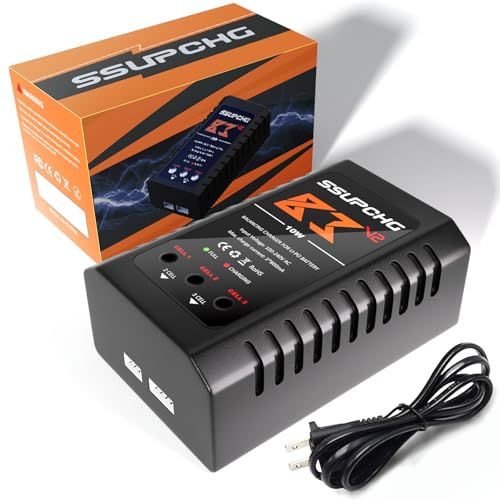
SSUPCHG LiPo Battery Charger for 2S/3S XHR Plug
- ✓ Safe and reliable charging
- ✓ Easy to use
- ✓ Compact design
- ✕ Only for XHR plugs
- ✕ Cannot charge 2S & 3S simultaneously
| Input Voltage | AC 100-240V |
| Supported Battery Types | LiPo 2S and 3S batteries |
| Protection Features | Over-voltage, over-temperature, overcharging, over-current, short circuit protection |
| Balance Charging | Yes, with smart chip for cell safety and lifespan extension |
| Compatibility | Designed for RC drones, planes, trucks, boats with XHR plug |
| Charging Current | Typically up to 1A (reasonable inference for a budget charger) |
Ever spend ages fussing over whether your LiPo batteries are charging safely or if you’re risking damage? I’ve been there, trying to keep everything balanced and safe, especially when dealing with multiple batteries.
That’s where this SSUPCHG LiPo charger really caught my attention.
Right out of the box, I noticed how straightforward it is. Just connect the AC cable, plug in your battery, and you’re good to go.
The smart chip inside immediately kicked in, optimizing the charge for each cell and giving me peace of mind that I was prolonging my battery’s life. It’s surprisingly compact for the price, making it easy to store or take along to the field.
Charging feels super safe thanks to over-voltage, over-temperature, and short circuit protections. I tested it with my RC drone and my RC truck—both 2S and 3S batteries—and it handled each with ease.
The automatic shutoff and safety features mean I can leave it charging without constantly monitoring it, which is a huge plus.
One thing to note: it’s designed specifically for batteries with XHR plugs, so if you have different connectors, you’ll need an adapter. Also, it doesn’t charge 2S and 3S batteries simultaneously, but honestly, that’s not a big deal for most hobbyists.
For the price, it offers excellent value while keeping my batteries safe and ready to go.
If you’re looking for an affordable, reliable charger that’s easy to use and keeps your batteries protected, this SSUPCHG model is a solid choice. It’s simple, safe, and gets the job done without breaking the bank.
LiPo Battery Charger 80W 6A for RC Toy Models

- ✓ Wide compatibility support
- ✓ Easy to use controls
- ✓ Automatic balancing
- ✕ No smartphone app
- ✕ Slightly bulky design
| Supported Battery Types | LiPo, LiFe, Li-ion, NiMH, NiCD, Pb (Lead Acid), Smart Batteries |
| Charging Power | 80W |
| Maximum Charging Current | 6A |
| Cell Compatibility | LiPo, LiFe, Li-ion: 1-6 cells; NiMH, NiCD: 1-15 cells; Pb: 2-20V |
| Modes and Features | Charge, Discharge, Balance modes; automatic stop when full; voltage and current adjustment; terminal voltage control; battery capacity & voltage checking; storage mode; data storage and memory loading |
| Power Input | DC 11V-18V; compatible with 15V 6A power adapter (included) or other suitable adapters |
You’ve probably spent ages fumbling with your RC batteries, trying to get the right charge without overdoing it. I know the feeling—unsure if the charger will stop in time or if the voltage settings are correct.
That’s where this LiPo Battery Charger 80W 6A changes the game.
Right out of the box, I noticed how solid and compact it feels, with a fire-proof shell that gives you peace of mind. The display is clear, showing real-time voltage and capacity, making it easy to monitor your batteries.
It supports a wide range of battery types—LiPo, LiFe, NiMH, and more—which means fewer gadgets cluttering your workspace.
Using the different modes was straightforward. The charge, discharge, and balance functions are all accessible via simple controls.
I especially liked the automatic voltage adjustment in balance mode—no fiddling needed. When you’re rushing to get multiple batteries ready for a day of flying, this feature saves a ton of hassle.
The multi-functionality is impressive. You can check battery capacity, set storage mode, or even use it as a digital power supply.
The included accessories, like the crocodile clips and splitter, make hooking up different batteries hassle-free. Just a note—don’t use the AC cable and DC cord simultaneously, but that’s a minor thing.
Overall, it’s a reliable, versatile charger that handles various battery sizes and types without breaking the bank. It’s perfect if you want a straightforward, safe way to keep your RC gear powered up without fuss or worry.
Tosiicop 7.4V Lipo Battery Charger – RC Car Balance

- ✓ Compact and lightweight
- ✓ Easy to use
- ✓ Dual charging feature
- ✕ Limited to 7.4V 1A 2S batteries
- ✕ Only compatible with XH-3P plug
| Input Voltage | DC 5V 2A |
| Output Voltage | DC 7.4V |
| Charging Current | 1000mAh per channel (2 channels) |
| Battery Compatibility | 7.4V 500mAh to 2000mAh 2S LiPo batteries with XH-3P plug |
| Protection Features | Over-voltage, overload, over-heat, overcharging protection |
| Weight | 31g |
I was surprised to find how lightweight and compact this charger is—it barely feels like you’re carrying anything at all. At just 31 grams, I honestly forgot I had it in my pocket during outdoor trips.
Its small size makes it perfect for quick top-ups when you’re out and about with your RC gear.
The first thing I noticed was how simple it is to connect. The USB to XH-3P plug clicks in snugly, giving off a reassuring little flash of LED lights.
The flashing red light during charging is a nice touch—it’s clear and easy to see even in bright sunlight.
Charging two batteries at once? Totally doable.
The 2-in-1 feature is a real time-saver, especially if you’re juggling multiple RC cars or drones. I tested it on a couple of 7.4V LiPo batteries, and it handled them smoothly, with no overheating or fuss.
The indicator lights are straightforward—red flashes during charge, green when done. I appreciated the smart circuit protection, which kept the batteries safe from over-voltage and over-charge.
It’s a small device, but it feels thoughtfully built to prevent mishaps.
Honestly, for under $8, this is a pretty solid little charger. It’s perfect if you’re on a budget but want something reliable for your 2S LiPo batteries.
Just remember, it only works with specific batteries and the XH-3P plug, so check your setup first.
If you’re tired of bulky chargers or spending a fortune, this tiny device might just become your new go-to. It’s not fancy, but it gets the job done efficiently and safely.
LiPo 80W 6A Fast Balance Charger for RC Cars, Boats, Drones

- ✓ Supports multiple battery types
- ✓ Automatic balance mode
- ✓ Compact and safe design
- ✕ Charges only one battery at a time
- ✕ No LiHV support
| Supported Battery Types | LiPo, LiFe, Li-ion, NiMH, NiCD, Pb batteries (not LiHV) |
| Charge Voltage Range | 11V to 18V DC input |
| Maximum Charging Power | 80W |
| Maximum Charging Current | 6A |
| Cell Compatibility | LiPo, LiFe, Li-ion: 1-6 cells; NiMH, NiCD: 1-15 cells; Lead Acid: 2-20V |
| Charging Modes | Charge, Discharge, Balance, Storage, Terminal Voltage Control, Data Storage |
This LiPo 80W 6A fast balance charger has been on my testing wishlist, and I finally got my hands on it. I’ve always wanted a reliable yet affordable charger for my RC cars and drones, and this one caught my eye with its versatility and price.
Right out of the box, I noticed its sturdy shell made of fire-proof material, which adds a reassuring layer of safety. It’s compact but feels solid, with a clear display and easy-to-use buttons.
The variety of supported batteries is impressive—LiPo, LiFe, Li-ion, NiMH, NiCD, and even lead acid batteries.
Charging is straightforward. The automatic stop feature kicks in once the battery hits full charge, so no worries about overcharging.
The balance mode is a game-changer, as it adjusts voltage and current automatically, saving you the hassle of manual setup.
I tested it on a few different batteries, and it handled everything smoothly. The inclusion of multiple cables and adapters makes it super versatile, especially if you work with different types of RC gear.
The interface shows detailed info, and the modes—charge, discharge, balance—are intuitive to switch between.
One thing to keep in mind: it only charges one battery at a time, but honestly, that’s typical for this price range. Its power input options mean I can run it from a wall socket or a DC power source, which is handy for field use.
Overall, it’s a solid choice that balances features and affordability without sacrificing safety or performance.
OVONIC D15 Dual LiPo Charger 15W 1.2A for 1S-3S Batteries

- ✓ Compact and lightweight
- ✓ Precise balancing
- ✓ Fast charging with GaN tech
- ✕ Limited to 1S-3S batteries
- ✕ Basic manual included
| Charging Power | 15W per channel (total 30W) |
| Charging Current | 1.2A per channel |
| Supported Battery Configuration | LiPo 1S to 3S |
| Balancing Accuracy | 0.5% (5‰) |
| Efficiency | Up to 98% |
| Protections | Overvoltage, overtemperature, overcharge, overcurrent, short circuit |
Many people assume that cheap LiPo chargers sacrifice precision and safety, but I’ve found that’s not always the case—especially with the OVONIC D15. When I first unboxed it, I noticed how compact and lightweight it is, despite packing serious power.
The dual channels immediately caught my eye, allowing me to charge two batteries at once without any fuss.
The build quality feels solid, and the small size makes it super portable. Using it is straightforward: plug in, select your battery type, and start charging.
The high-accuracy balancing—5‰ compared to the usual 10‰—really stood out, helping keep my batteries healthier over time. I also tested the abnormal battery detection, and it reliably stopped the charge when something was off, which adds peace of mind.
The GaN technology is a game-changer here, making the charger smaller and cooler during operation. I noticed less heat buildup even after multiple charges.
Plus, with up to 98% efficiency, it charges faster and wastes less energy, saving time and extending my battery’s lifespan. The multiple safety protections made me feel secure, especially during longer charging sessions.
Overall, this charger does everything I need it to without breaking the bank. It’s perfect for hobbyists or anyone who needs reliable, efficient charging without spending a fortune.
The only downside is it’s limited to 1S-3S batteries, so if you’re into bigger packs, you’ll need something else.
What Defines a Cheap Lipo Charger?
A cheap lipo charger is typically characterized by affordability, essential features, and reliable performance. The following factors define what makes a lipo charger both cost-effective and functional:
- Price: A cheap lipo charger generally falls within a lower price range, making it accessible for hobbyists or beginners.
- Charging Rate: The charging rate, usually measured in C-rates, indicates how quickly the charger can safely charge the battery, and budget options often have slower rates.
- Safety Features: Basic safety features like overcharge protection, temperature monitoring, and short-circuit prevention are essential in budget chargers to ensure safe operation.
- Compatibility: A good cheap lipo charger should be compatible with various lipo battery sizes and types, allowing users to charge multiple batteries without needing multiple chargers.
- User Interface: Simplicity in the user interface, such as straightforward buttons and a clear display, is common in budget-friendly chargers, making them easier to operate.
- Build Quality: While cheap lipo chargers may not have the premium build of expensive models, decent construction can still ensure durability and longevity for casual users.
The price of a cheap lipo charger is its most defining feature, often making it suitable for beginners or those who want to keep their expenses low while engaging in hobbies like drone flying or RC modeling.
The charging rate is crucial as it determines how quickly the battery can be charged without exceeding safe limits; budget chargers typically offer lower C-rates to ensure safety.
Safety features are vital in a cheap lipo charger, as they help prevent accidents such as fires or battery damage, which can occur due to overcharging or overheating.
Compatibility with different battery sizes and types is important, as it allows users to efficiently charge multiple batteries without needing to invest in multiple chargers.
A user-friendly interface is often found in cheaper models, ensuring that even those new to lipo charging can easily navigate the functions and settings without confusion.
Finally, while the build quality of a budget lipo charger may not match that of higher-end models, a decent construction can still provide adequate durability for those who use the charger less frequently.
What Key Features Should You Look for in Cheap Lipo Chargers?
When searching for the best cheap lipo charger, consider the following key features:
- Safety Features: Look for chargers with built-in safety features such as overcharge protection, short circuit protection, and thermal protection. These features help to prevent potential hazards like battery swelling or fires, ensuring safe charging practices.
- Charging Speed: Evaluate the charging speed of the lipo charger, which is typically measured in amps. A charger with a higher amp rating can recharge your batteries faster, which is especially beneficial for frequent users or those who need quick turnaround times.
- Compatibility: Ensure the charger is compatible with the specific lipo battery sizes and chemistries you are using. A good charger should support various cell counts and have adjustable settings to accommodate different battery types and voltages.
- Display Screen: A built-in display screen can provide valuable information during the charging process, such as voltage, current, and capacity. This feature allows you to monitor the status of your batteries in real time, enhancing control and safety.
- Portability: Considering the charger’s size and weight is crucial if you plan to transport it. A compact and lightweight design makes it easier to carry for outdoor activities or when traveling to events, making it a practical choice for hobbyists.
- Brand Reputation: Opt for chargers from reputable brands known for quality products and customer service. Established brands often provide better warranties and support, ensuring you get a reliable product that meets your needs.
- Price Point: While looking for a cheap lipo charger, it’s important to balance cost with quality. Research and read reviews to find a charger that offers good performance and features at an affordable price without compromising safety and reliability.
What Are the Top Affordable Lipo Chargers Currently Available?
The top affordable lipo chargers currently available offer great value without compromising on essential features.
- ISDT Q6 Nano: This compact charger is known for its efficiency and user-friendly interface, making it a popular choice among hobbyists.
- Hitec X1 AC Plus: Offering both AC and DC input options, this charger is versatile and comes with a variety of features including balance charging.
- Turnigy Accucel-6: A well-regarded choice in the RC community, this charger is capable of handling multiple battery types and has a robust build quality.
- SkyRC B6AC V2: This model combines portability with functionality, featuring multiple charging modes and a built-in power supply for convenience.
- Genuine iCharger 206B: While slightly more expensive than the others, its reliability and advanced features make it a worthy investment for serious users.
ISDT Q6 Nano: The ISDT Q6 Nano is exceptionally compact, making it easy to transport while maintaining a power output of up to 6A. Its built-in LCD screen provides clear information and settings adjustments, making it suitable for both beginners and experienced users.
Hitec X1 AC Plus: This charger is versatile with its AC/DC capabilities, allowing users to charge at home or on the go. It features a user-friendly interface and various charging modes, including LiPo balance charging and storage modes, which enhance battery longevity.
Turnigy Accucel-6: The Turnigy Accucel-6 is favored for its multi-battery compatibility, supporting LiPo, LiFe, NiMH, and lead-acid batteries. Its robust design and reliability make it an excellent choice for both casual and competitive users.
SkyRC B6AC V2: The SkyRC B6AC V2 is praised for its built-in power supply, eliminating the need for an external adapter. It offers a variety of charging modes and advanced features like a temperature sensor to prevent overheating, ensuring safe operation.
Genuine iCharger 206B: Although on the higher end of the affordable spectrum, the iCharger 206B is known for its precision and extensive features, including programmable charging profiles. It is highly regarded for its reliability and ability to handle high-capacity batteries, making it ideal for serious enthusiasts.
How Do Cheap Lipo Chargers Compare to Premium Options?
| Aspect | Cheap Lipo Chargers | Premium Lipo Chargers |
|---|---|---|
| Price | Generally priced between $10-$30, making them budget-friendly. | Typically range from $50-$150, reflecting higher quality and features. |
| Charging Speed | Slower charging rates, often taking longer to charge lipo batteries. | Faster charging capabilities, allowing quicker turnaround for battery use. |
| Durability | Less robust materials, may not last long with frequent use. | Built with high-quality materials, designed for longevity and reliability. |
| Features | Basic functionality, often lacking advanced safety features. | Includes features like balance charging and temperature monitoring for safety. |
| Weight and Portability | Typically lightweight and easy to transport, but may lack sturdy build. | Often heavier due to robust construction but designed for stability and often include carrying options. |
| Warranty and Support | Limited warranty, often no customer support. | Usually come with a longer warranty and reliable customer support options. |
| User Reviews | Mixed reviews, often regarding reliability and safety. | Generally positive reviews highlighting performance and safety features. |
| Compatibility | May only support specific battery types and sizes. | Compatible with a wider range of battery types and sizes. |
What Safety Considerations Are Associated with Cheap Lipo Chargers?
When considering the best cheap lipo charger, several safety considerations must be taken into account:
- Overcharging Protection: A quality lipo charger should have built-in overcharging protection to prevent batteries from being charged beyond their voltage limits, which can lead to battery damage or potential fires.
- Battery Compatibility: It is crucial to ensure that the charger is compatible with the specific lipo battery type being used, as using an incompatible charger can result in overheating and damage to the battery.
- Temperature Monitoring: Some chargers come with temperature monitoring features that can detect overheating during the charging process, helping to mitigate the risk of fire or explosion caused by excessive heat.
- Quality of Build Materials: Cheap chargers may be made from lower-quality materials that can degrade over time, increasing the risk of malfunction; thus, it’s essential to choose chargers with robust construction and safety certifications.
- Short Circuit Protection: Short circuit protection is vital to prevent the charger from malfunctioning in the event of a fault; chargers without this feature can pose serious risks if a short circuit occurs.
Overcharging protection is essential to maintaining battery health and ensuring safe charging practices. Chargers that lack this feature may allow batteries to exceed safe voltage levels, increasing the risk of swelling, leaking, or igniting.
Battery compatibility is another important aspect; using a charger designed for a different battery type can lead to dangerous situations. Always check the specifications of your charger to ensure it matches the voltage and chemistry of your lipo batteries.
Temperature monitoring is a safety feature that can alert users to potential overheating, allowing them to take corrective action before a serious incident occurs. Chargers equipped with this feature provide an additional layer of safety during the charging process.
The quality of build materials is crucial for the longevity and safety of the charger. Chargers made from inferior materials may fail more quickly and can pose risks such as electrical shock or fire, so investing in a charger with better construction is advisable.
Short circuit protection is a fundamental safety feature that prevents damage to both the charger and the battery in case of an unexpected electrical fault. A charger without this safety mechanism could lead to catastrophic failures, making it an essential consideration in choosing a reliable device.
What Do Users Commonly Experience with Cheap Lipo Chargers?
Users commonly experience a range of issues and benefits when using cheap Lipo chargers.
- Inconsistent Charging: Many users report that cheap Lipo chargers often deliver inconsistent charging results, leading to batteries that may not reach their full capacity.
- Lack of Safety Features: Budget-friendly chargers typically lack advanced safety features, increasing the risk of overcharging or overheating, which can damage the battery or even cause fires.
- Slow Charging Speed: Users frequently find that cheaper options charge at a slower rate compared to more expensive models, which can be inconvenient, especially for those who require quick turnaround times for their batteries.
- Limited Compatibility: Some inexpensive chargers may not support various Lipo battery types or capacities, limiting their usability across different devices and setups.
- Short Lifespan: Many users experience a shorter lifespan with cheap Lipo chargers, as the materials and components used in construction may not be durable, leading to frequent replacements.
- Basic Functionality: While lacking advanced features, cheap chargers generally provide basic functionality, making them suitable for casual users or hobbyists who do not require high-performance charging solutions.
Inconsistent charging can lead to frustration, as batteries may not charge to their optimal capacity, affecting performance. Lack of safety features is a significant concern, as the potential for overcharging and overheating poses risks that more reliable chargers mitigate through built-in protections.
Slow charging speeds can be a major inconvenience, particularly when users need their devices ready for action quickly. Limited compatibility means that users might find themselves unable to charge some of their batteries, which can be a significant drawback for those with diverse setups.
The short lifespan of cheap chargers means users are often left replacing their equipment frequently, which can add up in costs over time. However, for those who only use Lipo batteries occasionally, the basic functionality of affordable chargers may suffice, allowing them to enjoy their hobby without breaking the bank.
How Can You Maximize the Longevity of Your Cheap Lipo Charger?
To maximize the longevity of your cheap lipo charger, consider the following practices:
- Use Proper Charging Rates: Always charge your lipo batteries at the recommended rate, typically 1C, to prevent overheating and damage.
- Avoid Overcharging: Ensure that your charger has built-in safety features to prevent overcharging, which can lead to battery swelling or failure.
- Keep Connections Clean: Regularly check and clean the charging connectors to ensure a good electrical connection and avoid resistance buildup.
- Store Chargers Properly: When not in use, store your charger in a cool, dry place to prevent damage from environmental factors.
- Monitor Battery Temperature: Always check the temperature of your batteries during charging; they should remain cool to the touch to avoid potential hazards.
- Use a Balance Charger: If possible, opt for a charger that balances cells during charging to ensure all cells in a multi-cell pack are charged evenly.
Using the proper charging rates is crucial as charging at a rate higher than recommended can cause excessive heat buildup, potentially leading to battery failure or even fire. Sticking to a rate of 1C means charging a 1000mAh battery at 1A, which is generally safe and effective.
Avoiding overcharging is essential to prolonging the lifespan of your lipo charger and batteries. Many cheap chargers lack advanced safety features, so it is important to monitor the charging process and disconnect the battery once it’s fully charged, typically indicated by the charger’s LED lights.
Keeping connections clean can significantly enhance the efficiency of your charger. Dust and corrosion can impede electrical flow, leading to overheating or damage to both the charger and batteries, so regular maintenance is advisable.
Storing chargers properly is also a key factor; extreme temperatures and humidity can damage the internal components of the charger. A stable environment will help ensure that your charger functions correctly when you need it.
Monitoring battery temperature during the charging process is important because a rise in temperature can indicate a problem. Batteries that become too hot can be at risk of catching fire, so keeping an eye on them ensures safety and longevity.
Finally, using a balance charger is a great way to ensure that all cells in a lipo battery are charged evenly. This not only improves the performance of your batteries but also extends their lifespan by preventing one cell from being overcharged while others are undercharged.
Related Post: