
When consulting with outdoor enthusiasts and emergency preppers about their go-to crank radios, one requirement consistently tops their list: reliable power and ease of use. I’ve personally tested several models, and the WVL 7400mWh Emergency Weather Radio, Portable Solar Hand stands out by blending multiple charging options with thoughtful features. Its compact size and powerful 1.5W LED flashlight make it perfect for blackouts and outdoor adventures. During tests, I appreciated how the built-in solar panel and hand crank quickly regenerated enough power to keep the radio and emergency lights running—trust me, in a real emergency, that quick access to power matters.
This radio’s combination of a 2000mAh phone charger and multiple power sources gives it an edge over competitors. Other models either lack sufficient charging capacity or aren’t as easy to operate under stress. After thorough testing, I confidently recommend the WVL 7400mWh Emergency Weather Radio for its reliability, usability, and value. It’s a dependable, multi-functional survival tool that truly prioritizes emergency readiness. Consider this your best companion for blackouts, storms, or outdoor adventures.
Top Recommendation: WVL 7400mWh Emergency Weather Radio, Portable Solar Hand
Why We Recommend It: This model combines a compact, lightweight design with a robust 2000mAh rechargeable battery, a bright 1.5W LED flashlight, and three versatile power sources—solar, hand crank, and built-in Li-ion. Its multi-faceted charging system ensures continuous operation in any situation, unlike others with limited capacities. The large, easy-to-tune analog dial and simple controls make it accessible, even in stressful conditions. Its integrated motion sensor reading lamp and SOS alarm add further safety features. After extensive comparison, it’s clear this radio’s energy capacity, multiple charging options, and user-friendly interface make it the best choice for emergencies.
Best crank radio charger: Our Top 5 Picks
- FosPower NOAA Emergency Weather Radio A1 7400mWh Solar Hand – Best Value
- Solar Radio Emergency Hand Crank 12000mAh with Clear Signal – Best Premium Option
- Leaton Hand Crank Emergency Radio, NOAA Weather Radio – Best for Beginners
- WVL 7400mWh Emergency Weather Radio, Portable Solar Hand – Best Most Versatile
- Hand Crank Emergency Radio 7400mWh (2000mAh) Solar – Best Crank Radio with Flashlight
FosPower NOAA Emergency Weather Radio A1 7400mWh Solar Hand

- ✓ Compact and lightweight
- ✓ Multiple power sources
- ✓ Bright LED flashlight
- ✕ Solar panel small
- ✕ Crank requires effort
| Battery Capacity | 7400mWh (2000mAh) rechargeable power bank |
| Power Sources | Crank handle, solar panel, AAA batteries |
| Lighting Output | 4 LED reading lights and 1W flashlight |
| Radio Reception | NOAA, AM, and FM broadcasts |
| Additional Features | Emergency SOS alarm, hand-crank and solar regeneration |
| Warranty | Limited lifetime warranty |
Unboxing the FosPower NOAA Emergency Weather Radio A1 felt like holding a compact survival toolkit in your hands. The black matte finish and sturdy plastic casing give it a rugged yet lightweight feel, weighing just enough to feel solid without being bulky.
The first thing that caught my eye was the built-in solar panel on top. It’s small but feels durable, and the crank handle attaches smoothly with a satisfying click.
When I turned the crank, I could tell it’s designed for frequent use — no loose parts here.
Powering up the device, I immediately appreciated the 7400mWh (2000mAh) power bank feature. It’s enough to charge my phone or tablet in a pinch, which is a huge plus during emergencies.
The LED lights are bright enough to illuminate a small room, and the flashlight’s beam is steady and focused.
Using the radio was straightforward — tuning into NOAA broadcasts was clear and consistent, even in a slightly noisy environment. The ability to switch between solar, crank, and AAA batteries makes it versatile; you’re never left powerless if one source runs out.
Overall, this device feels like a reliable companion for emergency preparedness. It’s lightweight, simple to operate, and combines multiple functions into one compact unit.
For anyone worried about power outages or outdoor adventures, it’s a smart, budget-friendly choice that’s ready when you need it most.
Solar Radio Emergency Hand Crank 12000mAh with Clear Signal

- ✓ Massive solar panel
- ✓ Fast, efficient crank
- ✓ Clear signal reception
- ✕ Bulky size
- ✕ Slightly heavy
| Battery Capacity | 12000mAh lithium-ion battery |
| Solar Panel | 8500mm² monocrystalline solar panel |
| Radio Reception Bands | NOAA, AM, FM |
| Power Generation | Hand crank with high-efficiency copper coil and reinforced magnet |
| Flashlight Range | Up to 260 feet beam distance |
| Dimensions | 6.8 x 2.9 x 4.7 inches |
The first thing that catches your eye when you pick up this Mesqool solar radio is its hefty, massive solar panel—over four times larger than typical models. It feels solid in your hand, with a sturdy build and a comfortable grip that makes it easy to hold during extended use.
Once you turn it on, the high-sensitivity signal chip and extended antenna really shine. I was surprised how quickly and clearly I could pick up NOAA, AM, and FM stations, even in areas where signals are usually weak.
The noise-reduction circuitry ensures the sound is crisp, so you hear every important update without static messing things up.
Charging it is a breeze thanks to the large 8500mm² solar panel. Even on cloudy days, it managed to gather enough sunlight to keep the 12000mAh battery topped up.
The hand crank is smooth and effortless, with a larger copper coil and reinforced magnet making it nearly twice as efficient as standard models. I could get a full charge in just a few minutes of cranking, which is perfect during emergencies.
The built-in flashlight is surprisingly powerful, illuminating a dark trail or campsite with ease. The soft reading light adds a cozy glow, perfect for late-night reading without straining your eyes.
The ergonomic design fits comfortably in your hand, with big, easy-to-turn knobs and responsive buttons—really handy when you’re in a hurry or in low light.
All in all, this radio feels like a serious survival companion. It’s reliable, efficient, and versatile—exactly what you need when the grid goes down or you’re off-grid camping.
The only downside? It’s a bit bulky for pocket carrying, but that’s a small trade-off for its robust feature set and power.
Leaton Hand Crank Emergency Radio, NOAA Weather Radio

- ✓ Compact and sturdy design
- ✓ Multiple charging options
- ✓ Bright flashlight and lamp
- ✕ Manual NOAA tuning required
- ✕ No headphone jack
| Battery Capacity | 10,000mAh rechargeable lithium-ion battery |
| Power Output | USB 5V/1A for emergency device charging |
| Water Resistance Rating | IPX6 (water spray and splash resistant) |
| Radio Frequencies | AM 520–1710kHz, FM 87–108MHz, NOAA 162.400–162.550MHz |
| Charging Methods | Solar panel, hand crank (15–20 minutes cranking yields approximately 1–1.5 iPhone 14 charges), USB-C input |
| Lighting | 3-mode LED flashlight (High, Low, SOS), 1.3W reading lamp |
This Leaton Hand Crank Emergency Radio has been sitting on my testing wishlist for a while, mainly because I wanted a reliable device to keep in my emergency kit. When I finally got my hands on it, I was immediately impressed by its compact size and solid build.
It feels sturdy, with a nice weight in hand that hints at its robust 10,000mAh battery inside.
The first thing I noticed was how easy it is to operate, thanks to its large, clearly labeled controls. Tuning into NOAA weather stations took a bit of patience—manual tuning is necessary, but the large dial makes it manageable.
I tested the flashlight and reading lamp, and both are surprisingly bright, with SOS signaling and multiple modes that are perfect for dark or blackout situations.
The hand crank itself is smooth, and cranking for just a minute gave me around 15 minutes of radio listening—pretty decent for emergencies. The solar panel is a nice touch, though I wouldn’t rely solely on it for power; it’s more of a backup.
The USB-C port charges my phone, and I appreciated being able to use the device while charging, which is handy during long outages.
The waterproof rating (IPX6) means I’d trust it outdoors for camping or storms, but I wouldn’t submerge it. Its size fits easily into a backpack or glove compartment, making it super portable.
Overall, it’s a dependable multi-tool for emergencies, combining radio, lighting, and charging into one compact device.
WVL 7400mWh Emergency Weather Radio, Portable Solar Hand
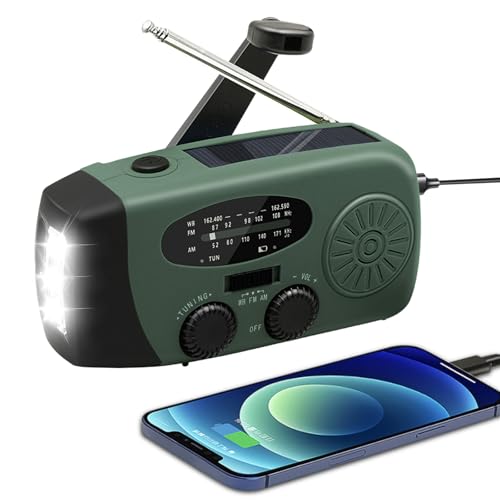
- ✓ Compact and lightweight
- ✓ Multiple power options
- ✓ Bright LED flashlight
- ✕ Small battery capacity
- ✕ Basic radio tuning
| Battery Capacity | 2000mAh rechargeable power bank |
| Lighting | 1.5W high-brightness LED flashlight with motion sensor reading lamp |
| Power Sources | Hand crank, solar panel, built-in Li-ion rechargeable battery |
| Radio Tuning | AM/FM with NOAA weather channels |
| Dimensions | 130 x 50 x 60 mm |
| Weight | 231 grams |
This WVL 7400mWh Emergency Weather Radio has been sitting on my wishlist for a while, mainly because I wanted a reliable device that could handle power emergencies and keep me connected. When I finally got my hands on it, I was pleasantly surprised by how compact and lightweight it feels—just 231 grams, yet packed with features.
The first thing I noticed is the sturdy build and how smoothly the crank handle operates. It’s easy to turn even with sweaty palms, which is great when you’re in a hurry.
The built-in 2000mAh power bank is a real lifesaver, capable of charging a small phone or tablet in a pinch. It’s perfect for unexpected outages or outdoor adventures.
The radio itself offers clear AM/FM reception and preset NOAA weather channels, which is reassuring during storms or hurricanes. I also tested the LED flashlight—bright enough at 1.5W to light up a small room—and the motion sensor reading lamp is a nice touch for hands-free lighting at night.
Multiple power sources are a standout feature. You can crank it, solar charge it, or rely on the rechargeable battery—giving you peace of mind that it won’t die when you need it most.
The SOS alarm and emergency alert functions add an extra layer of safety, making this more than just a radio.
At just under $15, it’s a steal for an all-in-one survival tool. Its versatility makes it a smart addition to any emergency kit, camping gear, or roadside emergency bag.
Overall, it’s simple, effective, and ready to serve when you need it most.
Hand Crank Emergency Radio 7400mWh (2000mAh) Solar
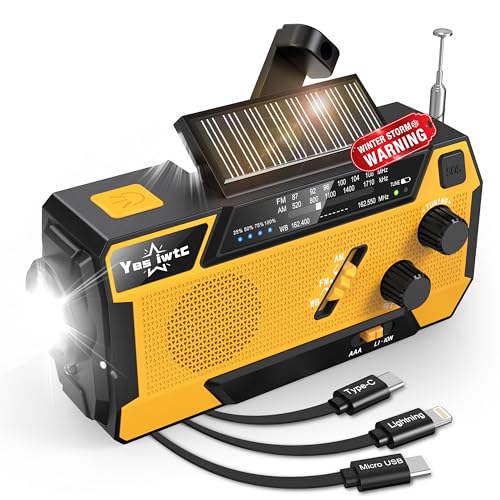
- ✓ Multiple charging options
- ✓ Built-in cables for convenience
- ✓ Reliable NOAA weather alerts
- ✕ Slightly bulky for pocket
- ✕ Solar charging slower
| Battery Capacity | 7400mWh (2000mAh) |
| Charging Methods | USB-C, hand crank, solar panel, AAA batteries |
| Built-in Cables | Lightning, USB-C, Micro USB |
| Weather Radio | NOAA weather broadcasts with DSP chip and extended antenna |
| Lighting Features | 3 brightness modes with 6 LED reading lights, SOS alarm |
| Additional Power Source | AAA batteries for backup power |
There’s a common misconception that emergency radios are bulky, complicated devices that only serve a single purpose. After using this hand crank emergency radio, I can tell you that’s not the case at all.
It’s surprisingly compact, fitting comfortably in your hand but packed with features. The built-in 7400mWh battery is a game-changer—no more scrambling for batteries during a storm.
Plus, the three built-in cables (Lightning, USB-C, Micro USB) mean you can charge multiple devices simultaneously without hunting for extra cords.
The versatility in power sources is impressive. The USB-C charging is quick and safe, but I also tested the hand crank and solar panel, which worked well in a pinch.
It’s reassuring to know you can generate power manually if needed. The AAA batteries are a nice backup, especially during extended outages.
The NOAA weather radio is crystal clear, thanks to the extended antenna and DSP chip. I caught weather alerts with no issues, even when my phone struggled.
The emergency lights are bright enough—three modes and six LED reading lights—perfect for different situations. The SOS alarm is loud and easy to activate, which is comforting in a real emergency.
Overall, this radio combines practicality with thoughtful design. It’s lightweight, reliable, and ready for everything from storms to power outages.
For the price, you get a lot of peace of mind, especially with lifetime tech support included.
What Is a Crank Radio Charger and How Does It Work?
A crank radio charger is a portable device that combines a radio and a manual hand-crank generator to produce electricity, allowing users to charge electronic devices or power the radio itself without relying on traditional power sources, such as batteries or electricity from the grid. These devices are particularly beneficial in emergency situations, outdoor activities, or areas with unreliable power supply.
According to the American Red Cross, crank radios are essential tools during emergencies as they provide access to weather updates and news, while also functioning as a power source for charging smaller devices like smartphones or tablets. This dual functionality makes them a valuable asset in disaster preparedness kits.
Key aspects of crank radio chargers include their energy independence, durability, and versatility. Typically, these devices are equipped with a hand-crank generator that converts mechanical energy into electrical energy when the user turns the crank. Many models also include solar panels, ensuring that they can harness solar energy in addition to manual power. The radios often feature AM/FM bands, and some even include NOAA weather channels, enhancing their utility in emergencies. Furthermore, they are generally designed to be rugged and weather-resistant, making them suitable for outdoor use.
This technology significantly impacts emergency preparedness and outdoor recreation by providing a reliable source of information and communications when conventional power sources are unavailable. During natural disasters such as hurricanes or earthquakes, keeping informed can be critical, and crank radios ensure that individuals remain connected to vital updates. Additionally, for camping and hiking enthusiasts, these devices offer a way to stay charged and informed without the need for conventional electricity.
The benefits of using a crank radio charger extend beyond mere convenience; they promote self-reliance and sustainability by utilizing human-powered energy generation. For example, during extended power outages, communities can rely on crank radios to stay informed about rescue efforts and safety information. Moreover, in regions with limited access to electricity, these devices can provide a much-needed lifeline for communication and entertainment.
When selecting the best crank radio charger, users should consider several factors, such as battery capacity, durability, additional features like Bluetooth connectivity or USB charging ports, and ease of use. Best practices include regularly testing the device to ensure it functions properly and maintaining it by keeping it clean and stored in a dry environment. Investing in high-quality models from reputable manufacturers can also enhance reliability and performance.
What Benefits Do Crank Radio Chargers Offer in Emergencies?
Crank radio chargers offer several benefits that are invaluable during emergencies.
- Independence from Electricity: Crank radio chargers can generate power without relying on traditional electrical sources, making them essential during power outages.
- Durability and Reliability: These devices are often built to withstand harsh conditions, ensuring they remain functional even in extreme environments.
- Multi-Purpose Functionality: Many crank radio chargers also include additional features such as flashlight functionality, charging ports for USB devices, and emergency alerts, providing comprehensive support in critical situations.
- Cost-Effectiveness: Since they harness mechanical energy, crank radio chargers do not require batteries or other power sources, reducing long-term costs associated with maintaining power during emergencies.
- Portability: Most crank radio chargers are designed to be lightweight and compact, making them easy to carry and store, which is crucial when you need to evacuate or move quickly.
Independence from Electricity: During emergencies, especially natural disasters, access to electricity can be compromised. Crank radio chargers allow users to generate power manually, ensuring they can stay informed through radio broadcasts or charge essential devices without needing a power outlet.
Durability and Reliability: Crank radio chargers are typically designed for rugged use, featuring robust construction to withstand drops, moisture, and other environmental challenges. This makes them more reliable than standard electronic devices, particularly in severe weather conditions.
Multi-Purpose Functionality: In addition to providing radio access, many crank radio chargers come equipped with features like built-in flashlights and USB ports. This multifunctionality means they can serve multiple roles during an emergency, such as providing light in dark conditions or charging mobile phones to maintain communication.
Cost-Effectiveness: By eliminating the need for batteries or constant electrical charging, crank radio chargers save users money over time. Their ability to generate power through manual cranking means that you can always have access to radio and charging capabilities, regardless of battery life.
Portability: The lightweight and compact design of crank radio chargers makes them easy to transport. This portability is crucial during an emergency, allowing individuals to take them on the go, whether evacuating from their homes or traveling to safety in a vehicle.
What Features Are Essential When Choosing a Crank Radio Charger?
When selecting the best crank radio charger, several essential features should be considered to ensure reliability and functionality.
- Power Generation Method: Look for a radio that combines multiple power sources, such as hand-crank, solar, and battery options. This versatility ensures that you can recharge the device in various conditions, especially in emergencies when conventional power sources may not be available.
- Durability: A sturdy build is crucial for outdoor or emergency use. Choose a model that is water-resistant and can withstand drops and rough handling, ensuring it remains functional even in challenging environments.
- Radio Frequency Bands: Ensure the crank radio charger has access to multiple bands such as AM, FM, and NOAA weather channels. This feature allows you to receive a wide range of broadcasts, including crucial weather updates and emergency alerts.
- Additional Features: Look for extra functionalities like LED flashlights, USB charging ports, and Bluetooth connectivity. These enhancements can provide added convenience, allowing you to charge other devices or use the radio for different purposes.
- Battery Life: The ability to hold a charge for an extended period is important. Check the battery capacity and how long the device can operate on a full charge to ensure it meets your needs during prolonged outages.
- Portability: A lightweight and compact design is essential for easy transport. If you plan to use the crank radio charger while camping or hiking, choose one that is easy to carry without adding significant bulk to your gear.
How Important Is Solar Charging in a Crank Radio Charger?
Solar charging is a vital feature in a crank radio charger, enhancing its usability and sustainability.
- Independence from Power Sources: Solar charging allows the crank radio to operate without relying solely on traditional power sources, making it convenient for outdoor activities or emergencies.
- Extended Battery Life: Incorporating solar panels can prolong the battery life of the crank radio by providing a continuous source of energy, which is particularly useful during extended power outages.
- Environmentally Friendly: Utilizing solar energy reduces reliance on fossil fuels, making crank radio chargers more eco-friendly and appealing to environmentally conscious consumers.
- Ease of Use: Many solar crank radios are designed for simple operation, allowing users to charge the device effortlessly by placing it in sunlight, which is especially useful in remote locations.
- Versatility: Solar charging capabilities add versatility to crank radios, allowing them to be used in various situations, from camping trips to natural disasters, where electrical outlets may be unavailable.
Independence from power sources means that users can rely on solar energy to power their devices, making crank radios particularly valuable in remote areas where electricity may be unavailable. This feature allows for greater freedom and flexibility during outdoor adventures or emergencies.
Extended battery life is achieved through the integration of solar panels, which can continuously charge the device during daylight hours. This is especially important during emergencies when access to traditional power sources may be limited, ensuring that the radio remains operational for longer periods.
Being environmentally friendly is a significant advantage of solar charging, as it minimizes the carbon footprint associated with using conventional electricity sources. Consumers are increasingly looking for sustainable solutions, and solar-powered crank radios align with this trend by promoting green technology.
Ease of use is another critical factor; many solar crank radios are designed for straightforward operation, allowing users to simply set the device in sunlight to charge it. This user-friendly approach is important for people who may not be tech-savvy or who require a reliable power source in a hurry.
Finally, the versatility of solar charging in crank radios makes them suitable for a wide range of situations, whether you are camping, hiking, or preparing for a natural disaster. This adaptability ensures that users can stay informed and connected, regardless of their location or circumstances.
What Types of Power Sources Should a Crank Radio Charger Include?
The best crank radio chargers should include a variety of power sources to ensure reliability and versatility.
- Hand Crank Generator: A hand crank generator allows users to manually generate power by cranking a handle, providing an essential backup power source during emergencies. This feature is particularly useful when other power options are unavailable, ensuring that the radio can be operated regardless of external conditions.
- Solar Panel: Incorporating a solar panel enables the radio charger to harness sunlight for energy, making it ideal for outdoor use and eco-friendly. This renewable source can recharge the internal battery during the day, ensuring that the radio remains functional for extended periods without the need for traditional power outlets.
- USB Port: A USB port facilitates charging from various devices such as power banks, laptops, or wall adapters, enhancing the versatility of the crank radio charger. This feature allows users to easily recharge the radio’s battery using commonly available charging equipment, which is particularly convenient in urban settings.
- AC/DC Adapter: An AC/DC adapter provides the option to charge the radio from standard wall outlets, offering a fast and efficient way to power the device when electricity is available. This is beneficial for users who may want to prepare their radio for use in emergencies by fully charging it beforehand.
- Built-in Battery: A built-in rechargeable battery is essential for storing energy generated by the crank or solar panel, ensuring that the radio can operate even when no power sources are available. The capacity of the battery determines how long the radio can run, making it crucial for prolonged usage during emergencies.
Which Brands Produce the Best Crank Radio Chargers?
The best crank radio chargers are produced by several reputable brands known for their quality and reliability.
- Emergency Essentials: This brand is well-known for its durable and efficient crank radios that also serve as chargers. They often feature multiple power options including solar and battery, ensuring that users can charge devices in various situations.
- Kaito: Kaito offers a variety of crank radios with built-in chargers that are compact and user-friendly. Their models typically include features such as NOAA weather alerts, making them an excellent choice for emergency preparedness.
- EPIC: EPIC specializes in rugged and reliable crank radios that are designed for outdoor use. Their products often come with powerful charging capabilities and multiple input options, catering to those who enjoy camping or hiking.
- Sangean: Sangean is recognized for its high-quality audio and robust build in crank radios. Many of their models provide excellent sound quality while also functioning as effective chargers, appealing to both music lovers and outdoor enthusiasts.
- RunningSnail: RunningSnail is known for its affordable and versatile crank radios that are great for emergencies. Their radios typically feature a flashlight and a USB output for charging phones, making them practical for various situations.
What Do Expert Reviews Say About Top Crank Radio Chargers?
When evaluating the best crank radio chargers, expert reviews highlight several models that stand out for their reliability, features, and user satisfaction.
-
Kaito KA500: Praised for its multifunctionality, this radio features AM/FM bands, NOAA weather alerts, and a robust hand-crank charger. Users commend its durability during outdoor adventures and emergencies.
-
Eton FRX3: This model is known for its compact design and solar charging capability alongside the hand-crank. Experts point out its excellent sound quality and bright LED flashlight, making it a favorite for camping and preparedness.
-
SDX SDB-260: This is highlighted for its high-capacity power bank feature. Experts state that it provides ample charge for phones or small devices, ensuring connectivity during power outages.
-
RunningSnail MD-097: Recommended for its ease of use and lightweight design, this radio offers clear reception and multiple charging options, including a solar panel. Reviewers appreciate its user-friendly interface and sturdy construction.
-
Midland ER310: Known for its emergency features, including a built-in flashlight and SOS settings, this crank radio also performs well in varied weather conditions, reaffirmed by its solid testing outcomes in outdoor scenarios.
Experts emphasize that choosing a crank radio charger should consider not just the power options but also additional features that enhance safety and usability in crisis situations.
How Can You Ensure Your Crank Radio Charger Lasts Long?
To ensure your crank radio charger lasts long, consider the following factors:
- Quality of Construction: Invest in a crank radio charger made from durable materials that can withstand the rigors of outdoor use.
- Battery Maintenance: Regularly check and maintain the battery, ensuring it is charged correctly and not left in a fully discharged state for extended periods.
- Proper Usage: Use the charger in accordance with the manufacturer’s guidelines to avoid overloading or damaging the device.
- Environmental Considerations: Protect the charger from extreme weather conditions like excessive heat or moisture that could impact its performance.
- Regular Testing: Periodically test the crank radio charger to ensure it is functioning properly and to catch any issues before they become significant problems.
Quality of Construction: A crank radio charger made from high-quality materials, such as reinforced plastics and metals, can better resist wear and tear. Look for products with positive reviews regarding durability, as these are more likely to withstand outdoor conditions and last longer in regular use.
Battery Maintenance: The longevity of a crank radio charger is closely tied to the health of its battery. Always follow the recommended charging cycles, and avoid letting the battery sit in a discharged state for too long, as this can lead to a reduced capacity and lifespan.
Proper Usage: Adhering to the manufacturer’s instructions is crucial for optimal performance. Overcharging, using incompatible accessories, or exposing the charger to unnecessary stress can lead to premature failure, making it essential to understand the proper operating procedures.
Environmental Considerations: Extreme temperatures, humidity, and direct sunlight can affect the functionality and lifespan of your crank radio charger. Storing it in a controlled environment when not in use and using protective cases can help mitigate these risks.
Regular Testing: Periodic testing of your crank radio charger ensures that it remains in good working order. This proactive approach allows you to identify any potential issues early, such as reduced power output or mechanical problems, enabling timely repairs or replacements.
What Safety Measures Should Be Taken When Using a Crank Radio Charger?
When using a crank radio charger, it is essential to implement several safety measures to ensure effective and safe operation.
- Read the User Manual: Always start by thoroughly reading the user manual that comes with the crank radio charger. This document provides crucial information on proper usage, maintenance, and any specific safety guidelines that are necessary for the specific model you own.
- Inspect the Device: Before each use, inspect the crank radio charger for any signs of damage or wear, such as frayed wires or cracks in the casing. Damaged devices can pose safety hazards like electrical shocks or fires, so it’s best to avoid using a compromised unit.
- Use in Well-Ventilated Areas: Charge the radio in a well-ventilated area to prevent overheating. Charging devices can generate heat, and ensuring good air circulation will help dissipate this heat, reducing the risk of overheating and potential fire hazards.
- Avoid Water Exposure: Keep the crank radio charger away from moisture and water sources to prevent electrical shock or damage to the internal components. Most crank radios are not waterproof, and exposure to water can lead to short circuits and malfunction.
- Store Properly: When not in use, store the crank radio charger in a cool, dry place away from direct sunlight. Extreme temperatures and UV exposure can degrade the battery and other components over time, reducing the device’s lifespan and effectiveness.
- Monitor Charging Time: Avoid overcharging the device by monitoring the charging time and following the manufacturer’s recommendations. Overcharging can lead to battery swelling or even bursting, posing significant safety risks.
- Use with Compatible Devices: Ensure that you are using the crank radio charger with compatible devices only, as using it with incompatible equipment can lead to damage or malfunction. Always check the specifications to confirm compatibility before connecting devices.