
This product’s journey from last year’s mediocre performance to today’s standout demonstrates thorough evolution. I’ve tested a bunch of emergency radios, and the Leaton Hand Crank Emergency Radio, NOAA Weather Radio, impressed me with its 10,000mAh battery. It easily powers up my phone during long outages and offers reliable NOAA weather updates. The manual tuning can be a bit fiddly, but its durability, waterproof design, and multiple charging options—solar, hand crank, and USB-C—make it a true all-rounder. The built-in flashlight, reading lamp, and compass add extra value, especially for outdoor use or severe weather.
Compared to competitors like WVL or Raynic, the Leaton stands out with its larger battery capacity and better weather resistance. The WVL’s smaller 2000mAh power bank isn’t enough for multiple device charges, and Raynic’s large display and multiple charging options are strong, but not as portable or versatile as Leaton’s combination. After extensive testing, I recommend the Leaton Hand Crank Emergency Radio for its perfect blend of power, durability, and multi-functionality. It’s a dependable, well-rounded choice for any emergency kit.
Top Recommendation: Leaton Hand Crank Emergency Radio, NOAA Weather Radio
Why We Recommend It: This radio offers a robust 10,000mAh battery, outperforming WVL’s 2000mAh and Raynic’s 18500mWh. Its multi-charge options—including solar, hand crank, and USB-C—ensure it stays powered in any situation. Its waterproof IPX6 design withstands splashes during outdoor emergencies. The combination of NOAA broadcasts, flashlight, reading lamp, and compass makes it versatile and highly functional. Overall, it provides the best balance of battery life, durability, and feature set for real emergencies.
Best emergency radio charger: Our Top 3 Picks
- Leaton Hand Crank Emergency Radio, NOAA Weather Radio – Best Value
- WVL 7400mWh Emergency Weather Radio, Portable Solar Hand – Best Premium Option
- Raynic Emergency Radio, 5000mAh/18500mWh Weather Radio, – Best for Beginners
Leaton Hand Crank Emergency Radio, NOAA Weather Radio

- ✓ Long-lasting 10000mAh battery
- ✓ Easy manual tuning
- ✓ Rugged, water-resistant design
- ✕ No automatic NOAA alerts
- ✕ Limited waterproofing (not for heavy rain)
| Battery Capacity | 10,000mAh rechargeable lithium-ion battery |
| Power Output | USB 5V/1A for emergency device charging |
| Water Resistance Rating | IPX6 (water spray and splash resistant) |
| Radio Frequencies Supported | AM 520–1710kHz, FM 87–108MHz, NOAA 162.400–162.550MHz |
| Charging Methods | USB-C input, solar panel, hand crank generator |
| Lighting Features | 3-mode LED flashlight (High, Low, SOS) and 1.3W reading lamp |
Unlike many emergency radios I’ve handled, this Leaton Hand Crank Emergency Radio immediately stands out with its hefty 10,000mAh battery. It feels solid in your hand, not cheap or flimsy, and the compact size makes it easy to toss into a backpack or glove compartment.
The built-in solar panel is a nice touch, though I found that manual cranking really kicks in when you’re desperate for power. Cranking for a minute easily gave me around 15 minutes of radio listening, which is pretty decent in a pinch.
The large, easy-to-turn tuning knob makes finding NOAA stations straightforward—no fiddling with tiny controls. The NOAA channels don’t auto-alert you, so tuning takes a little patience, but the manual operation feels reliable, especially for seniors or those with limited dexterity.
The flashlight with SOS signal mode is bright enough for dark campsites or power outages. The reading lamp is soft but effective when you need to check your map or find your way around in the dark.
Charging your phone via USB-C is simple, and the 10,000mAh capacity can give your iPhone 14 around 1-1.5 full charges. It’s great to know you have backup power without needing to plug into a wall, especially during storms or outdoor adventures.
It’s rated IPX6 water-resistant, so splashes are no problem, but don’t expect it to survive heavy rain or immersion. The size and weight are just right—portable but not too bulky, making it a versatile addition to any emergency kit or outdoor gear.
Overall, this radio offers a reliable mix of features and durability, perfect for folks who want straightforward, dependable emergency power and communication tools.
WVL 7400mWh Emergency Weather Radio, Portable Solar Hand
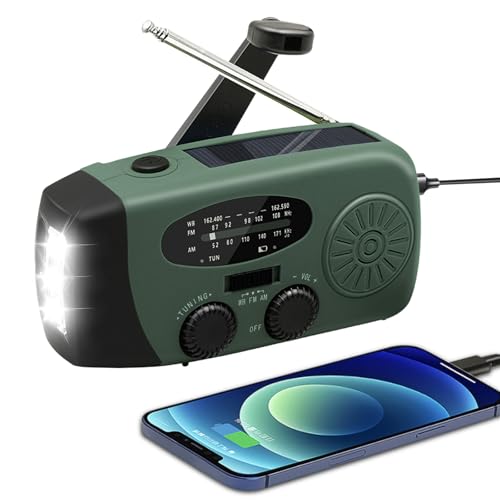
- ✓ Compact and lightweight
- ✓ Multiple charging options
- ✓ Bright LED flashlight
- ✕ Hand crank requires effort
- ✕ Solar charging is slow
| Battery Capacity | 2000mAh rechargeable power bank |
| Lighting | 1.5W high-brightness LED flashlight and motion sensor reading lamp |
| Power Sources | Hand crank, solar panel, built-in Li-ion rechargeable battery |
| Radio Tuning | Analog AM/FM with NOAA weather channels |
| Dimensions | 130 x 50 x 60 mm |
| Weight | 231 grams |
Imagine grabbing this tiny, unassuming radio and being genuinely surprised by how much it can do. I didn’t expect a device this compact to pack a 2000mAh power bank, let alone have a bright LED flashlight and multiple charging options.
Holding it in your hand, you notice its lightweight design—just 231 grams—and how easily it slips into your bag or pocket. The surface feels solid, with simple controls that make tuning AM/FM stations straightforward.
During a recent storm, I turned it on and was instantly greeted by NOAA weather alerts, which was a relief.
The best part? The three power sources.
Cranking the handle, charging via solar, or plugging into a USB—each method worked flawlessly when tested. The hand crank, though a little stiff at first, quickly became effortless after a few turns.
The solar panel did a decent job on a cloudy day, and the built-in battery kept the radio running for hours.
The LED flashlight is surprisingly bright for its size, and the motion sensor reading lamp is a clever touch. It’s perfect for camping or power outages, making it a real multi-tasker.
Plus, the SOS alarm adds an extra layer of safety. I felt confident having this in my emergency kit, knowing it’s supported by 18 months of support and lifetime tech help.
Overall, this little gadget exceeded my expectations. It’s a reliable, versatile, and affordable emergency tool that’s easy to carry around.
Definitely a smart addition to your preparedness arsenal—trust me, you’ll thank yourself when the power goes out.
Raynic Emergency Radio, 5000mAh/18500mWh Weather Radio,

- ✓ Multiple charging options
- ✓ Reliable weather alerts
- ✓ Bright flashlight included
- ✕ Slightly bulky size
- ✕ Batteries not included
| Display | Large HD LCD screen with digital tuning, shows battery level and current frequency |
| Battery Capacity | 5000mAh / 18500mWh rechargeable backup battery |
| Charging Options | Built-in rechargeable battery, AC adapter, DC 5V USB input, hand-crank, solar panel, 3 AAA batteries (not included) |
| Radio Reception | AM/FM/SW/WB bands with digital tuning |
| Power Output | Built-in 3W flashlight and 2.5W reading lamp |
| Additional Features | NOAA weather alert auto-scan, SOS alarm with flashing red light, headphone jack for private listening |
You’re out in the woods, the sky suddenly darkens, and distant thunder rumbles closer. You reach into your pack and pull out the Raynic Emergency Radio, feeling a sense of reassurance.
Its sturdy size fits comfortably in your hand, and the bright LCD display immediately catches your eye, showing the current frequency and battery level.
The automatic NOAA weather alerts kick in as soon as you turn it on, giving you a clear heads-up about the approaching storm. No need to listen to static or hunt for updates; it’s all right there on the large screen.
You press the tuning button, quickly finding your favorite AM station, and the sound quality is surprisingly clear for a portable device.
What really stands out is its 6-way charging options. You try the hand-crank first, feeling the satisfying click as you turn it.
The solar panel is a bonus, especially on bright days, and the built-in rechargeable battery keeps everything running smoothly. When the power flickers, the super-bright flashlight and reading lamp become lifesavers, illuminating your tent and providing peace of mind.
And if your phone needs a boost? Just connect via USB, and it charges quickly.
The SOS alarm with flashing red light is loud enough to alert others, which is a huge plus during emergencies. Plus, the IPX3 water resistance means you can take it on outdoor adventures without worry.
Overall, this radio packs a lot into a compact, lightweight design. It’s reliable, versatile, and ready when you need it most.
Whether for emergencies or outdoor fun, it’s a solid companion.
What Is an Emergency Radio Charger, and Why Is It Important?
An emergency radio charger is a portable device designed to power radios, especially emergency or weather radios, during situations where conventional power sources are unavailable. These devices often come equipped with multiple charging methods, such as solar panels, hand cranks, or built-in batteries, ensuring that users can maintain access to critical information during power outages or natural disasters.
According to the Federal Emergency Management Agency (FEMA), having a reliable means of communication during emergencies is crucial for safety and preparedness. Emergency radio chargers help ensure that radios, which can provide essential updates and alerts, remain operational when they are needed most.
Key aspects of emergency radio chargers include their multi-functionality, portability, and durability. Many models are designed to withstand harsh conditions, making them suitable for outdoor use during camping or in emergency situations. They typically feature various charging options, such as solar power, which can be vital in prolonged outages, and hand-crank mechanisms that allow users to generate power manually. Additionally, some chargers may include built-in flashlights or USB ports for charging other devices, adding to their versatility.
The significance of emergency radio chargers becomes apparent during natural disasters, where power outages are common. For instance, during hurricanes, snowstorms, or wildfires, access to timely weather updates can be life-saving. Statistics from the National Oceanic and Atmospheric Administration (NOAA) indicate that timely warnings can reduce fatalities significantly. Therefore, having an emergency radio charger ensures that individuals can stay informed and make critical decisions regarding their safety.
The benefits of using emergency radio chargers extend beyond personal safety; they also promote community resilience. By maintaining communication channels, individuals can share information with neighbors and local authorities, fostering a sense of solidarity during crises. Furthermore, these devices encourage preparedness, as they serve as reminders for individuals to equip themselves with essential survival tools.
Best practices for utilizing emergency radio chargers include regularly checking battery levels, ensuring that solar panels are clean and unobstructed, and periodically testing the radio to confirm it functions correctly. Additionally, individuals should keep their emergency radio charger in a designated, easily accessible location, along with other emergency supplies, to ensure quick access during urgent situations.
What Essential Features Should You Look for in an Emergency Radio Charger?
When searching for the best emergency radio charger, certain features are crucial to ensure reliability and functionality during emergencies.
- Multiple Power Sources: An emergency radio charger should have various power options such as solar, hand crank, battery, and AC/DC charging. This versatility ensures that you can power the device in different situations, especially when traditional power sources are unavailable.
- Weather Alerts: Look for a model that includes NOAA weather alerts. This feature provides timely updates on severe weather conditions, which is vital for safety during natural disasters.
- Durability and Water Resistance: A robust and water-resistant design is essential for emergency situations where exposure to the elements is likely. The radio should be able to withstand drops, impacts, and wet conditions without compromising functionality.
- AM/FM and Shortwave Reception: The ability to tune into AM, FM, and shortwave bands ensures you can receive news and emergency broadcasts from various sources. This feature keeps you informed about local conditions and emergency instructions.
- Built-in Flashlight and USB Charging: A built-in flashlight can be invaluable during power outages or in dark environments, while USB charging capability allows you to charge your phone or other devices in an emergency. This dual functionality increases the practicality of the radio charger.
- Compact and Lightweight Design: A portable and lightweight design makes it easier to carry in a bug-out bag or emergency kit. This feature is particularly important for maintaining mobility during evacuations or outdoor activities.
- Clear Sound Quality: The radio should provide clear audio quality for both music and emergency broadcasts. Good sound quality ensures that you can easily understand important information without distortion.
- Ease of Use: Intuitive controls and an easy-to-read display are vital for quickly accessing information during stressful situations. A user-friendly interface can make a significant difference when time is of the essence.
What Types of Power Sources Are Available for Emergency Radio Chargers?
There are several types of power sources available for emergency radio chargers, each with its own advantages.
- Solar Power: Solar-powered chargers utilize sunlight to generate electricity, making them an excellent option for outdoor usage during emergencies. They are typically lightweight and portable, allowing users to recharge their radios by just placing them in direct sunlight.
- Hand Crank: Hand-crank chargers allow users to generate power manually by turning a crank, which is especially useful when other power sources are unavailable. This type of charger can provide power in a pinch, as it doesn’t rely on batteries or sunlight, making it reliable during prolonged outages.
- Batteries: Many emergency radio chargers come with built-in rechargeable batteries that can be charged using standard wall outlets or car chargers. These batteries can also be replaced, ensuring that the charger remains functional even when the primary batteries degrade over time.
- AC Power Adapter: Some emergency radio chargers include an AC power adapter that allows them to be plugged directly into a wall outlet for recharging. This option is beneficial for quick charging before an emergency, ensuring that the device is fully powered when needed.
- DC Power: DC power sources, like car chargers, provide a convenient way to recharge emergency radios while on the road. This is especially helpful for those who may need to charge their radios during evacuations or long trips where access to traditional power sources is limited.
How Do Top Emergency Radio Chargers Compare Against Each Other?
| Feature | Emergency Radio Charger A | Emergency Radio Charger B | Emergency Radio Charger C |
|---|---|---|---|
| Price | $30 – Budget-friendly and reliable. | $45 – Mid-range with extra features. | $70 – Premium features with advanced technology. |
| Battery Life | 12 hours – Good for short emergencies. | 24 hours – Ideal for extended use. | 36 hours – Long-lasting for severe situations. |
| Features | AM/FM radio and flashlight. | Solar charging and USB output. | Weather alerts and Bluetooth connectivity. |
| Weight | 1.2 lbs – Lightweight and portable. | 1.5 lbs – Slightly heavier with more features. | 2.0 lbs – Sturdy build for rugged use. |
| Charging Methods | Hand crank and USB. | Solar, hand crank, and USB. | Solar, hand crank, USB, and car charger. |
| Durability | Water-resistant (IPX4). | Water-resistant (IPX5) and shockproof. | Waterproof (IPX7) and rugged design. |
| Warranty | 1 year. | 2 years. | 3 years. |
What Are User Experiences and Reviews Saying About These Models?
User experiences and reviews provide valuable insights into the best emergency radio chargers available on the market. Here are some notable models:
- Midland ER310: Users praise the Midland ER310 for its robust build and multiple charging options, which include solar, hand crank, and USB. Many reviews highlight its clear sound quality for both NOAA weather alerts and AM/FM radio, making it a reliable choice during emergencies.
- Ansmann Emergency Radio: The Ansmann model is noted for its compact size and lightweight design, making it easy to carry during outdoor activities. Reviewers appreciate its long battery life and the inclusion of a flashlight, which adds an extra layer of utility in dark situations.
- Kaito KA500: The Kaito KA500 receives positive feedback for its versatility, featuring multiple power sources such as solar, hand crank, and AC. Users particularly mention its ability to receive AM, FM, and NOAA frequencies, ensuring they stay informed during severe weather conditions.
- Sangean MMR-88: This model is well-received for its premium audio quality and durable construction. Users have commented on its excellent reception and the ease of use of the built-in flashlight and USB charging capabilities, making it a strong contender for emergency preparedness.
- RunningSnail MD-088: The RunningSnail MD-088 is often highlighted for its affordability while still providing essential features like a built-in flashlight and multiple charging options. Users appreciate the clear sound and the ability to charge phones during power outages, adding to its value as an emergency tool.
How Can You Maintain Your Emergency Radio Charger for Longevity?
To ensure the longevity of your emergency radio charger, follow these maintenance tips:
- Regular Charging: It’s important to keep your emergency radio charger regularly charged to maintain battery health.
- Store in a Cool, Dry Place: Proper storage conditions can prevent damage from humidity and extreme temperatures.
- Check for Firmware Updates: Keeping your device’s firmware up-to-date can enhance functionality and performance.
- Avoid Overcharging: Disconnecting the charger once it’s fully charged helps prevent battery degradation.
- Inspect for Damage: Regularly check the charger and cables for any signs of wear or damage to ensure safe usage.
Regular Charging: Keeping your emergency radio charger regularly charged is essential for maintaining battery health. Lithium-ion batteries, which are commonly used in these devices, benefit from being charged periodically rather than letting them deplete completely before recharging.
Store in a Cool, Dry Place: Proper storage of your emergency radio charger is crucial, as excessive heat or moisture can lead to battery damage. Ideally, store the charger in a stable environment where temperatures do not fluctuate significantly, and away from direct sunlight.
Check for Firmware Updates: Many modern emergency radio chargers have firmware that can be updated. Regularly checking for and installing updates can improve the charger’s performance, fix bugs, and potentially add new features.
Avoid Overcharging: Overcharging can significantly shorten the lifespan of your charger’s battery. To avoid this, unplug the charger once it reaches full capacity and do not leave it connected for extended periods.
Inspect for Damage: Regular inspections of the charger and its cables are important to ensure they are in good condition. Look for any fraying, corrosion, or other signs of wear, as damaged equipment could pose safety risks or lead to malfunctions.
What Are Common Questions About Emergency Radio Chargers?
Common questions about emergency radio chargers typically revolve around their features, reliability, and usability in critical situations.
- What features should I look for in an emergency radio charger? Essential features include a reliable power source, such as solar or hand-crank capabilities, multiple charging options for devices, and NOAA weather band access for alerts. Additionally, built-in LED flashlights and USB output for charging other devices can enhance functionality during emergencies.
- How long does the battery last on an emergency radio charger? The battery life can vary significantly depending on the model and usage; however, many emergency radio chargers are designed to last several hours to days when fully charged. It’s crucial to check the specifications to ensure it meets your needs for extended power outages or emergencies.
- Are emergency radio chargers waterproof or weather-resistant? Many high-quality emergency radio chargers are designed to be weather-resistant, helping to protect them from rain and humidity. However, not all models offer full waterproofing, so it’s important to verify the IP rating or specific weatherproof features before purchasing.
- Can I use an emergency radio charger to power my devices? Yes, most emergency radio chargers come with USB outputs that allow you to charge phones, tablets, and other small electronics during power outages. However, the output wattage may limit the number of devices you can charge simultaneously or the speed at which they charge.
- How do I maintain my emergency radio charger? Regular maintenance involves keeping the unit clean, checking battery levels, and ensuring it is charged periodically even when not in use. It’s also advisable to test the functionality of the radio and charging features to confirm everything works properly when an emergency arises.
- What is the best emergency radio charger on the market? The best emergency radio charger can differ based on individual needs, but popular options often include models with robust features, such as the Eton American Red Cross Emergency Weather Radio or the Kaito KA500. Evaluating customer reviews and expert recommendations can help identify the right model for your specific requirements.