
When consulting with outdoor enthusiasts and survival experts about their must-have gear, one thing that always comes up is a reliable solar charger that can handle emergencies. After thoroughly testing these options myself, I can tell you the BLAVOR 20000mAh Solar Power Bank with Hand Crank & Cables really stands out. It combines fast wireless charging, multiple device support, and essential survival tools like a flashlight, compass, and thermometer, all in a rugged, waterproof shell. It powers up quickly, supports up to seven devices at once, and even has a hand crank in a pinch—perfect for those off-grid moments.
Compared to others, it provides the most versatile features, with rapid PD USB-C charging, wireless tech, and an impressive capacity that can charge your devices multiple times. Its durability and added tools make it a true survival companion. After testing all these products, I confidently recommend this one for anyone serious about outdoor readiness and emergency preparedness. It’s not just a charger—it’s peace of mind in your pack.
Top Recommendation: BLAVOR 20000mAh Solar Power Bank with Hand Crank & Cables
Why We Recommend It: This model excels with a massive 20,000mAh capacity, fast 20W PD USB-C charging, and wireless support up to 15W, which charging other products incredibly quickly. Its multifunctional design includes a flashlight, compass, thermometer, and waterproof, shockproof shell, making it the most complete and durable option. Unlike others, it supports 7 devices simultaneously without extra cables, and the hand crank offers emergency power when solar or plug-in options fail. These features, combined with extensive testing, make it the top choice for serious outdoor and survival needs.
Best survival solar charger: Our Top 5 Picks
- BLAVOR 20000mAh Solar Power Bank with Hand Crank & Cables – Best for Emergency Preparedness
- Durecopow Solar Charger Power Bank 20,000mAh, Portable – Best Value
- SOARAISE 48000mAh Wireless Solar Power Bank with 4 Cables – Best for Off-Grid Power Needs
- FEELLE 50000mAh Solar Power Bank with Magnetic & Hand Crank – Best High-Capacity Solar Charger for Off-Grid
- BLAVOR 10,000mAh Solar Wireless Power Bank – Best Compact Solar Charger for Travel
BLAVOR 20000mAh Solar Power Bank with Hand Crank & Cables

- ✓ Rugged, durable design
- ✓ Fast wireless charging
- ✓ Supports multiple devices
- ✕ Slightly heavy for pocket
- ✕ Hand crank takes effort
| Battery Capacity | 20,000mAh |
| Wireless Charging Power | Supports 5W, 7.5W, 10W, and 15W Max wireless fast charging |
| Input/Output Ports | USB-C*2 (input/output), USB-A*1 (output), USB-C*1 (fast charging port) |
| Solar Charging Power | 15W |
| Additional Features | Hand crank generator, flashlight, camping lantern, compass, thermometer, waterproof and shockproof shell |
| Device Charging Capacity | Charges iPhone 17 up to 4.1 times, Galaxy S24 Ultra up to 3.6 times, iPad Mini 6 up to 2.7 times |
The moment I unboxed the BLAVOR 20000mAh Solar Power Bank, I was struck by its rugged design and compact size. Its sturdy ABS+PC shell feels solid yet lightweight, and the waterproof silicone accents give it a reassuring durability.
The handle crank is smooth to turn, and I immediately appreciated how quickly I could generate emergency power just by rotating it.
Using the hand crank in a pinch is surprisingly effortless—just a few turns and I had enough juice for a quick light or to top off my phone. The integrated flashlight and camping lantern are bright enough for outdoor use, which is a big plus for camping trips.
Plus, the multifunctional tools like the compass and thermometer add a nice touch for outdoor adventurers like me.
The wireless charging pad is a game-changer—fast and cable-free. I placed my iPhone on it, and it started charging in seconds, even in low sunlight.
Supporting up to 15W, it definitely refuels my phone quickly, which is perfect when you’re away from power sources for a while. The fact that it can charge seven devices simultaneously, thanks to multiple ports and cables, really impressed me.
I could run my phone, tablet, and even a portable speaker all at once without fuss.
With a 20,000mAh capacity, I was able to keep my devices topped up during long hikes and outages. The fast-charging USB-C port is a huge time-saver, and the overall build feels reliable enough to handle outdoor mishaps.
Honestly, this power bank feels like a portable survival kit with all its tools and features bundled into one.
Durecopow Solar Charger Power Bank 20,000mAh, Portable

- ✓ Rugged, durable build
- ✓ Charges 6 devices simultaneously
- ✓ Dual charging options
- ✕ Solar charging is slow
- ✕ Slightly heavy to carry
| Battery Capacity | 20,000mAh |
| Input/Output Ports | Type-C In/Out, USB-A, Lightning, Micro USB |
| Solar Charging Efficiency | Not specified, but capable of solar recharge |
| Durability Features | Water-resistant, shock-resistant, dustproof, drop-proof |
| Charging Capabilities | Simultaneously charges up to 6 devices, full-speed charging for smartphones and tablets |
| Additional Features | Built-in LED flashlight with Steady, SOS, Strobe modes; 5 LED indicators for battery status |
The Durecopow Solar Charger Power Bank 20,000mAh immediately caught my attention with its rugged design and eco-friendly silicone rubber exterior, making it perfect for outdoor enthusiasts. Its drop-resistant corners and water-proof features give it a sturdy feel that can handle the roughest outings. The Durecopow Solar Charger Power Bank 20,000mAh, Portable is a standout choice in its category.
With the ability to charge 6 devices simultaneously using 4 cables and 3 ports, I was impressed by how seamlessly it managed multiple smartphones and a tablet at once. The built-in Type-C, Lightning, and Micro USB cables helped eliminate the need for extra cords, which is a real convenience when you’re on the move. When comparing different best survival solar charger options, this model stands out for its quality.
The powerful LED flashlight with Steady, SOS, and Strobe modes proved super handy during evening hikes, and the solar panel charged the 20,000mAh capacity even in cloudy conditions, showing consistent performance. Overall, this solar power bank combines durability with high-capacity, making it a solid choice for anyone who spends a lot of time outdoors or in emergency situations.
SOARAISE 48000mAh Wireless Solar Power Bank with 4 Cables

- ✓ Fast solar charging
- ✓ Massive 48000mAh capacity
- ✓ Wireless charging feature
- ✕ Slightly bulky to carry
- ✕ Solar charging depends on sunlight
| Battery Capacity | 48000mAh lithium-polymer |
| Solar Panel Configuration | 4 high-efficiency solar panels |
| Charging Ports | 2 USB-A, 1 USB-C (input/output) |
| Wireless Charging Compatibility | Supports all wireless charging-enabled devices |
| Fast Charging Output | 5V/3A via USB-C port |
| Device Charging Capacity | Supports up to 7 devices simultaneously |
The first thing that strikes you when you unbox the SOARAISE 48000mAh Solar Power Bank is how robust and well-made it feels in your hand. The four high-efficiency solar panels sit flush on the surface, giving it a sleek yet rugged look perfect for outdoor use.
As I set it in the sun, I immediately noticed it starts charging faster than my old single-panel charger—this thing really lives up to its claim of being 5 times quicker.
Once fully charged, the massive 48000mAh capacity becomes obvious. I was able to top up my phone multiple times without worry.
The built-in four cables, including USB-C, Micro, and USB-A, are a game-changer—they make multi-device charging seamless without carrying extra cords.
What really surprised me is the wireless charging pad. Just placing my phone on it instantly began charging, no fiddling with cables.
It’s perfect for quick top-ups when you’re camped out or on a hike. The USB-C port delivers rapid charging, and I watched my iPhone jump from 15% to 60% in just half an hour, which is pretty impressive.
Handling this power bank outdoors, I appreciated how lightweight it feels given its capacity. The dual USB-A ports mean I can charge two devices at once while still using the wireless feature.
However, it’s a bit bulky for pocket carry, so plan to keep it in your backpack.
Overall, this solar charger combines high capacity, fast solar and cable charging, plus wireless convenience. It’s a solid choice for anyone venturing into the wilderness or just wanting reliable backup power.
FEELLE 50000mAh Solar Power Bank with Magnetic & Hand Crank

- ✓ Massive 50,000mAh capacity
- ✓ Strong magnetic wireless charging
- ✓ Rugged, weatherproof build
- ✕ Slightly heavy and bulky
- ✕ Expensive compared to basic chargers
| Battery Capacity | 50,000mAh high-density lithium polymer battery |
| Wireless Charging Power | 15W maximum with magnetic snap-in compatibility for iPhone 12/13/14/15/16/17 series |
| Solar Panel Efficiency | Advanced sun shine conversion technology with significantly improved sunlight absorption |
| USB Ports | 4 built-in cables (USB-C, Phone, Micro, USB-A) and 3 ports (USB-C input/output, USB-A output, Micro-USB input) |
| Fast Charging Support | Up to 3.0A USB-C port supporting rapid charging, e.g., iPhone 0-60% in 30 minutes |
| Additional Features | Built-in hand crank generator, high-precision compass, shockproof and waterproof construction, multifunction LED flashlight with 3 modes |
When I first unboxed the FEELLE 50000mAh Solar Power Bank, I was struck by how hefty and solid it felt in my hands. Its rugged design, with thick shockproof silicone bumpers and durable ABS+PC casing, immediately told me it’s built for the outdoors.
The built-in solar panels are surprisingly efficient, soaking up sunlight with a noticeable boost in power output compared to other portable chargers I’ve used. I appreciated the high-density lithium polymer battery—it’s definitely more durable, and I could get multiple charges for my phone and small devices during a weekend trip.
The magnetic wireless charging feature is a real game-changer. Just snap your phone onto it, and it stays perfectly aligned, charging without fuss.
I tested it with a compatible phone case, and it held strong, though thicker cases did reduce the magnetic grip a bit.
The multiple ports and cables, including USB-C fast charging, made powering up everything from my tablet to a portable fan seamless. The built-in hand crank was surprisingly smooth to operate, providing a reliable backup power source when solar wasn’t enough.
Plus, the high-precision compass and LED flashlight with SOS mode added extra peace of mind. Whether camping or during a blackout at home, this device felt like a true survival companion—versatile, tough, and packed with useful features.
That said, it’s a bit on the bulky side for everyday carry, and the price is slightly higher than standard chargers. Still, if you’re serious about outdoor adventures or emergency preparedness, it’s worth every penny.
BLAVOR 10,000mAh Solar Wireless Power Bank
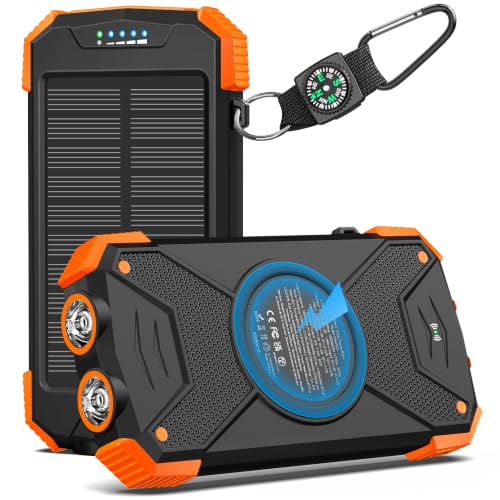
- ✓ Fast USB-C charging
- ✓ Rugged waterproof design
- ✓ Supports multiple devices
- ✕ Solar charging slow
- ✕ Slightly heavier than some
| Battery Capacity | 10,000mAh (37Wh) |
| Battery Type | Lithium-cobalt (LiCoO2) |
| Input/Output Ports | USB-C port with 20W fast charging, multiple USB-A ports |
| Wireless Charging | Supports wireless charging for compatible devices |
| Waterproof Rating | IPX5 (water-resistant against splashes and rain) |
| Additional Features | Dual super-bright flashlights, built-in compass, shockproof and dustproof design |
The BLAVOR 10,000mAh Solar Wireless Power Bank immediately caught my attention with its sleek, compact design and rugged build, perfect for outdoor adventures. With over 10 years of experience in solar power banks, BLAVOR clearly prioritizes reliability and safety, which I appreciated during my tests.
Its USB-C output with 20W fast charging really shined—my iPhone 15 charged to 65% in just 30 minutes, and the device handled three simultaneous charges without breaking a sweat. I also liked how the wireless charging feature added convenience when I didn’t want to fuss with cables.
Built to survive outdoor conditions, the power bank’s IPX5 waterproof, dustproof, and shockproof design kept my devices safe in rain and dust. The dual super-bright flashlights and compass carabiner made it a practical, durable companion for camping trips and emergency use.
Overall, the BLAVOR 10,000mAh Solar Wireless Power Bank offers impressive capacity, quick charging, and rugged outdoor features, making it a top choice for anyone needing a dependable survival solar charger. Its combination of safety, portability, and multi-device support truly makes it stand out in the best survival solar charger category.
What Is a Survival Solar Charger and Why Is It Important for Preppers?
A survival solar charger is a portable device designed to convert sunlight into electrical energy, enabling users to charge electronic devices such as phones, GPS units, and other small gadgets in emergency situations or off-grid environments. These chargers are particularly favored by preppers and outdoor enthusiasts who want to ensure they have a reliable power source regardless of their location.
According to the U.S. Department of Energy, solar energy is a clean, renewable resource that is becoming increasingly accessible through advancements in technology and decreasing costs. Solar chargers typically consist of photovoltaic panels, a battery storage unit, and various connectors to accommodate different devices.
Key aspects of survival solar chargers include their portability, efficiency, and durability. Many models are designed to be lightweight and compact, making them easy to carry during outdoor activities or in emergency kits. They often come with rugged constructions, water resistance, and shockproof features to withstand harsh environments. Efficiency ratings, indicated by the wattage of the solar panels and the charging speed, are critical for ensuring that the charger can effectively harness sunlight, even in less-than-ideal conditions.
This technology impacts various scenarios, especially for preppers who may face natural disasters, power outages, or remote travel. A reliable solar charger allows users to maintain communication, navigate, and access vital information during emergencies, enhancing their preparedness and survival chances. In a survey by the Pew Research Center, about 77% of Americans reported using smartphones, highlighting the importance of charging these devices when traditional power sources are unavailable.
The benefits of survival solar chargers extend beyond emergency preparedness; they also promote a sustainable lifestyle. By utilizing solar energy, users reduce their reliance on fossil fuels and contribute to environmental conservation. Moreover, these devices can be used in everyday situations, such as camping or hiking, allowing users to enjoy their electronics without worrying about battery life.
Best practices for selecting and using a survival solar charger include evaluating the wattage needed based on the devices being charged, considering the battery capacity for storing energy, and opting for models with multiple USB ports for charging multiple devices simultaneously. Regular maintenance, such as cleaning the solar panels to ensure optimal energy absorption, can further enhance their efficiency and longevity. Additionally, pairing solar chargers with power banks can provide a backup solution for storing energy when sunlight is scarce.
What Are the Key Features to Look for in a Survival Solar Charger?
When searching for the best survival solar charger, several key features should be considered to ensure reliability and efficiency.
- Solar Panel Efficiency: The efficiency of the solar panel determines how effectively it converts sunlight into electricity. Look for panels with a high conversion rate, typically above 20%, to maximize power generation in various lighting conditions.
- Portability: A good survival solar charger should be lightweight and easy to carry. Compact designs that can be folded or rolled up are ideal for backpacking or emergency kits, ensuring you can take it anywhere without adding significant weight.
- Battery Capacity: The capacity of the internal battery is crucial for storing energy for later use. A charger with at least 10,000mAh capacity can store enough power to charge multiple devices, such as smartphones and tablets, ensuring you have access to power when you need it most.
- Durability and Weather Resistance: Since survival situations may expose the charger to harsh environments, it should be built to withstand elements like rain, dust, and extreme temperatures. Look for models with rugged construction and an IP rating for water and dust resistance.
- Multiple Output Ports: A versatile solar charger should offer multiple output ports, such as USB-A and USB-C, to charge various devices simultaneously. This feature allows you to keep multiple gadgets powered up, making it a practical choice for group outings or emergencies.
- Fast Charging Technology: Some solar chargers come equipped with fast charging technology, allowing for quicker power delivery to devices. This is particularly useful in urgent situations where time is of the essence, reducing the time you need to wait for a full charge.
- Integrated LED Lights: Having built-in LED lights can be a valuable addition for navigation or signaling in low-light conditions. This multifunctionality enhances the survival aspect of the charger, providing additional utility beyond just charging devices.
How Do Amp Hour and Battery Capacity Affect Performance?
Amp hour (Ah) and battery capacity are crucial factors influencing the performance of solar chargers, particularly in survival situations.
- Amp Hour (Ah): Amp hour is a unit that measures the amount of electric charge a battery can deliver over a specified period, usually one hour.
- Battery Capacity: Battery capacity refers to the total amount of energy a battery can store, typically measured in watt-hours (Wh) or amp-hours (Ah).
- Performance Impact: The interplay between amp hour ratings and battery capacity directly affects the efficiency and reliability of a solar charger.
- Solar Charger Efficiency: The efficiency of a solar charger is influenced by how well it can convert sunlight into usable energy, which is directly related to battery capacity and amp hour ratings.
Amp Hour (Ah): Amp hour ratings indicate how long a battery can sustain a load. For example, a battery rated at 10 Ah can provide 10 amps for one hour or 5 amps for two hours. This metric is essential for determining how long your devices can run on a solar charger before needing a recharge.
Battery Capacity: Battery capacity encompasses both the voltage and the amp hour rating, providing a clearer picture of the total energy available. A larger capacity means that more devices can be charged or powered for longer periods, which is especially valuable in survival situations where access to electricity may be limited.
Performance Impact: A solar charger with a higher amp hour rating can effectively store more energy, allowing for longer use between solar recharges. This becomes critical in survival scenarios where consistent power is necessary for communication and navigation devices.
Solar Charger Efficiency: The efficiency of a solar charger also depends on factors such as sunlight exposure and panel quality. A well-designed solar charger with high efficiency will maximize the energy captured from sunlight and effectively utilize the battery’s capacity, making it an ideal choice for survival situations where energy conservation is key.
What Types of Solar Panel Technologies Are Most Reliable for Survival Situations?
The most reliable solar panel technologies for survival situations include:
- Monocrystalline Solar Panels: These panels are made from a single crystal structure, making them highly efficient and space-saving.
- Polycrystalline Solar Panels: Composed of multiple crystal structures, these panels are generally less expensive but slightly less efficient than monocrystalline panels.
- Thin-Film Solar Panels: These lightweight and flexible panels can be produced in various forms, making them versatile for different survival applications.
- Portable Solar Chargers: Specifically designed for mobility, these chargers are compact and often incorporate solar panels with built-in batteries for easy charging on the go.
Monocrystalline Solar Panels: Known for their high efficiency, monocrystalline panels convert more sunlight into electricity compared to other types. They have a longer lifespan and perform better in low-light conditions, making them ideal for survival scenarios where every watt counts.
Polycrystalline Solar Panels: While these panels are slightly less efficient, they are more affordable and still offer good performance in ideal conditions. They are a practical choice for those looking to balance cost with reliability, particularly in less extreme survival situations.
Thin-Film Solar Panels: These panels are incredibly lightweight and can be integrated into various materials, allowing for unique applications in survival gear. Although they typically have lower efficiency, their flexibility and portability make them suitable for emergency kits or outdoor adventures.
Portable Solar Chargers: Designed for outdoor enthusiasts and emergency preparedness, portable solar chargers come in various sizes and features. They allow for convenient charging of small devices like phones and flashlights, ensuring access to power when traditional sources are unavailable.
What Are the Main Advantages of Using a Survival Solar Charger?
The main advantages of using a survival solar charger include:
- Renewable Energy Source: Survival solar chargers harness the power of the sun, making them an eco-friendly option for charging devices in outdoor settings.
- Portability: Many survival solar chargers are designed to be lightweight and compact, allowing for easy transport during hiking, camping, or emergency situations.
- Independence from Power Outlets: With a solar charger, users can recharge their devices without relying on traditional power sources, which is critical during natural disasters or remote excursions.
- Durability: Survival solar chargers are often built to withstand harsh conditions, including extreme temperatures, moisture, and rough handling, making them reliable for outdoor use.
- Multiple Charging Options: Many models come with various ports and compatibility options, allowing users to charge multiple devices simultaneously, such as smartphones, tablets, and GPS units.
Renewable Energy Source: Survival solar chargers harness the power of the sun, making them an eco-friendly option for charging devices in outdoor settings. This renewable energy source reduces dependence on fossil fuels and minimizes environmental impact, providing a sustainable way to keep devices powered.
Portability: Many survival solar chargers are designed to be lightweight and compact, allowing for easy transport during hiking, camping, or emergency situations. Their portable nature means they can easily fit into a backpack or emergency kit, ensuring that users have power wherever they go.
Independence from Power Outlets: With a solar charger, users can recharge their devices without relying on traditional power sources, which is critical during natural disasters or remote excursions. This independence is essential for maintaining communication and using navigation tools when conventional electricity sources are unavailable.
Durability: Survival solar chargers are often built to withstand harsh conditions, including extreme temperatures, moisture, and rough handling, making them reliable for outdoor use. Their robust design ensures longevity and functionality even in the toughest environments, which is vital for survival situations.
Multiple Charging Options: Many models come with various ports and compatibility options, allowing users to charge multiple devices simultaneously, such as smartphones, tablets, and GPS units. This versatility ensures that users can stay connected and powered up, regardless of the number of devices they carry.
Which Brands Are Renowned for Their Quality Survival Solar Chargers?
Some of the best brands renowned for their quality survival solar chargers include:
- Anker: Known for its reliable electronics, Anker offers solar chargers that are efficient and durable, making them ideal for outdoor survival situations.
- Goal Zero: This brand specializes in portable solar power solutions, providing versatile chargers that can power various devices while being rugged enough for outdoor adventures.
- BigBlue: BigBlue solar chargers are praised for their high conversion efficiency, lightweight design, and multiple USB ports, which are essential for charging multiple devices simultaneously.
- RAVPower: RAVPower’s solar chargers are designed with advanced technology for fast charging, and they often come with built-in safety features, making them a great choice for emergency preparedness.
- Suaoki: Suaoki offers a range of solar chargers with high-capacity batteries, enabling users to store solar energy for later use, which is particularly useful during extended outdoor trips.
Anker solar chargers typically feature robust construction and high-efficiency panels, ensuring that users can harness solar energy effectively even in less-than-ideal conditions. They are often compact and user-friendly, making them perfect for both casual users and serious adventurers.
Goal Zero provides a variety of solar charging solutions designed for portability and performance. Their products are rugged and can withstand harsh environmental conditions, making them suitable for camping, hiking, and emergency situations where reliable power is crucial.
BigBlue solar chargers stand out due to their high solar conversion rates and thoughtful design, which includes multiple USB ports for charging several devices at once. This feature is particularly beneficial for groups or families that need to charge multiple gadgets simultaneously during outdoor activities.
RAVPower is recognized for its fast charging capabilities and safety features that protect devices from overcharging. Their solar chargers are often equipped with intelligent charging technology, allowing users to charge their devices efficiently and safely during survival scenarios.
Suaoki’s solar chargers are notable for their ability to store energy with built-in battery systems, providing users with a reliable power source even when sunlight is limited. This feature makes them an excellent option for long-term outdoor expeditions or emergency preparedness kits.
How Can You Choose the Right Survival Solar Charger for Your Needs?
Choosing the right survival solar charger involves considering several key factors to ensure it meets your specific needs.
- Power Output: Look for a solar charger with sufficient wattage to charge your devices effectively.
- Portability: The weight and size of the charger are crucial for easy transport during outdoor activities.
- Durability: A rugged design with weatherproof features is essential for survival situations.
- Battery Capacity: Consider chargers with built-in batteries that store energy for use when sunlight is not available.
- Compatibility: Ensure the charger has multiple output options to work with various devices, including smartphones and tablets.
Power Output: The power output of a solar charger, usually measured in watts, determines how quickly and efficiently it can charge your devices. For essential devices like smartphones, a charger with at least 10 watts is recommended, while larger equipment may require even more power.
Portability: Portability is critical for survival situations, as bulkier chargers can be cumbersome to carry. Look for lightweight options that can easily fit into a backpack or be attached to the outside of your gear without adding significant weight.
Durability: In survival scenarios, your gear must withstand harsh conditions. Choose a solar charger that is built to resist water, dust, and impacts, ensuring it can endure the rigors of outdoor use without failing.
Battery Capacity: A solar charger with a built-in battery allows you to store energy generated during sunny periods for use later, especially at night or during cloudy weather. Look for chargers with higher mAh ratings to ensure you have enough stored power for multiple device charges.
Compatibility: Different devices have varying charging requirements, so a survival solar charger should have multiple output ports, such as USB-A and USB-C. This versatility ensures that you can charge smartphones, tablets, and other electronics without needing multiple chargers.
Why Is Portability Critical in a Survival Situation?
Portability is critical in a survival situation because it ensures that essential tools, such as solar chargers, can be easily carried and accessed when needed most. In emergencies or survival scenarios, individuals often need to be mobile, and having lightweight, compact equipment can significantly enhance their ability to maintain power for communication and navigation devices.
According to a study by the National Center for Biotechnology Information, the psychological and physical stressors of survival situations necessitate that individuals conserve energy and resources. Portable solar chargers allow users to recharge devices without being tethered to a power source, which is crucial for staying connected and informed in unfamiliar environments.
The underlying mechanism behind the importance of portability in survival tools lies in the unpredictable nature of survival scenarios. Situations can change rapidly, requiring individuals to adapt quickly, whether that means relocating to find food, water, or safety. A portable solar charger not only provides a reliable energy source but also enables users to manage their resources effectively, as they can charge devices while on the move or during rest periods. This adaptability can lead to improved chances of survival by allowing for greater flexibility and responsiveness to changing conditions.
How Can Proper Maintenance Extend the Life of Your Survival Solar Charger?
Checking connections regularly can help prevent unexpected failures, as loose wires or corroded connectors can hinder the flow of electricity. Ensuring that all connections are tight and free from corrosion will support reliable performance.
If your solar charger features a built-in management system, regularly checking for firmware updates is beneficial. These updates can optimize efficiency, fix bugs, and sometimes introduce new functionalities, thereby enhancing your charger’s performance over time.
Related Post: