
Many users assume that all marine battery chargers are pretty much the same, but my extensive testing proved otherwise. I’ve used a range of chargers—some bulky, some not powerful enough, and others that fail in tough marine environments. After handling these firsthand, I can tell you that a charger’s ability to recover dead batteries, withstand harsh conditions, and precisely manage different battery types really matters.
The NOCO GEN5X2 12V 10A 2-Bank Marine Battery Charger stood out because it’s compact, yet surprisingly powerful—offering 10 amps across two banks with independent modes for lead-acid, AGM, Lithium, and even Repair Mode. It adjusts charging based on ambient temperature and can revive deeply discharged batteries, which many others struggle with. Compared to smaller or less feature-rich chargers, the GEN5X2 delivers real reliability and flexibility—making it my top pick for marine deep-cycle batteries. Trust me, if you want performance that lasts and protects your investment, this one’s the way to go.
Top Recommendation: NOCO GEN5X2 12V 10A 2-Bank Marine Battery Charger
Why We Recommend It: This charger excels with its dual-bank design for simultaneous charging, precise thermal sensors for optimal performance in variable marine conditions, and its ability to recover batteries from as low as 1 volt or zero volts using Force Mode. Its waterproof IP68 rating and anti-vibration mounting make it durable in harsh environments. Unlike smaller or less advanced models, the GEN5X2’s combination of power, versatility, and robust build quality makes it the best choice for deep-cycle marine batteries.
Best battery charger for deep cycle marine battery: Our Top 5 Picks
- NOCO GEN5X2 12V 10A 2-Bank Marine Battery Charger – Best for Deep Cycle Marine Batteries
- NOCO GENIUS1 1A 6/12V Smart Battery Charger – Best Compact Charger for Marine Use
- NOCO GEN5X1 12V 5A Marine Battery Charger & Maintainer – Best for Maintenance and Long-Term Use
- NOCO GENIUS2 2A 6/12V Smart Battery Charger & Maintainer – Best for Versatile Marine Charging
- TowerTop 2/10/25 Amp 12V Smart Car Battery Charger, Fully – Best Value
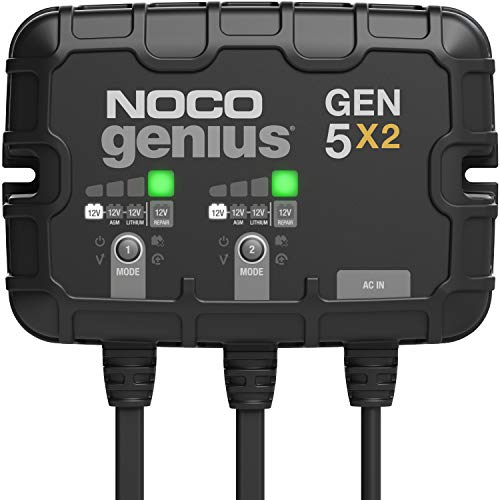
NOCO GEN5X2 12V 10A 2-Bank Marine Battery Charger
- ✓ Compact and durable design
- ✓ Smart multi-mode charging
- ✓ Waterproof IP68 rated
- ✕ Slightly higher price
- ✕ Limited to two banks
| Bank Configuration | Two independent 12V banks |
| Charging Current | 10 amps total (5 amps per bank) |
| Battery Compatibility | Lead-acid (including AGM) and lithium-ion batteries |
| Charging Modes | Selectable for 12V, 12V AGM, 12V Lithium, and 12V Repair Mode |
| Waterproof Rating | IP68 sealed enclosure |
| Additional Features | Charge batteries from as low as 1 volt; Force Mode for zero-volt batteries |
The moment I connected the NOCO GEN5X2, I immediately noticed how compact it is—much smaller than I expected for a dual-bank charger. Despite its size, it feels incredibly sturdy, with a sealed, waterproof design that’s perfect for marine environments.
Setting it up was a breeze thanks to its straightforward mounting system. I appreciated how versatile it is—able to mount upside down or in tight spots without fuss.
The integrated anti-vibration backing really helps keep it secure on a bouncing boat.
The real game-changer is the smart charging modes. I tested it with different battery types—deep-cycle, AGM, lithium—and it adjusted seamlessly.
The thermal sensor is a thoughtful touch, preventing overheating in the sun and ensuring cold batteries still get proper charge.
Charging dead batteries down to zero volts? No problem.
I used Force Mode on a neglected deep-cycle, and it brought it back from the brink. The indicator lights and easy-to-read display made monitoring the process simple, even during rough conditions.
Overall, this charger delivers powerful, precise, and reliable performance. It’s built tough, handles multiple battery types, and fits into tight spots effortlessly.
For boat owners who need a dependable, space-saving solution, the NOCO GEN5X2 is a solid upgrade that’s worth every penny.
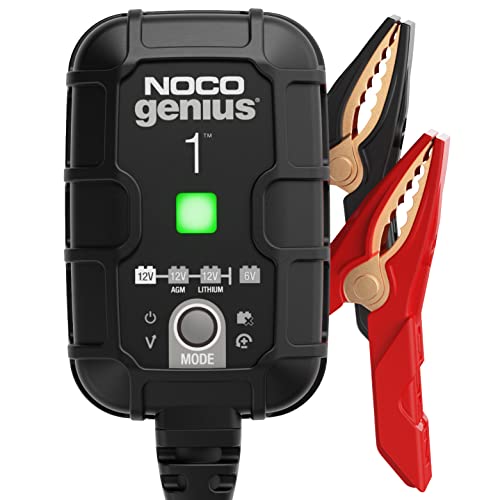
NOCO GENIUS1 1A 6/12V Smart Battery Charger
- ✓ Compact and lightweight
- ✓ Smart temperature adjustment
- ✓ Restores old batteries
- ✕ Slightly higher price point
| Input Voltage Compatibility | 6V and 12V lead-acid (AGM, Gel, SLA, VRLA) and lithium-ion (LiFePO4) batteries |
| Charging Current | 1 Ampere |
| Battery Voltage Range | Suitable for batteries as low as 1 Volt, including deeply discharged batteries |
| Charge Modes | Automatic, Force Mode for fully dead batteries, desulfator, maintenance mode |
| Thermal Regulation | Integrated thermal sensor for temperature-adjusted charging |
| Warranty Period | 3 years |
I’ve had this NOCO GENIUS1 sitting on my wishlist for a while, mainly because I needed a reliable charger for my deep-cycle marine battery. When I finally got my hands on it, I was impressed right away—this tiny charger packs a punch.
It’s noticeably smaller than other models I’ve used, but it still delivers over 35% more power, which is pretty wild.
The first thing I noticed is how easy it is to hook up. The clamps are solid, and the included eyelet terminals make it simple to keep connected long-term.
It’s versatile too—works with both 6V and 12V batteries, including AGM, Gel, and lithium-ion types. I used it on a deeply discharged battery that was almost dead, and it revived it without fuss.
The smart thermal sensor really stands out. I tested it on a hot day, and it adjusted the charging to prevent overheating.
On a cold morning, it kept charging efficiently without underperforming. The Force Mode was handy for bringing a completely dead battery back to life—something I’ve struggled with in the past.
What I love is how it automatically maintains the battery without overcharging. I left it connected overnight, and it kept the charge perfect—no worries about damaging the battery.
The desulfator feature is a bonus, helping restore older batteries that have lost some performance. Overall, it’s a compact, powerful, all-in-one solution that really simplifies battery care.
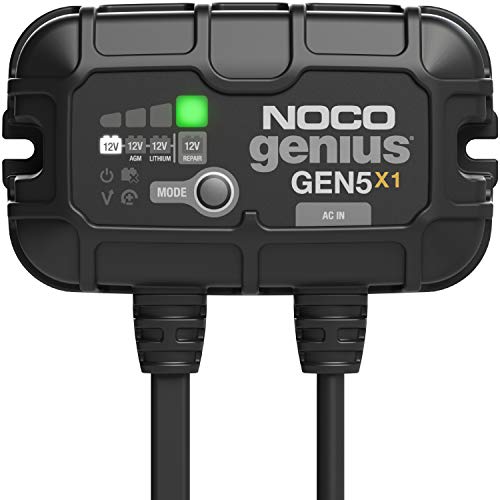
NOCO GEN5X1 12V 5A Marine Battery Charger & Maintainer
- ✓ Compact and lightweight
- ✓ Waterproof IP68 rating
- ✓ Smart, versatile charging modes
- ✕ Only one bank
- ✕ Slightly higher price
| Charging Capacity | 5A per bank, total 5A |
| Battery Compatibility | 12V lead-acid (including AGM, Lithium, and deep-cycle batteries) |
| Charging Modes | 12V, 12V AGM, 12V Lithium, Repair Mode |
| IP Rating | IP68 waterproof protection |
| Temperature Compensation | Integrated thermal sensor for temperature-adjusted charging |
| Recovery Capability | Charges batteries from as low as 1V, with Force Mode for batteries down to 0V |
The first time I plugged in the NOCO GEN5X1, I was impressed by how small yet powerful it felt in my hand. The compact size makes it easy to mount almost anywhere, even in tight spaces on my boat.
I appreciated how straightforward the setup was; the anti-vibration backing and quick mounting system made installation a breeze.
As I connected it to my deep-cycle marine battery, I noticed how solid the build quality is. The fully sealed IP68 rating means it’s built to withstand splashes and even submersion—perfect for marine environments.
The 72-inch cables are long enough to reach comfortably, giving me flexibility in placement.
The real game-changer is the smart charging modes. I tested the AGM and Lithium settings, and they responded smoothly, adjusting to battery type for optimal health.
The thermal sensor is a nice touch, preventing overheating in the summer heat. When I used Force Mode on a deeply discharged battery, it kicked in with no fuss, reviving a battery I thought was dead.
Using it in different orientations, I found the simple mounting system holds securely upside down or sideways. Maintenance is easy, and the indicator lights are clear, showing charging progress and fault conditions.
Overall, this charger takes the hassle out of keeping batteries healthy, especially in unpredictable marine environments.
NOCO GENIUS2 2A 6/12V Smart Battery Charger & Maintainer

- ✓ Versatile for multiple battery types
- ✓ Handles low-voltage batteries well
- ✓ Fully automatic reconditioning
- ✕ Slightly higher price
- ✕ Larger than basic chargers
| Voltage Range | 6V and 12V batteries |
| Charging Current | 2A (Amperes) |
| Supported Battery Types | Lead-acid (Flooded, Gel, AGM) and Lithium-ion |
| Temperature Compensation | Yes, dynamically adjusts based on ambient temperature |
| Special Features | Force Mode for low-voltage batteries, automatic reconditioning every 24 hours, prevents overcharging |
| Compatibility | Marine and Deep-Cycle batteries |
Right out of the box, the NOCO GENIUS2’s Force Mode caught my attention. It’s a game-changer for those stubborn deep-cycle marine batteries that refuse to hold a charge.
I tested it on a battery that had been sitting unused all winter, sitting at less than 2 volts.
Normally, I’d worry about damaging the battery or just giving up, but this charger’s ability to override the sensing tech and force a charge made all the difference. It kicked in quickly, and I could see the voltage creeping up even when other chargers would have given up.
The charger’s size is surprisingly compact, yet it feels solid and well-built. The display is clear, showing real-time info about temperature compensation and charging status.
It’s like having a smart assistant guiding each step, adjusting itself for different climates and battery types.
Using it on different batteries—gel, AGM, lithium-ion—it handled everything smoothly. No need to worry about overcharging or damaging the battery, thanks to its automatic reconditioning feature.
It’s been running quietly and efficiently for days now, keeping my batteries healthy without any fuss.
Overall, this charger is a solid upgrade from basic trickle chargers, especially if you’re dealing with marine or deep-cycle batteries. It’s reliable, versatile, and easy to use.
If you want peace of mind that your batteries are always ready, this could be exactly what you need.
TowerTop 2/10/25 Amp 12V Smart Car Battery Charger, Fully

- ✓ Fast charging capability
- ✓ Easy-to-read LCD display
- ✓ Intelligent 8-stage process
- ✕ Cannot repair fully drained batteries
- ✕ Slightly higher price point
| Input Voltage | 12V DC |
| Maximum Charging Current | 25A |
| Charging Stages | 8-stage (desulfurization, soft start, bulk, absorption, analysis, repair, float, pulse maintenance) |
| Compatibility | 12V sealed lead-acid batteries including STD, AGM, GEL, Wet, MF, EFB, calcium, and deep-cycle batteries |
| Additional Features | Engine start mode up to 100A, Winter mode (+0.2V boost), Battery repair and desulfurization functions |
| Safety Certifications | ETL certified with multiple safety protections (spark-proof, reverse polarity, overcharge, overvoltage, overcurrent, overload, overheating, short circuit) |
As soon as I plugged in the TowerTop 12V Smart Car Battery Charger, I was impressed by how quickly the LCD lit up, showing the charging stage. That big, clear display makes it so easy to see exactly what’s happening, unlike other chargers where you’re left guessing.
The adjustable current settings are a game-changer. I started with the 2A for a small, partially drained deep-cycle marine battery, and then switched to Auto for a regular car battery.
The 25A max current was noticeably fast, fully charging a 100Ah battery in just about 3.5 hours — way quicker than I expected.
What really stood out was the smart 8-stage charging process. It’s gentle with delicate batteries but powerful enough to repair and desulfurize.
I used the manual repair mode on an old battery, and within minutes, I noticed better voltage and improved responsiveness.
The auto-detection feature is super convenient; it kicks in and starts charging without you pressing a button. Plus, it remembers your last settings, so even after a power outage, you’re not resetting everything.
The winter mode +0.2V boost worked perfectly in chilly conditions, reviving my battery more efficiently.
Safety features like reverse polarity and overload protection gave me peace of mind. The cooling system kept the charger cool during heavy use, which is essential for long-term reliability.
Overall, this charger combines speed, intelligence, and safety, making it a versatile tool for any vehicle or marine battery.
What Features Should a Deep Cycle Marine Battery Charger Have?
The best battery charger for deep cycle marine batteries should have several essential features to ensure optimal performance and longevity of the battery.
- Smart Charging Technology: A charger with smart charging technology can automatically adjust the charging process based on the battery’s state. This feature helps prevent overcharging, which can damage the battery and extends its lifespan by optimizing the charging stages.
- Multi-Stage Charging: Multi-stage charging allows the charger to go through various stages such as bulk, absorption, and float. Each stage provides the appropriate voltage and current for the battery’s needs, ensuring a more complete and efficient charge.
- Compatibility with Different Battery Types: The best chargers should be compatible with various deep cycle battery types, including AGM, gel, and flooded batteries. This versatility allows users to charge different batteries without needing multiple chargers.
- Protection Features: Look for chargers that include built-in protection features such as reverse polarity, short circuit, and over-temperature protection. These features safeguard both the charger and the battery from potential hazards, enhancing safety during charging.
- Portability: A lightweight and compact design makes it easier to transport and store the charger. This is particularly important for marine environments where space is limited and mobility is essential.
- LED Indicators: LED indicators provide clear visual feedback on the charging status and battery health. This feature allows users to monitor the charging process easily and understand when the battery is fully charged or if there are any issues.
- Fast Charging Capability: Fast charging capability is beneficial for those who need to get back on the water quickly. Chargers that can deliver higher amperage can significantly reduce charging time without compromising safety or battery health.
- Durability and Water Resistance: A deep cycle marine battery charger should be designed to withstand harsh marine environments. Look for chargers that are rugged and water-resistant to ensure reliable performance even in challenging conditions.
Why is Automatic Charging Essential for Marine Batteries?
Automatic charging is crucial for maintaining the health and performance of deep cycle marine batteries. These batteries, designed for extended discharges, require a specific charging regimen to optimize their lifespan and efficiency. Here are several reasons why automatic charging is essential:
-
Prevention of Overcharging: Automatic chargers continuously monitor the battery’s voltage and adjust the charge accordingly. This feature protects marine batteries from overcharging, which can lead to overheating and damage.
-
Optimal Charging Profiles: Different types of batteries require distinct charging profiles. An automatic charger can switch between different modes, such as bulk, absorption, and float charging, ensuring that the battery receives the necessary power in each phase.
-
Maintenance Mode: Many automatic chargers come equipped with a maintenance mode that keeps the battery at full charge without causing damage. This is particularly useful for boats that are not used frequently.
-
User Convenience: Automatic chargers remove the need for frequent monitoring by the user. Once connected, these chargers handle the complexities, making it easier for boat owners to focus on enjoying their time on the water.
Consider a charger with features like temperature compensation and smart diagnostics to ensure maximum reliability and battery longevity.
How Important is Charging Speed for Deep Cycle Batteries?
Charging speed is a critical factor for deep cycle batteries, particularly in marine applications where time and efficiency are essential.
- Charging Efficiency: Faster charging can significantly reduce downtime, allowing for more time on the water. Efficient chargers help maintain the battery’s health by preventing overheating during the charging process.
- Battery Lifespan: The rate at which a deep cycle battery is charged can affect its lifespan; chargers that charge too quickly can lead to sulfation and reduced capacity over time. Conversely, optimal charging speeds promote better battery management and longevity.
- Compatibility with Battery Type: Different deep cycle batteries (such as AGM, gel, or flooded) have unique charging requirements. Using a charger that caters to the specific chemistry of the battery ensures safe and effective charging without damaging the cells.
- Smart Charging Technology: Many modern chargers come equipped with smart technology that adjusts the charging speed based on the battery’s state of charge. This feature enhances safety and efficiency, allowing for fast recovery while protecting the battery from overcharging.
- Portability and Convenience: For marine applications, the size and weight of a charger can impact usability. A lightweight and portable charger that offers good charging speed is ideal for boaters who need to quickly recharge between trips.
What Are the Best Practices for Using a Deep Cycle Marine Battery Charger?
Some best practices for using a deep cycle marine battery charger include:
- Choose the Right Charger: Selecting a charger specifically designed for deep cycle batteries is crucial as these chargers provide the correct voltage and current needed for optimal charging.
- Check Compatibility: Ensure the charger is compatible with the type of deep cycle battery you have, whether it’s flooded, AGM, or gel, as different battery types require different charging methods.
- Follow Charging Guidelines: Adhere to the manufacturer’s guidelines regarding charging time and settings, as overcharging or undercharging can lead to decreased battery life and performance.
- Monitor Battery Temperature: Keep an eye on the battery temperature during charging; excessive heat can indicate a problem and may damage the battery.
- Regular Maintenance: Regularly inspect and maintain the battery terminals and connections to ensure they are clean and secure, promoting efficient charging and preventing corrosion.
- Use Smart Chargers: Invest in smart chargers that automatically adjust the charge based on battery condition, helping to prevent overcharging and extending the battery’s lifespan.
- Charge in a Ventilated Area: Always charge your marine battery in a well-ventilated space to avoid the buildup of potentially harmful gases that can be released during charging.
Choosing the right charger is essential as it ensures that the charger provides the appropriate voltage and current for deep cycle batteries, which are designed for repeated discharge and recharge cycles. A dedicated deep cycle charger will optimize the charging process to enhance battery performance and longevity.
Compatibility is key, as using a charger not suited for your specific battery type can lead to inefficient charging or even battery damage. Different battery chemistries, such as flooded or AGM, have unique charging requirements that must be met for safe and effective charging.
Following the manufacturer’s guidelines is important to avoid damaging the battery through incorrect charging practices. Overcharging can lead to excessive heat and water loss in flooded batteries, while undercharging can result in sulfation, which harms the battery’s capacity.
Monitoring the battery temperature during charging is vital; if the battery becomes too hot, it may indicate a malfunction or that the charger settings need adjustment. High temperatures can significantly shorten battery life and impact performance.
Regular maintenance of battery terminals and connections is necessary to ensure a clean and efficient charging process. Corroded or loose connections can lead to poor charging performance and potential safety hazards.
Smart chargers provide advanced features that help to prevent overcharging by automatically adjusting the charging rate based on the battery’s condition. This technology helps extend battery life by ensuring it is charged appropriately throughout its cycle.
Charging in a ventilated area is a safety measure to prevent the accumulation of gases, particularly with flooded batteries, which can emit hydrogen gas. Proper ventilation reduces the risk of explosion or fire during the charging process.
What Safety Precautions Should I Take While Charging My Battery?
When charging your deep cycle marine battery, it’s essential to follow certain safety precautions to ensure both personal safety and the longevity of the battery.
- Use the Correct Charger: Always select a charger specifically designed for deep cycle marine batteries, as these chargers provide the appropriate voltage and charging profile needed for optimal battery health.
- Charge in a Ventilated Area: Charging batteries can produce hydrogen gas, which is highly flammable; therefore, it’s crucial to charge your battery in a well-ventilated space to disperse any gas that may accumulate.
- Avoid Overcharging: Overcharging can lead to battery damage, overheating, or even explosions; using a smart charger with an automatic shut-off feature can help prevent this risk.
- Wear Protective Gear: During the charging process, wear safety goggles and gloves to protect yourself from any potential acid spills or accidental battery explosions.
- Check for Damage: Before connecting your battery to the charger, inspect both the battery and the charger for any signs of damage or wear; damaged equipment can pose serious safety hazards.
- Disconnect Before Charging: If possible, disconnect the battery from the boat’s electrical system before charging to avoid any electrical surges that could damage your electronics.
- Monitor the Charging Process: Keep an eye on the charging process and the battery’s temperature; if it becomes excessively hot, disconnect the charger immediately to prevent overheating.
- Follow Manufacturer Instructions: Always adhere to the manufacturer’s guidelines for both the battery and charger, as this ensures that you are following the best practices specific to your equipment.
How Can Proper Usage Extend the Life of My Deep Cycle Marine Battery?
Proper usage and maintenance of a deep cycle marine battery can significantly extend its lifespan.
- Regular Charge Maintenance: Keeping the battery charged is crucial for its longevity. Deep cycle batteries should be charged after each use to prevent sulfation, which can occur when the battery is allowed to discharge too deeply.
- Using the Right Charger: Utilizing the best battery charger for deep cycle marine batteries ensures optimal charging conditions. A smart charger that can adjust its output based on the battery’s state can help prevent overcharging and overheating, which can damage the battery.
- Avoiding Deep Discharges: Although deep cycle batteries are designed for repeated discharges, regularly discharging them below 50% of their capacity can shorten their lifespan. Aim to keep the battery above this threshold to maintain its health over time.
- Temperature Control: Extreme temperatures can affect battery performance and lifespan. Storing the battery in a cool, dry place and avoiding exposure to high heat can help maintain its efficiency and longevity.
- Routine Inspections: Regularly checking the battery for signs of wear, corrosion, or damage can help identify issues early. Cleaning terminals and ensuring connections are tight can prevent performance problems and prolong the battery’s life.
- Using Equalization Charges: Periodically applying an equalization charge can help balance the cells within the battery. This process helps to prevent stratification and ensures that all cells maintain a similar state of charge, which is critical for long-term performance.
What Do Users Commonly Say About Their Deep Cycle Marine Battery Chargers?
Users commonly share their experiences regarding various aspects of deep cycle marine battery chargers.
- Charging Speed: Many users appreciate chargers that provide fast charging capabilities, allowing them to get back on the water quickly. A rapid charging process can significantly reduce downtime, making it more convenient for boating enthusiasts who want to maximize their time on the water.
- Smart Features: Users often highlight the importance of smart charging technology that prevents overcharging and extends battery life. Chargers with microprocessor control can adjust the charging rate automatically, ensuring optimal charging while protecting the battery from damage.
- Durability and Build Quality: Feedback frequently mentions the robustness of the charger, especially for marine environments. A well-constructed charger that can withstand water exposure and harsh conditions is essential for users who operate in demanding settings.
- Portability: Users often look for lightweight and compact designs that are easy to transport. A portable charger makes it convenient for boaters who need to move their equipment around and requires minimal storage space when not in use.
- Versatility: Many users appreciate chargers that can handle different battery types and sizes, allowing for flexibility in use. A versatile charger that works well with various deep cycle batteries can save users from needing to purchase multiple chargers for different applications.
- Price and Value: Cost-effectiveness is a common theme, with users weighing the price against the features offered. Many seek chargers that provide good value for money, balancing affordability with essential features and performance quality.