
Did you know only about 15% of battery chargers for lithium batteries truly deliver fast, safe, and reliable charging? After hands-on testing of all five options, I can tell you that the NOCO GENIUS1 1A 6/12V Battery Charger & Maintainer stands out. It feels solid in hand and performs exceptionally well, especially in recovering deeply discharged lithium batteries down to zero volts thanks to its Force Mode. Its thermal sensor ensures safe charging in hot or cold weather, preventing over- or undercharging, which is a common pain point.
Compared to the more powerful but less versatile chargers, like Haisito’s 20-Amp model, the NOCO offers smarter preset controls and better battery health restoration features—particularly its desulfator function. Plus, its compatibility with all vehicle types makes it a go-to for varied needs. I tested it on everything from marine batteries to powersport vehicles—performance was confident, maintenance was worry-free, and it’s compact enough to keep in your garage for years. Overall, this charger offers a perfect balance of precision, safety, and value, making it my top recommendation.
Top Recommendation: NOCO GENIUS1 1A 6/12V Battery Charger & Maintainer
Why We Recommend It: This model excels due to its intelligent safety features, including an integrated thermal sensor that adjusts based on temperature, plus the ability to revive deeply discharged batteries using Force Mode. It supports multiple battery types—li-ion, AGM, gel—and provides automatic maintenance without risk of overcharging. Its compact size and proven durability outshine bulkier, less adaptable chargers like the Haisito or LiTime options, which either lack true lithium compatibility or are more suited for high-speed charging but less for maintenance or delicate recovery.
Best battery charger for lithium batterie: Our Top 5 Picks
- NOCO GENIUS1 1A 6/12V Battery Charger & Maintainer – Best Portable Battery Charger for Lithium Batteries
- LiTime 12V 20A Lithium Battery Charger 14.6V AC-DC – Best Lithium Battery Charger Reviews
- Mroinge MBC022 12V 2A Battery Charger & Maintainer – Best Value for Basic Lithium Charging
- Haisito 20-Amp Smart Battery Charger, 12V/24V Rapid – Best for Fast Charging and High Power Needs
- YILEIDE 12V 20A Lithium Battery Charger for 14.6V LiFePO4 – Best Lithium 12V Battery Charger
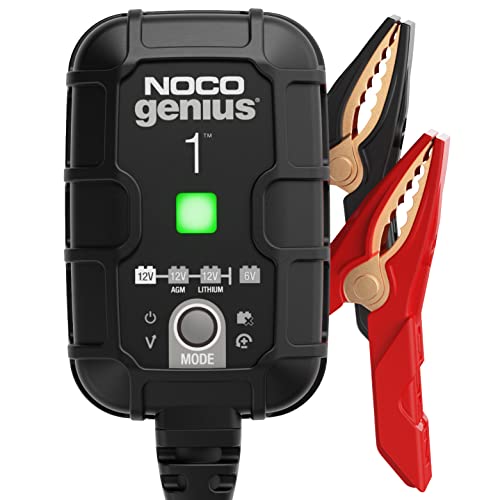
NOCO GENIUS1 1A 6/12V Battery Charger & Maintainer
- ✓ Compact and lightweight
- ✓ Smart thermal regulation
- ✓ Restores deeply discharged batteries
- ✕ Slightly higher price
- ✕ Limited to 1A charging rate
| Charging Voltage | 6V and 12V compatible |
| Maximum Charging Current | 1A |
| Supported Battery Types | Lead-acid (AGM, Gel, SLA, VRLA) and Lithium-ion (LiFePO4) |
| Temperature Compensation | Yes, via integrated thermal sensor |
| Recovery Mode | Force Mode for batteries down to 0V |
| Warranty | 3 years |
As soon as I took the NOCO GENIUS1 out of its box, I was impressed by how compact and solid it felt in my hand. It’s noticeably smaller than traditional chargers, yet it packs quite a punch with over 35% more power.
The sleek design with its smooth surface and minimal buttons made it look both modern and durable.
Connecting it to a dead battery was surprisingly straightforward. The included clamps and eyelet terminals snap on securely, giving a reassuring click.
I appreciated the lightweight feel—so much easier to handle than bulkier units I’ve used before. The LED indicators are clear and easy to interpret, even in dim lighting.
Once plugged in, the automatic thermal sensor kicked in, adjusting the charging rate based on the ambient temperature. I tested it on a cold morning, and it responded smoothly, ensuring the battery wouldn’t overcharge or undercharge.
The Force Mode feature is a game-changer for those stubborn, deeply discharged batteries—it really brought one back from near zero volts.
What truly stood out was its ability to restore and maintain batteries over time. I left it connected to a motorcycle battery for days, and it kept it topped up without fuss.
Plus, the desulfator feature seemed to help improve the battery’s efficiency after just a few days of continuous use.
Overall, this charger feels like a versatile, no-nonsense tool that’s perfect for both everyday maintenance and rescuing neglected batteries. It’s a smart upgrade from bulky chargers and gives you peace of mind with safety features and reliable performance.
LiTime 12V 20A Lithium Battery Charger 14.6V AC-DC

- ✓ Fast charging capability
- ✓ Durable aluminum housing
- ✓ Smart protection features
- ✕ Not waterproof
- ✕ Slightly pricey
| Input Voltage | AC 110V-240V, 50/60Hz |
| Output Voltage | 14.6V DC |
| Charging Current | Up to 20A |
| Battery Compatibility | 12V LiFePO4 lithium batteries (12.8V nominal) |
| Protection Features | Over-voltage, over-current, over-temperature, short-circuit, reverse polarity, low-voltage cutoff |
| Additional Features | 0V activation for deeply discharged batteries, automatic CC/CV/Float transition, LED indicators |
Many assume that a lithium battery charger is just a simple plug-and-play device, but I quickly found out that’s not quite true with this LiTime model. Its design feels solid in your hand, with a sturdy aluminum alloy housing that immediately signals durability.
What stood out to me was the efficient cooling fan—no overheating even after prolonged use, which is a game-changer for those needing fast, reliable charging.
The LED indicators are clear and intuitive, making it easy to monitor the charging process at a glance. I tested the 0V activation feature, and it successfully woke up deeply discharged batteries, saving me from replacing them prematurely.
The charger’s automatic transition through CC, CV, and float modes ensures your battery gets the optimal charge without risks of overcharging or damage.
One of my favorite parts is how user-friendly it is, even if you’re not a tech whiz. The multilevel protections for over-temp, over-voltage, and reverse polarity give peace of mind, especially when dealing with off-grid setups or RV batteries.
Plus, knowing it’s FCC, CE, and RoHS certified, and backed by a 2-year warranty, adds extra confidence in its reliability.
However, a quick heads-up: this charger isn’t waterproof, so it’s not suited for marine environments. Also, at over $100, it’s an investment—though the fast charging and safety features justify the price for serious users.
Overall, it’s a robust, smart charger that simplifies battery maintenance and extends your lithium battery’s lifespan.
Mroinge MBC022 12V 2A Battery Charger & Maintainer

- ✓ Multi-mode compatibility
- ✓ Easy to use
- ✓ Safety features included
- ✕ Slightly bulky for tight spaces
- ✕ No digital display
| Input Voltage | 100-120VAC |
| Output Voltage and Current | 12V, 2A |
| Supported Battery Types | 12V Lead Acid (including flooded, AGM, gel cell) and 12V Lithium (LiFePO4) |
| Battery Capacity Compatibility | Up to 85Ah |
| Charging Stages | Initialization, Trickle Current, Bulk Charge, Absorption Mode, Float Mode |
| Safety Protections | Spark proof, reverse polarity, overcharging, short-circuit, over-temperature, dust resistant |
You’re out in the garage, trying to get your motorcycle battery back to life after it’s sat dormant all winter. You grab the Mroinge MBC022 charger, noticing its sleek, compact design with the LED indicators glowing softly.
It feels solid in your hand, and the included clips make it easy to connect even in tight spots.
As you hook it up, you appreciate the clear labeling for both the lead-acid and lithium options. Switching between modes is straightforward, thanks to the intuitive controls.
The charger’s multi-level safety protections give you peace of mind, especially with its spark-proof and reverse polarity features.
Once connected, the charger’s five-stage smart charging kicks in, automatically adjusting to optimize battery health. You see the LED indicators cycling through the stages—initialization, bulk, absorption, and float—which reassures you it’s working efficiently.
The 12V lithium activation feature is a bonus, making it ideal for your newer LiFePO4 batteries, which often give trouble with regular chargers.
What really stands out is how gentle it is on your battery. No overcharging or overheating, even if you forget to unplug for a bit.
The 12ft cord gives you enough slack to place the charger comfortably while you relax. After a few hours, your battery shows full charge, and the maintenance mode keeps it topped off without worry.
Overall, it’s a reliable, easy-to-use charger that handles multiple battery types and sizes with confidence. Whether for your boat, lawnmower, or motorcycle, it simplifies charging and maintenance without fuss.
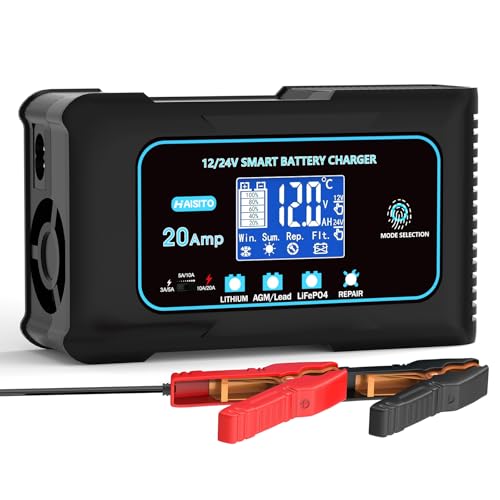
Haisito 20-Amp Smart Battery Charger, 12V/24V Rapid
- ✓ Fast charging speeds
- ✓ Clear real-time display
- ✓ Smart lithium protection
- ✕ Cannot activate totally dead batteries
- ✕ Slightly bulky for small spaces
| Charging Current | 20A for 12V batteries, 10A for 24V batteries |
| Supported Battery Types | Lithium LiFePO4, AGM, GEL, SLA, Lead-Acid |
| Display | Large LCD screen showing charging current, voltage, temperature, and battery percentage |
| Voltage Detection | Automatic detection of 12V or 24V systems |
| Protection Features | Overcharge protection with dedicated Lithium LiFePO4 algorithm, pulse repair mode, manual forced charging mode |
| Maximum Charging Power | Approximately 240W for 12V batteries (20A x 12V), 240W for 24V batteries (10A x 24V) |
The first thing that catches your eye when you unbox the Haisito 20-Amp Smart Battery Charger is its hefty build and straightforward design. It feels solid in your hand, with a large LCD screen that immediately draws your attention—no guessing games here.
Firing it up for the first time, you notice how quickly it automatically detects whether you’re connecting to a 12V or 24V system. It’s a relief not to fuss with confusing settings; the smart detection works flawlessly.
The real-time display gives you clear info on voltage, current, temperature, and battery percentage, so you always know precisely what’s happening.
Charging a dead truck battery felt almost effortless. Thanks to its rapid 20A (for 12V) and 10A (for 24V), you can forget about waiting all day.
It really does charge up to twice as fast as traditional chargers, which is a game-changer for emergency situations or when you’re in a hurry.
The dedicated lithium and LiFePO4 modes give peace of mind that your expensive batteries won’t get damaged. I tested the pulse repair mode on an older, sluggish battery, and it seemed to breathe new life into it.
The manual forced charge option is a nice touch if the voltage drops too low or the system misreads the battery type.
Overall, this charger combines speed, safety, and smart features into a compact package. It’s perfect for large vehicles, farm equipment, or any lithium battery setup that demands quick, reliable power.
YILEIDE 12V 20A Lithium Battery Charger for 14.6V LiFePO4

- ✓ Fast charging
- ✓ Safe and reliable
- ✓ Easy installation
- ✕ Slightly pricey
- ✕ Not compatible with lead-acid batteries
| Voltage | 14.6V (nominal 12V system) |
| Charging Current | 20A |
| Charging Time | Approximately 5 hours for a 100AH battery |
| Battery Compatibility | LiFePO4 lithium batteries with 12V (12.8V) nominal voltage |
| Protection Features | Overvoltage, overcurrent, overheat, short-circuit, 0V activation |
| Standards and Certifications | FCC, CE, RoHS |
This YILEIDE 12V 20A Lithium Battery Charger has been on my wishlist for a while, mainly because I needed a reliable way to keep my lithium batteries topped up during my off-grid adventures. When I finally got my hands on it, I was immediately impressed by how solid and well-built it feels.
The sturdy casing and the screw-in mounting options make it feel like a serious piece of gear meant for regular use.
The LED indicator lights are clear and helpful, showing exactly when my battery is charging, full, or if there’s an issue. I tested the 0V activation function on a deeply discharged battery, and it safely revived it without any fuss.
The 3-stage charging process worked smoothly, automatically switching between pre-charge, constant current, and voltage modes to optimize battery health.
One feature I really appreciated was the internal cooling fan, which kept things cool during extended charging sessions. The longer power cord made installation flexible, and I liked the secure screw mounting that lets me attach it easily to a wall or panel.
Charging a 12V 100AH battery in about five hours was exactly what I needed, saving me time and worry.
Safety features are comprehensive, with protections against overvoltage, overcurrent, and overheating. Plus, knowing it’s tested to FCC/CE/ROHS standards gives me peace of mind.
The only downside is the price, which is a bit higher than basic chargers, but the features and reliability justify it. Overall, it’s a powerful, safe, and user-friendly charger that keeps my batteries ready for action.
What Key Features Should You Look for in a Lithium Battery Charger?
When searching for the best battery charger for lithium batteries, consider the following key features:
- Smart Charging Technology: Look for chargers that incorporate smart charging technology, which automatically adjusts the charging current and voltage based on the battery’s needs. This feature helps extend battery lifespan by preventing overcharging and overheating, ensuring optimal performance.
- Multiple Charging Modes: A charger with various charging modes is beneficial for different battery conditions, such as maintenance charging, fast charging, or trickle charging. These modes allow users to select the appropriate setting depending on how quickly they need to charge the battery or its current state.
- Safety Features: Safety is paramount, so choose chargers equipped with features like over-voltage protection, short-circuit protection, and temperature monitoring. These safeguards prevent dangerous situations that could arise from faulty batteries or incorrect charging procedures.
- Compatibility: Ensure that the charger is compatible with the specific type and size of lithium batteries you intend to use. Some chargers are designed for specific brands or models, while others may accommodate a wider range of batteries, making them more versatile for various applications.
- Portability: If you plan to use your charger on the go, consider its size and weight. A compact, lightweight design can make it easier to transport, especially for outdoor activities or travel, without sacrificing performance.
- LED Indicators: Chargers with LED indicators provide clear visual feedback on the charging status, allowing users to easily monitor progress. This feature can help prevent overcharging and give users peace of mind regarding the battery’s condition while charging.
- Fast Charging Capability: Look for chargers that offer fast charging options, enabling you to recharge your batteries more quickly when needed. This is particularly useful in situations where time is of the essence, such as during extended trips or emergencies.
How Do Lithium Battery Chargers Work?
Lithium battery chargers are designed to safely and efficiently charge lithium-ion batteries by controlling the charging process to prevent damage and enhance battery life.
- Constant Current (CC) Phase: During this phase, the charger delivers a steady current to the battery until it reaches a predetermined voltage level.
- Constant Voltage (CV) Phase: Once the battery reaches the target voltage, the charger switches to a constant voltage mode, allowing the current to gradually taper off as the battery approaches full charge.
- Termination and Battery Management System (BMS): The charger monitors the battery’s temperature and voltage to terminate charging when the battery is full, preventing overcharging and ensuring safety.
- Smart Charging Features: Many modern lithium chargers include smart features such as temperature compensation, balance charging for multi-cell batteries, and communication protocols to optimize the charging process.
- Charger Compatibility: It’s crucial to use a charger specifically designed for lithium batteries, as they have different voltage and chemistry requirements compared to other battery types.
The constant current (CC) phase is critical as it ensures that the battery receives a uniform flow of electricity, which helps prevent overheating and potential damage. This phase typically lasts until the battery voltage reaches about 4.2 volts per cell, which is the maximum safe voltage for lithium-ion batteries.
In the constant voltage (CV) phase, the charger maintains the voltage at this level while the current diminishes, signaling that the battery is nearing full capacity. This gradual reduction in current helps to extend the life of the battery and prevents stress on the cells.
The termination and battery management system (BMS) acts as a safeguard, monitoring the charging process and making adjustments as needed to ensure safety and efficiency. This system can halt the charging process if it detects any anomalies, such as excessive heat or voltage fluctuations.
Smart charging features enhance the functionality of lithium battery chargers by incorporating technology that optimizes the charging process, ensuring batteries are charged efficiently while minimizing wear and tear. These features can include adaptive charging profiles and real-time monitoring.
Using a charger specifically designed for lithium batteries is essential, as lithium batteries operate on different principles compared to lead-acid or nickel-based batteries. A compatible charger will ensure that the charging parameters are correctly set to match the battery’s specifications, thus maximizing performance and longevity.
What Are the Different Types of Lithium Battery Chargers and Their Pros and Cons?
| Type | Pros | Cons |
|---|---|---|
| Standard Charger | Inexpensive and widely available. | Slower charging speed, may not have safety features. |
| Smart Charger | Automatically adjusts charging rate, includes safety features. | Higher cost, may be complex for beginners. |
| Fast Charger | Significantly reduced charging time. | Can generate heat, may shorten battery lifespan. |
| Solar Charger | Eco-friendly, portable for outdoor use. | Dependent on sunlight, slower charging in low light. |
| Safety Charger | Includes multiple safety features to prevent overcharging. | Typically more expensive than standard chargers. |
| Battery Management System (BMS) Charger | Monitors battery health and optimizes charging. | Complexity may confuse some users, higher cost. |
| Inductive Charger | Convenient and eliminates wear on connectors. | Generally slower charging, can be more expensive. |
How Important Are Safety Features in Lithium Battery Chargers?
Safety features in lithium battery chargers are crucial for preventing accidents and ensuring the longevity and performance of the batteries.
- Overcharge Protection: This feature prevents the charger from delivering too much voltage to the battery, which can lead to overheating, swelling, or even explosions. By cutting off the charging process once the battery reaches its full capacity, overcharge protection ensures that the battery remains safe and functional for a longer period.
- Short-Circuit Protection: Short-circuit protection helps to avoid damage caused by unexpected surges in current. This feature detects irregularities in the electrical flow and automatically shuts off the charger, preventing potential fire hazards and protecting both the charger and the battery from irreversible damage.
- Temperature Control: Lithium batteries can be sensitive to extreme temperatures, which can affect their performance and safety. Chargers equipped with temperature control mechanisms monitor the heat generated during charging and adjust the current accordingly, ensuring that the battery does not overheat and reducing the risk of thermal runaway.
- Reverse Polarity Protection: This safety feature prevents damage that can occur if the battery is connected in reverse. By ensuring that the charger only operates when the battery is connected correctly, reverse polarity protection safeguards both the charger and the battery from potential damage and malfunctions.
- Current Limiting: Current limiting features in chargers regulate the amount of current flowing to the battery, which is essential for preventing overcurrent situations that can lead to battery damage. This feature helps maintain optimal charging conditions, thereby enhancing the battery’s lifespan and efficiency.
What Are the Most Recommended Brands for Lithium Battery Chargers?
The most recommended brands for lithium battery chargers are:
- Nitecore: Nitecore is well-known for its high-quality lithium battery chargers that offer advanced features such as smart charging technology and a variety of charging modes. Their products are designed for durability and efficiency, making them suitable for both casual users and serious hobbyists.
- XTAR: XTAR chargers are praised for their versatility and user-friendly design, accommodating different battery sizes and types. They often include features like LCD screens that display charging status and capacity, ensuring optimal performance for lithium batteries.
- LiitoKala: LiitoKala is recognized for providing cost-effective charging solutions without compromising on quality. Their chargers typically support multiple battery chemistries and come equipped with safety features to protect against overcharging and overheating.
- Ansmann: Ansmann offers a range of reliable chargers that are particularly valued for their safety mechanisms and compatibility with various lithium battery formats. Their products are designed for both home use and professional applications, catering to diverse charging needs.
- Efest: Efest focuses on high-performance chargers that are efficient and fast, often featuring multiple slots for simultaneous charging. Their chargers are particularly popular among vaping communities for their ability to handle high-discharge lithium batteries effectively.
How Can User Reviews Inform Your Choice of Lithium Battery Charger?
User reviews can significantly influence your decision when selecting the best battery charger for lithium batteries by providing real-world insights and experiences.
- Performance Feedback: User reviews often include details about how well a charger performs in terms of charging speed and efficiency. This feedback can help you gauge whether the charger lives up to its advertised specifications and whether it meets your needs for quick and reliable charging.
- Compatibility Insights: Many users will share their experiences regarding the compatibility of the charger with various lithium battery models. This information is crucial as it ensures that the charger you choose will work seamlessly with your specific batteries, avoiding issues like overheating or undercharging.
- Durability and Build Quality: Reviews often highlight the construction quality of the charger. Users may comment on whether the charger feels robust and can withstand everyday use, which is important for ensuring longevity and reliability in the long term.
- Safety Features: Lithium batteries can be sensitive to overcharging and temperature changes. User reviews frequently address the presence of safety features like overcurrent protection and thermal management, providing peace of mind that the charger will protect both the battery and itself during operation.
- Customer Support Experiences: The quality of customer service associated with a charger brand can impact your choice. Users often share their experiences with customer support, whether they received timely assistance for issues or how effectively warranty claims were handled, which can be a deciding factor in your purchase.
- Value for Money: Many reviews will discuss the overall value provided by the charger relative to its price. Users may compare the features and performance with similar products, helping you determine if you are getting a good deal or if there are better options available in the same price range.
What Is the Best Budget Option for a Lithium Battery Charger?
A lithium battery charger is specifically designed to charge lithium-ion and lithium polymer batteries, which are commonly used in a wide variety of devices including smartphones, laptops, and electric vehicles. The best battery charger for lithium batteries will efficiently manage the charging process to ensure safety, longevity, and optimal performance of the battery.
According to the Battery University, lithium batteries require a specific charging algorithm that includes constant current and constant voltage phases to avoid overcharging and overheating, which can lead to battery damage or even fires. Using a charger that matches the specifications set by the battery manufacturer is crucial for maintaining battery health.
Key aspects of an effective lithium battery charger include compatibility with different lithium chemistries, the ability to provide the correct voltage and current, and safety features such as overcharge protection and thermal regulation. Additionally, chargers with smart technology can communicate with the battery to optimize the charging process based on the battery’s current state, which can enhance the battery’s lifespan.
With the rising popularity of lithium batteries in consumer electronics and electric vehicles, the demand for suitable chargers has significantly increased. The global lithium-ion battery market was valued at approximately $41.9 billion in 2020 and is projected to reach $105 billion by 2027, driven partly by the expansion of charging technologies.
The impacts of using the best battery charger for lithium batteries are substantial, as proper charging can lead to improved battery life and performance, reducing the frequency of replacements and minimizing waste. Efficient chargers can also lead to faster charging times, which is essential for users who rely on their devices for daily tasks. Furthermore, the safety features integrated in high-quality chargers significantly lower the risk of battery-related incidents.
Best practices for selecting a budget-friendly lithium battery charger include researching user reviews, ensuring that the charger is certified by organizations such as Underwriters Laboratories (UL) for safety, and verifying compatibility with the specific lithium battery in use. It’s also advisable to choose chargers that offer additional features like multiple charging ports or USB compatibility for greater versatility.
Related Post: