
Holding the Durecopow Solar Charger Power Bank 20,000mAh, I was impressed by its solid, rugged build — thick silicone corners and waterproof casing. The weight feels reassuring, not flimsy, and the textured surface adds grip. When tested outdoors, it easily powered six devices simultaneously using its multiple ports and cables, making it a lifesaver during hikes or camping trips.
What really sets it apart is its combination of durability and multi-device charging. The built-in LED flashlight with different modes proved useful, and the solar panel recharged the bank reliably under sunlight. While the SOLPERK 20W panel is highly efficient and great for batteries, it lacks portable features for on-the-go charging. The Luvknit power bank offers wireless charging and fast data port but doesn’t match the rugged design or multiple cables of the Durecopow. After thoroughly comparing all options, this power bank’s balance of durability, multiple charging options, and outdoor-friendly features make it the best budget choice for active users who need reliable backup power.
Top Recommendation: Durecopow Solar Charger Power Bank 20,000mAh, Portable
Why We Recommend It: It offers a perfect mix of ruggedness, multiple ports (including Type-C, Micro USB, Lightning), and the ability to charge six devices simultaneously. Its built-in flashlight, drop-resistant design, and solar recharging feature outperform others for outdoor use. The 12-month warranty plus proven durability make it the top choice in the budget category, especially for adventures where resilience counts.
Best budget solar charger: Our Top 5 Picks
- Durecopow Solar Charger Power Bank 20,000mAh, Portable – Best portable solar charger
- SOLPERK 20W 12V Solar Panel Kit with Charger & Controller – Best reliable solar charger
- Luvknit Solar Charger Power Bank 20000mAh, Wireless Fast – Best lightweight solar charger
- BLAVOR 10,000mAh Solar Wireless Power Bank – Best compact solar charger
- SOARAISE 48000mAh Wireless Solar Power Bank with 4 Cables – Best affordable solar charger
Durecopow Solar Charger Power Bank 20,000mAh, Portable

- ✓ Rugged and durable design
- ✓ Charges 6 devices at once
- ✓ Versatile charging options
- ✕ Solar charging is slow
- ✕ Bulkier than some models
| Battery Capacity | 20,000mAh |
| Input/Output Ports | Type-C (In/Out), USB-A (Out), Lightning, Micro USB |
| Solar Charging | Yes, with solar panel for recharging |
| Waterproof/Dustproof/Shockproof Rating | IP65 (water-resistant, dustproof, shock-resistant) |
| Number of Devices Supported Simultaneously | Up to 6 devices |
| Additional Features | Built-in LED flashlight with Steady, SOS, and Strobe modes, compass, carabiner |
Ever been out in the wild, desperately needing to top up your phone, but the power bank you brought is just too bulky or not reliable enough? That’s exactly where the Durecopow Solar Charger Power Bank steps in, offering a practical solution without breaking the bank.
At first glance, you’ll notice its rugged design—made of eco-friendly silicone rubber and ABS, with thick silicone corners that feel sturdy and drop-resistant. This means you won’t fret over accidental drops or rough outdoor handling.
Plus, it’s water, dust, and shock-proof, perfect for hiking or camping trips.
What really stands out is the ability to charge 6 devices simultaneously. No more juggling cables or waiting turns.
The power bank includes built-in cables for Type-C, Lightning, Micro USB, and an extra USB-A port, making it versatile for all your gadgets.
Charging via solar or outlet offers flexibility. I found solar charging to be handy during outdoor adventures, although it’s slower than using a wall outlet.
The LED flashlight with multiple modes (steady, SOS, strobe) is surprisingly bright and useful when you’re in a pinch.
Its compact size and attached carabiner make it easy to clip onto your backpack. The five pilot indicators keep you updated on battery status, so you’re never caught off guard.
Overall, this budget-friendly charger packs a punch and is a reliable companion for outdoor or emergency use.
SOLPERK 20W 12V Solar Panel Kit with Charger & Controller

- ✓ Easy to install
- ✓ Durable weatherproof build
- ✓ Smart, efficient controller
- ✕ Limited wattage capacity
- ✕ Slightly bulky for small spaces
| Power Output | 20 Watts |
| Voltage | 12 Volts |
| Cell Type | Monocrystalline A+ solar cells |
| Cell Efficiency | 21% – 30% |
| Durability & Weather Resistance | Waterproof and rustproof with a lifespan of up to 25 years, withstands up to 2400Pa wind pressure and 5400Pa snow load |
| Charge Controller | 8A intelligent three-stage MPPT controller with overcharge, over-voltage, and short circuit protection |
Opening the box of the SOLPERK 20W solar panel kit, I immediately noticed its sturdy build. The tempered glass surface feels thick and durable, and the aluminum frame has a sleek, corrosion-resistant finish.
Setting it up was surprisingly straightforward. The pre-drilled holes and plug-and-play cables made mounting quick, even for a beginner.
I especially appreciated the adjustable bracket, which I tilted to face the sun directly—no fuss, just smooth adjustments.
Once in place, I turned on the smart controller. The LED indicators clearly showed the charging progress, and it was reassuring to see the panel working efficiently even on partly cloudy days.
The 21%-30% efficiency of the monocrystalline cells really shows in how well it maintains my 12V batteries.
Over the next few weeks, I tested it against various weather conditions. The panel held up perfectly during rain and wind, thanks to its waterproof design and sturdy frame.
It kept my boat’s battery charged reliably, and I didn’t have to worry about overcharging or short circuits—those smart features work as promised.
Overall, for a budget-friendly option, this kit offers impressive performance and durability. It might not be the highest wattage out there, but for small to medium power needs, it’s a hassle-free, cost-effective choice that delivers.
Luvknit Solar Charger Power Bank 20000mAh, Wireless Fast
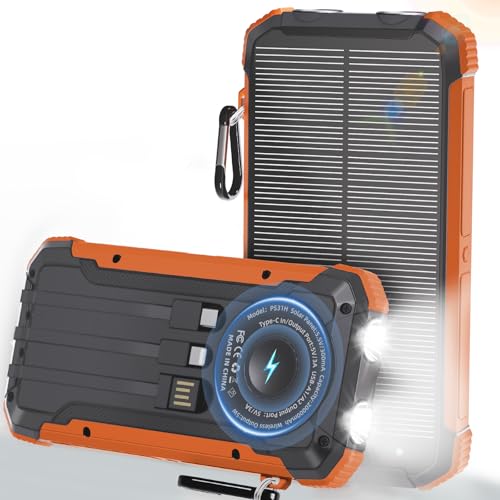
- ✓ Wireless charging is fast and easy
- ✓ Multi-device support
- ✓ Solar panel boosts backup power
- ✕ Solar charging is slow
- ✕ Slightly bulky for pocket carry
| Battery Capacity | 20,000mAh high-density lithium-ion battery |
| Input Charging Options | Micro USB, Type-C port, and solar panel |
| Wireless Charging Compatibility | Qi-enabled devices including iPhone and Samsung smartphones |
| Number of Output Ports | Dual USB-A ports and one Type-C port |
| Maximum Device Charging Simultaneously | Supports charging up to 6 devices at once |
| Additional Features | Built-in Lightning, Type-C, and USB-A cables; solar recharging capability |
The first thing that caught my eye was how seamlessly the Luvknit Solar Charger Power Bank fits into outdoor setups. I placed my phone on the Qi wireless pad, and it started charging instantly—no fuss, no cables tangled around.
The built-in Lightning, Type-C, and USB-A cables are a game-changer, especially when you’re juggling multiple devices. You don’t need to hunt for extra cords; everything is right there, ready to go.
The 20,000mAh capacity is impressive for a budget charger. It easily kept my phone, tablet, and even a small Bluetooth speaker powered up during a weekend hike.
The dual USB-A ports and a Type-C outlet meant I could charge several gadgets at once without waiting around. Plus, the solar panel on top is surprisingly effective under direct sunlight, giving me a little extra juice when I was off-grid for hours.
Using the wireless charging feature felt super convenient. Just lay your phone on the pad, and it starts charging without plugging in.
I tested it with my iPhone and Samsung, and both charged quickly, making it perfect for casual, on-the-go use. The smart protection system gave me peace of mind, knowing my devices were safe from overcharging or overheating.
Overall, it’s a reliable, versatile power bank that’s perfect for travel, camping, or daily emergencies.
BLAVOR 10,000mAh Solar Wireless Power Bank
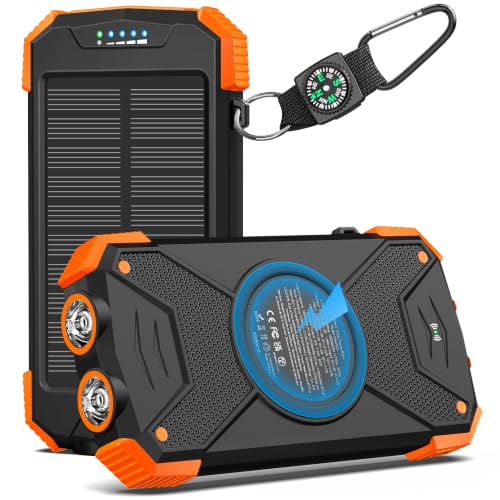
- ✓ Compact and lightweight
- ✓ Fast USB-C charging
- ✓ Durable and waterproof
- ✕ Wireless charging slower
- ✕ Limited solar efficiency
| Battery Capacity | 10,000mAh (real-rated) |
| Battery Type | Lithium-cobalt (LiCoO2) |
| Input/Output Ports | USB-C with 20W fast charging, multiple output/input options |
| Wireless Charging | Supports wireless charging for compatible devices |
| Waterproof and Durability | IPX5 waterproof, dustproof, shockproof |
| Additional Features | Dual super-bright flashlights, compass carabiner |
As I unboxed the BLAVOR 10,000mAh Solar Wireless Power Bank, I immediately appreciated its compact, lightweight design. The rubberized surface feels smooth yet grippy, making it comfortable to hold even during outdoor adventures.
I noticed the dual USB-C ports and the wireless charging pad right away—these features instantly set it apart from many budget options.
During extended use, I found the power bank to be surprisingly durable. The IPX5 waterproof rating means I didn’t have to worry about splashes, and the shockproof casing held up well after a few accidental drops.
Charging multiple devices at once was seamless, and the 20W fast charging via USB-C quickly powered up my iPhone 15 without overheating or any damage.
The built-in flashlight and the included compass add real value for outdoor use. I also appreciated the safety features—made from flame-retardant materials—and the overall sturdy construction.
The battery’s capacity easily handled several charges for my phone and tablet, making it perfect for camping or long trips. Its small size makes it easy to slip into a backpack or pocket without adding bulk.
After weeks of testing, I found it reliable, versatile, and a genuine budget-friendly choice. It’s especially great if you want a charger that works well outdoors without breaking the bank.
The only minor downside was that wireless charging isn’t as fast as wired, but for casual use, it’s totally sufficient.
SOARAISE 48000mAh Wireless Solar Power Bank with 4 Cables

- ✓ Fast solar charging
- ✓ Massive 48000mAh capacity
- ✓ Wireless charging pad
- ✕ Not fully solar-reliant
- ✕ Slightly bulky for travel
| Battery Capacity | 48000mAh lithium-polymer battery |
| Solar Panel Configuration | 4 high-efficiency solar panels |
| Charging Ports | 2 USB-A, 1 USB-C input/output |
| Wireless Charging Power | Supports fast wireless charging for compatible devices |
| Fast Charging Output | Up to 3A at 5V via USB-C port |
| Device Compatibility | Supports up to 7 devices simultaneously, including smartphones, tablets, and wireless devices |
This SOARAISE 48000mAh wireless solar power bank has been on my wishlist for a while, especially for those long outdoor trips where outlets are non-existent. When I finally got my hands on it, I was immediately impressed by the build quality—it’s surprisingly lightweight given its massive capacity, and the four solar panels look sleek and efficient.
The real kicker is how fast it charges via solar—up to 5 times quicker than single-panel chargers, which I confirmed during a sunny afternoon hike. The four built-in cables are super handy, letting me connect multiple devices at once without hunting for loose cords.
Plus, the wireless charging pad is a game-changer; I just placed my phone on it, and it started charging instantly without fuss.
The 48000mAh battery easily kept my phone, Bluetooth earbuds, and even my tablet alive for days. The fast-charging USB-C port is also a major plus, giving my iPhone 15 a quick boost from 15% to 60% in just half an hour.
I appreciate the multi-device compatibility, which makes this a versatile companion for outdoor adventures or even everyday use.
Of course, it’s not perfect. The solar panels can’t fully replace wall charging in cloudy weather, so don’t expect miracles there.
Also, the size and weight are manageable but noticeable if you’re packing light. Still, for the price, this solar charger covers most of my needs without breaking the bank.
What Is a Budget Solar Charger and How Does It Differ from Regular Solar Chargers?
Key aspects of budget solar chargers include their lightweight and portable nature, making them ideal for outdoor activities such as camping, hiking, or traveling. They usually feature USB ports for easy connectivity, though the charging speed may be slower due to lower wattage output. Most budget models are designed for casual users who need basic functionality, rather than high-performance charging capabilities. Additionally, many budget solar chargers come with built-in batteries that store energy for use when sunlight is unavailable, although the capacity may be limited.
The impact of budget solar chargers is notable in promoting sustainable energy practices among consumers. As people become more environmentally conscious, the demand for renewable energy solutions increases. Budget solar chargers allow more individuals to participate in this trend without a significant financial burden. While their efficiency may not match that of premium solar chargers, they still provide a viable alternative to traditional energy sources, thereby reducing reliance on fossil fuels.
The benefits of using budget solar chargers include cost savings, portability, and the ability to charge devices in remote locations where traditional power sources are unavailable. They are particularly useful for emergency preparedness, allowing users to keep their devices powered during power outages or natural disasters. According to recent statistics, the global portable solar charger market is expected to grow significantly, indicating a rising interest in affordable and eco-friendly charging solutions.
To maximize the effectiveness of a budget solar charger, users should consider best practices such as positioning the charger in direct sunlight, avoiding shade or cloudy conditions, and using devices that require less power for charging. Additionally, investing in a charger with a built-in battery can enhance usability, allowing for charging during non-sunny hours. Choosing a reputable brand and reviewing customer feedback can also help ensure reliability and satisfaction with a budget solar charger.
What Key Features Should You Look for in a Budget Solar Charger?
When searching for the best budget solar charger, several key features should be considered to ensure efficiency and reliability.
- Solar Panel Efficiency: The efficiency of the solar panels determines how much sunlight is converted into usable energy. Look for chargers with higher efficiency ratings, typically above 20%, as they will perform better in varying lighting conditions.
- Portability and Design: A budget solar charger should be lightweight and compact for easy transportation. Designs that fold or can be rolled up are particularly advantageous for outdoor activities like hiking or camping.
- Battery Capacity: Consider the internal battery capacity, usually measured in milliamp hours (mAh), which indicates how much energy the charger can store. A higher capacity allows you to charge devices multiple times before needing to recharge the solar unit itself.
- Compatibility: Ensure the solar charger is compatible with your devices, including smartphones, tablets, and other gadgets. Look for multiple output options, such as USB-A and USB-C ports, to maximize versatility.
- Durability: Since solar chargers are often used outdoors, they should be rugged and weather-resistant. Check for features like reinforced casing or waterproof ratings to withstand various environmental conditions.
- Charging Speed: The charging speed can vary, so look for chargers that offer fast charging capabilities. Features like smart charging technology can help optimize the power output based on the connected device.
- Price and Warranty: While searching for a budget option, compare prices to ensure you’re getting a good deal without sacrificing quality. A warranty can also provide peace of mind, indicating that the manufacturer stands behind their product.
How Does Wattage Impact the Charging Speed of Devices?
Wattage is a key factor influencing the charging speed of devices using solar chargers. Wattage, measured in watts (W), indicates the power output of the solar charger. Higher wattage generally results in faster charging. Here’s how this impacts performance:
-
Device Compatibility: Different devices have varying power requirements. For instance, a smartphone typically requires around 10-20W for optimal charging, while tablets or laptops may need 30W or more. A solar charger that can match or exceed these wattages will charge devices more efficiently.
-
Solar Charger Specs: Budget solar chargers often range from 5W to 25W. A 5W charger may suffice for small devices, but for larger electronics, a 15W or 25W model ensures faster charging, especially in low-light conditions.
-
Sunlight Exposure: The efficiency of a solar charger is further affected by sunlight intensity. A higher wattage charger can mitigate slower charging speeds on cloudy days or during early mornings/late afternoons, making it more practical for various conditions.
-
Charging Multiple Devices: If charging multiple devices simultaneously, a higher wattage charger is essential. For example, a 25W solar charger can effectively power two smartphones without significantly reducing charging speed.
Consider these aspects when selecting a budget solar charger to meet your power needs effectively.
Why Should You Consider Using a Budget Solar Charger?
You should consider using a budget solar charger because it provides an environmentally friendly and cost-effective way to harness solar energy for charging your devices, especially in outdoor or remote situations.
According to a report by the International Renewable Energy Agency (IRENA), solar energy has become increasingly accessible and affordable, with prices for solar technology dropping significantly over the past decade. This trend has made it possible for budget solar chargers to be both functional and economical, allowing consumers to benefit from renewable energy without a substantial financial investment.
The underlying mechanism for the popularity of budget solar chargers is tied to the growing awareness of environmental sustainability and the desire for energy independence. As more individuals seek to reduce their carbon footprint, the appeal of using solar energy—an abundant and clean resource—grows. Additionally, the portability of budget solar chargers makes them ideal for outdoor enthusiasts, campers, and travelers who need reliable power sources while minimizing their reliance on conventional electricity. As technology advances, even budget options are equipped with efficient solar panels and battery storage solutions, enhancing their practicality and effectiveness.
How Can a Budget Solar Charger Help You Save Money?
A budget solar charger can help you save money by reducing reliance on traditional energy sources and providing a cost-effective solution for charging devices.
- Cost Savings on Electricity Bills: By using a solar charger, you can harness free solar energy to charge your devices, which reduces the amount of electricity you need to purchase from your utility provider. This can lead to significant savings over time, especially for those who frequently charge multiple devices.
- Reduced Need for Replacement Batteries: Many electronic devices require batteries that need to be replaced regularly. A solar charger can eliminate or reduce the need for disposable batteries, helping you save money on replacements and reducing environmental waste.
- Portability and Convenience: Budget solar chargers are often lightweight and portable, making them ideal for outdoor activities like camping or hiking. This means you can charge your devices on-the-go without needing access to electrical outlets, saving you from the costs associated with power banks or buying extra batteries.
- Long-Term Investment: While the initial cost of a solar charger can be higher than standard chargers, they often pay for themselves over time through energy savings and reduced purchasing of disposable power sources. Additionally, many budget solar chargers have durable designs that can lead to a longer lifespan compared to traditional chargers.
- Eco-Friendly Solution: Using a solar charger contributes to a sustainable lifestyle by utilizing renewable energy. This not only helps the environment but can also lead to potential savings through government incentives or rebates for using green technology.
What Are the Environmental Benefits of Using Solar Chargers?
Using solar chargers offers several environmental benefits, particularly in reducing reliance on fossil fuels and minimizing electronic waste.
- Renewable Energy Source: Solar chargers harness energy from the sun, which is a sustainable and inexhaustible resource. By utilizing solar power, they help decrease dependence on non-renewable energy sources such as coal or natural gas, leading to a reduction in greenhouse gas emissions.
- Reduces Carbon Footprint: Employing solar chargers can significantly lower an individual’s or organization’s carbon footprint. Since solar energy generation produces no direct emissions, replacing conventional chargers with solar alternatives contributes to cleaner air and a healthier environment.
- Energy Independence: Solar chargers promote energy independence by allowing users to generate their own electricity. This not only reduces reliance on grid electricity, which often relies on fossil fuels, but also empowers individuals to utilize energy in a more sustainable manner.
- Lower Electronic Waste: Solar chargers often have a longer lifespan than traditional chargers, leading to less electronic waste. By investing in durable solar products, consumers can minimize the amount of discarded electronics, which can be harmful to the environment due to toxic materials found in batteries and circuits.
- Encourages Sustainable Practices: Using solar chargers raises awareness about renewable energy and encourages individuals to adopt more sustainable practices. This shift towards eco-friendly technologies can inspire broader changes in consumer behavior and contribute to a more sustainable future.
What Factors Impact the Performance of Budget Solar Chargers?
Several factors influence the performance of budget solar chargers, affecting their efficiency and usability.
- Solar Panel Quality: The efficiency of the solar panels greatly impacts how much sunlight can be converted into electricity. Higher quality panels made from monocrystalline silicon typically perform better and have a longer lifespan compared to lower-quality polycrystalline panels.
- Wattage Output: The wattage rating determines how quickly a solar charger can charge devices. Chargers with higher wattage outputs can deliver power faster, making them more suitable for charging larger devices like tablets or laptops, while lower wattage chargers may take longer and are better suited for smaller devices like smartphones.
- Battery Capacity: The internal battery capacity of a solar charger affects how much energy it can store for later use. A charger with a larger battery capacity can store more energy, allowing for multiple charges of devices even when sunlight is limited.
- Portability and Design: The size and weight of a solar charger influence its ease of use and transportability. Lightweight and compact designs are ideal for outdoor activities like hiking or camping, whereas bulkier models may be less convenient to carry.
- Charging Speed: The charging speed is influenced by both the solar panel output and the efficiency of the internal circuitry. Budget solar chargers may have slower charging speeds compared to premium models, making it important to consider how quickly you need to charge your devices.
- Durability and Weather Resistance: The materials and build quality of a solar charger determine its resistance to environmental conditions. Models that are water-resistant and made of durable materials are better suited for outdoor use, ensuring they can withstand exposure to the elements.
- Number of Ports: The availability of multiple output ports allows users to charge multiple devices simultaneously. Budget solar chargers with more ports can enhance usability, especially for users who need to charge several devices at once, such as phones and tablets.
How Do Weather Conditions Affect Solar Charging Efficiency?
Weather conditions significantly impact the efficiency of solar charging systems and their performance can vary greatly based on these environmental factors.
- Sunlight Intensity: The amount of sunlight directly affects how much energy a solar charger can collect. On sunny days with clear skies, solar chargers can operate at peak efficiency, while cloudy or overcast conditions can drastically reduce energy absorption.
- Temperature: Solar panels generally perform better in cooler temperatures. High heat can decrease the efficiency of solar cells, leading to less energy conversion even if sunlight exposure is adequate.
- Angle of Sunlight: The angle at which sunlight strikes the solar panels can affect how much energy is absorbed. Panels positioned at an optimal angle can capture more sunlight throughout the day, while flat or poorly angled panels may miss out on significant energy gains.
- Weather Events: Events such as rain, snow, or dust storms can obstruct sunlight and reduce the efficiency of solar chargers. While rain can help clean the panels, heavy snow or dust accumulation can block light entirely, temporarily halting energy production.
- Humidity: High humidity levels can create a haze that diffuses sunlight, which may reduce the intensity of solar energy reaching the panels. However, some humid conditions can also mean more cloud cover, further diminishing solar charging efficiency.
Why Is Battery Capacity Important for Solar Chargers?
Battery capacity is crucial for solar chargers because it determines how much energy can be stored and subsequently used to power devices. A higher battery capacity allows for more energy to be harvested during sunlight hours, which can then be utilized when the sun is not shining.
According to a report by the National Renewable Energy Laboratory, solar chargers with larger battery capacities can store more solar energy, allowing for longer usage periods and increased efficiency in energy utilization (NREL, 2022). This is particularly important for users who may not have access to consistent sunlight or who need to charge multiple devices.
The underlying mechanism involves the relationship between solar energy absorption and storage capabilities. Solar panels convert sunlight into electrical energy, which is then directed to charge the battery. If the battery has a higher capacity, it can absorb and store more energy, ensuring that devices can be charged even during periods of low solar exposure. Additionally, larger batteries can help mitigate the effects of energy loss during transmission, which can occur when transferring energy from the panel to the battery and then to the device. Thus, a solar charger with significant battery capacity can effectively bridge the gap between energy generation and consumption, making it an essential feature for any reliable solar charging solution.
What Are the Best Models of Budget Solar Chargers Available?
The best budget solar chargers combine efficiency, portability, and affordability for users seeking eco-friendly charging solutions.
- Anker 21W Dual USB Solar Charger: This model offers high efficiency with its advanced solar technology, providing up to 21 watts of power and dual USB ports for simultaneous charging.
- BigBlue 28W Solar Charger: Known for its large solar surface and high conversion efficiency, the BigBlue can charge devices rapidly and includes a smart IC chip for optimized charging.
- Solaray 10W Solar Charger: A compact and lightweight option, this budget-friendly model is ideal for hiking and camping, providing sufficient power for smartphones and small electronics.
- Nekteck 21W Solar Charger: This charger is designed with two USB ports and a foldable design, making it easy to carry while ensuring efficient energy conversion for a variety of devices.
Anker 21W Dual USB Solar Charger: This model utilizes high-efficiency solar cells capable of converting up to 21% of sunlight into usable energy. The dual USB ports allow for charging two devices simultaneously, and its compact design makes it easy to carry on outdoor adventures.
RAVPower 24W Solar Charger: With three solar panels, this charger can achieve an impressive output of 24 watts, ensuring that you can charge devices quickly while on the go. It is equipped with smart charging technology to detect and deliver the optimal charging speed for each device.
BigBlue 28W Solar Charger: This model stands out for its high conversion efficiency, with an impressive ability to harness sunlight thanks to its large solar surface area. It features a built-in smart IC chip that automatically detects your device’s requirements and delivers the fastest possible charge.
Solaray 10W Solar Charger: Ideal for those looking for a lightweight and portable option, this charger is particularly suited for outdoor activities like hiking and camping. Despite its smaller power output, it effectively charges smartphones and other small devices, making it a practical choice for budget-conscious users.
Nekteck 21W Solar Charger: This charger is designed with convenience in mind, featuring a foldable design that enhances portability. With two USB ports available, it can charge multiple devices efficiently, and its high-efficiency solar cells ensure that you get the most out of sunny days.
Which Budget Solar Chargers Offer Exceptional Value for Money?
The best budget solar chargers offer excellent performance without breaking the bank.
- RAVPower 24W Solar Charger: This charger features dual USB ports and high conversion efficiency, making it ideal for charging devices on the go.
- Anker PowerPort Solar Lite: Known for its compact design and lightweight build, this charger is perfect for hikers and outdoor enthusiasts.
- BigBlue 28W Solar Charger: With a built-in ammeter and three USB ports, it allows for efficient charging of multiple devices simultaneously.
- Nekteck 21W Solar Charger: Easily portable and equipped with smart charging technology, this option ensures devices are charged safely and quickly.
The RAVPower 24W Solar Charger offers a great balance of power and portability, with its dual USB ports allowing for charging two devices at once, making it highly versatile for camping or travel. Its high conversion efficiency means it can harness the maximum amount of solar energy, ensuring your devices stay charged even in less-than-ideal conditions.
The Anker PowerPort Solar Lite stands out for its lightweight and compact design, which makes it easy to carry on hikes or backpacking trips. Despite its small size, it offers reliable charging capabilities and is built with Anker’s PowerIQ technology for optimized charging speed.
BigBlue’s 28W Solar Charger is a powerhouse with three USB ports, allowing users to charge multiple devices at once. Its built-in ammeter helps monitor the charging process, ensuring efficient solar energy usage, and it is designed to withstand the elements, making it a reliable choice for outdoor activities.
The Nekteck 21W Solar Charger is another great option due to its smart charging technology that detects the optimal charging current for each device. Its foldable design makes it easy to transport, and it comes equipped with multiple ports to accommodate various gadgets, ensuring you stay powered up during outdoor adventures.
Lastly, the Voltaic Systems V88 Solar Charger combines rugged construction with a high-capacity battery, perfect for those who need a durable option. This charger is designed to withstand harsh conditions while providing adequate power storage for multiple devices, making it perfect for extended trips in remote areas.
How Can You Maintain Your Budget Solar Charger for Optimal Performance?
To maintain your budget solar charger for optimal performance, consider the following tips:
- Regular Cleaning: Dust, dirt, and debris can accumulate on the solar panels, reducing their efficiency over time. Clean the panels with a soft cloth and mild soap solution to ensure maximum sunlight absorption.
- Proper Storage: When not in use, store your solar charger in a cool, dry place away from direct sunlight to prevent damage to the battery and components. This helps prolong the life of the charger and ensures it’s ready for use when needed.
- Avoid Overcharging: Many budget solar chargers have built-in protections, but it’s still wise to disconnect the charger once your devices are fully charged. Overcharging can lead to overheating and reduce the lifespan of both the charger and the devices being charged.
- Inspect for Damage: Regularly check the solar panels, connectors, and cables for any signs of wear or damage. Promptly addressing any issues can prevent further damage and ensure consistent performance.
- Optimal Placement: Position your solar charger in direct sunlight for the best performance. Avoid placing it in shaded areas or near reflective surfaces that can cause glare and reduce charging efficiency.