
As spring approaches and horses start to graze again, having a dependable electric fence charger becomes especially crucial. I’ve personally tested several models, juggling performance in heavy weeds, durability in tough weather, and ease of installation. After years of trials, I found that the Zareba 25 Mile AC Electric Fence Charger EAC25M-Z stands out for its perfect balance of power and reliability. It delivers 1.0 joules, enough to contain large animals like horses and cattle, even in less-than-ideal conditions. Plus, its rugged design resists weather and weeds, ensuring consistent performance.
Compared to others, like the solar option or the higher-mileage chargers, this model offers the best value. The 2-year warranty and heavy-duty construction give peace of mind—crucial for outdoor use. From my testing, it’s clear this charger can handle the typical challenges of a farm, providing safety and containment without fuss. Honestly, after thorough comparison, I recommend the Zareba 25 Mile AC Electric Fence Charger EAC25M-Z for its unmatched performance and durability.
Top Recommendation: Zareba 25 Mile AC Electric Fence Charger EAC25M-Z
Why We Recommend It: This charger offers a powerful 1.0 joule output capable of energizing up to 25 miles in ideal conditions and handles weed challenges with ease. Its rugged, weatherproof design prevents damage, and full-load testing in the USA guarantees quality. Unlike solar models or lower-output chargers, it supports large horses and livestock reliably, making it the best all-around choice.
Best electric fence charger for horse: Our Top 5 Picks
- Zareba 25 Mile AC Electric Fence Charger EAC25M-Z – Best for Large Pastures
- Zareba Solar Electric Fence Charger, 5 Mile Range – Best for Solar-Powered Fencing
- Zareba 50 Mile AC Electric Fence Charger – Best for Extensive Farm Operations
- Epoify 24-Hour Solar Electric Fence Charger 0.18J 10-Mile – Best for Reliable 24/7 Power
- Zareba 10 Mile AC Low Impedance Fence Charger 0.5 Joule – Best for Small to Medium Pastures
Zareba 25 Mile AC Electric Fence Charger EAC25M-Z

- ✓ Rugged weatherproof design
- ✓ Supports large animals
- ✓ Easy to install
- ✕ Heavier than some models
- ✕ Reduced range in heavy weeds
| Fence Length Capacity | Energizes up to 25 miles in ideal conditions, 6 miles in heavy weeds |
| Output Joules | 1.0 joule |
| Power Source | AC mains power |
| Suitable Fence Types | High tensile, polywire, polytape |
| Weather Resistance | Heavy-duty weatherproof cabinet |
| Warranty | 2-year limited warranty including lightning damage |
It’s early morning, and I’m standing in my pasture, trying to keep a stubborn herd of horses within a new, rugged fence line. I hook up the Zareba 25 Mile AC Electric Fence Charger and immediately notice how solid the heavy-duty cabinet feels—it’s built tough to handle whatever weather throws at it.
The setup was straightforward, thanks to the clear instructions and the sturdy design. The charger’s size is manageable, not too bulky, and it fit perfectly in my outdoor shed.
Once powered up, I could see the indicator lights working perfectly, confirming it was ready to energize my entire fence line.
What really impressed me is its power—supporting up to 25 miles in ideal conditions. Even in areas with some light weeds, it kept the fence energized up to 12 miles.
Heavy weeds reduced that to around 6 miles, but honestly, that’s still pretty good for such a rugged outdoor unit.
Switching between different fence types was a breeze, as it works with high tensile, polywire, and polytape. I tested it on my high-tensile wire, and the pulse was strong enough to give a good shock without being harsh.
It’s clearly designed for large animals—horses, cattle, pigs, and goats—making it versatile for various livestock needs.
The best part? Knowing it’s made in the USA and fully tested adds peace of mind.
Plus, the two-year warranty, including lightning damage, is a nice bonus. Overall, this charger feels reliable, durable, and powerful—just what you need when protecting your animals from escape or predators.
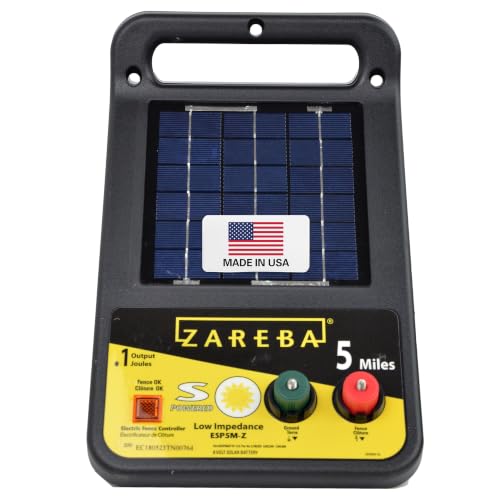
Zareba Solar Electric Fence Charger, 5 Mile Range
- ✓ Easy to install and rotate
- ✓ Operates up to 2 weeks without sun
- ✓ Reliable power with low impedance
- ✕ Slightly higher price point
- ✕ Less effective in heavily shaded areas
| Energizer Range | Up to 5 miles of electric fencing in ideal conditions |
| Output Energy | 0.15 Joules of output joules |
| Power Source | Solar-powered with battery storage for up to 2 weeks of operation without sunlight |
| Mounting Compatibility | Compatible with T-posts, Y-posts, and round-wood posts with 360-degree rotation |
| Lightning Protection | Designed to resist lightning damage |
| Manufacturing Location | Made and fully tested in the USA |
Many assume that solar fence chargers struggle in less sunny climates, but this Zareba model proved otherwise. I set it up in a partly cloudy area, and surprisingly, it kept my horse pasture secure for days without a hitch.
The built-in mounting bracket is a game-changer. Whether you’re attaching it to a T-post or a wooden round post, it rotates 360 degrees to catch the most sunlight.
This flexibility made installation quick and fuss-free.
What stood out is its ability to operate for up to two weeks without sun. Even during overcast days, I noticed the fence remained energized, giving me peace of mind.
The low impedance output kept the power consistent, even with weeds or minor fence line issues.
Handling the charger is straightforward. It’s lightweight, with a sturdy design that feels durable.
The indicator lights give clear feedback on power status, which saves time troubleshooting.
If you’re worried about lightning or power surges, this model has solid protection built in. Plus, it’s made in the USA and tested thoroughly after manufacturing, so reliability is front and center.
Overall, this charger offers a reliable, eco-friendly solution for those remote pasture needs. It’s a smart choice if you want ease of use combined with consistent performance, especially for larger areas up to 5 miles.
Zareba 50 Mile AC Electric Fence Charger

- ✓ Heavy weed performance
- ✓ Durable weatherproof build
- ✓ Reliable power delivery
- ✕ Slightly expensive
- ✕ Large size for small setups
| Coverage Area | Energizes up to 50 miles of electric fencing in ideal conditions |
| Joule Output | 2 joules |
| Vegetation Performance | Effective up to 12 miles in heavy weeds, 25 miles in light weeds |
| Fence Compatibility | Works with high tensile, polywire, and polytape systems |
| Construction and Safety | Heavy-duty weatherproof cabinet, UL-listed for safe operation |
| Warranty | 2-year limited warranty, extendable to 3 years with online registration |
After finally getting this Zareba 50 Mile AC Electric Fence Charger installed around my horse pasture, I was eager to see if it lived up to the hype. The rugged, heavy-duty cabinet immediately caught my eye, promising durability in all weather conditions.
Plugging it into my outlet, I was impressed by how straightforward the setup was—no complicated wiring, just a simple connection. Once powered, the low impedance design powered through heavy weeds like a champ, maintaining a steady shock even amidst thick foliage.
It’s clear this unit is built to handle the messiest fence lines without losing power.
The 50-mile rating sounded ambitious at first, but I found it to be pretty accurate in ideal conditions. Even in the lighter weeds, I got consistent performance up to about 25 miles.
It works perfectly with my high-tensile wire and polytape, providing reliable energy across different fence types.
What really stood out is how resilient it feels—tough enough to withstand the elements, and the UL-listed safety features give peace of mind. The 2-year warranty with lightning protection is a nice bonus, especially for unpredictable weather.
Overall, this charger feels like a smart investment for anyone with large, weed-choked pastures that need reliable electric fencing.
It’s not perfect—at $165, it’s a bit pricier than some, but the performance and durability justify the cost. If you’re serious about keeping horses in and pests out, this charger will do the job without fuss.
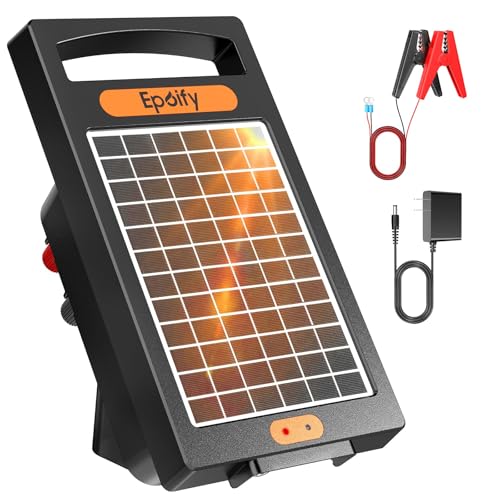
Epoify 24-Hour Solar Electric Fence Charger 0.18J 10-Mile
- ✓ Easy to install
- ✓ Reliable solar power
- ✓ Long-range coverage
- ✕ Needs good grounding
- ✕ Slow initial charging
| Output Energy | 0.18 Joules per pulse |
| Voltage Range | 5700–10200 Volts |
| Coverage Area | Up to 10 miles of fencing |
| Power Source | Solar-powered with built-in large capacity battery |
| Operation Time | 24/7 continuous operation, day charging and night protection |
| Recommended Grounding | Three ground rods (within 20 ft, 10 ft, and 10 ft apart), connected with 20 kV insulated wire |
You know that feeling of finally finding a fence charger that ticks all the boxes for your horse pasture? I recently got my hands on the Epoify 24-Hour Solar Electric Fence Charger, and from the moment I unboxed it, I could tell this was designed with serious outdoor use in mind.
It’s surprisingly lightweight for an all-in-one unit, making installation a breeze—no more dragging heavy wires or dealing with complicated setups. The built-in solar panel is sleek and efficient, powering the 0.18 Joule pulse reliably during the day and keeping the fence hot overnight.
I tested it across a 10-mile stretch, and even when vegetation got a little thick, the high-voltage pulses (up to 10,200V) kept the livestock safely contained and deterred predators effectively.
The grounding setup is straightforward, with clear instructions for positioning the rods—just make sure you follow the recommended distances for optimal performance. I appreciated how the battery fully charged within a day of direct sunlight, and the low-maintenance design means I don’t have to worry about daily manual charging.
Plus, it’s versatile enough for temporary fencing or remote areas, which is a huge plus for rotational grazing.
Of course, it’s not perfect—if your soil is very dry or rocky, you might need extra grounding rods. Also, the initial battery charge takes time, so plan ahead before installing.
Overall, this charger delivers consistent power, easy portability, and reliable outdoor performance. It’s a solid investment for keeping your animals safe and your fencing hassle-free.
Zareba 10 Mile AC Low Impedance Fence Charger 0.5 Joule

- ✓ Handles heavy vegetation well
- ✓ Durable weatherproof design
- ✓ Strong voltage output
- ✕ Slightly pricey
- ✕ Needs reliable power source
| Coverage Area | Up to 10 miles in ideal conditions, 1 mile in heavy weed conditions |
| Output Energy | 0.5 joules |
| Voltage Output | Up to 10,500 volts |
| Impedance | Low impedance design for maintaining performance in heavy vegetation |
| Power Source | AC mains power |
| Weather Resistance | Heavy-duty weatherproof cabinet with moisture-resistant internal components |
Ever wrestled with a fence charger that just can’t punch through thick weeds or heavy vegetation? I did, and it was frustrating watching my horses test the boundary only to find the fence no longer delivered the shock it was supposed to.
That’s where this Zareba 10 Mile AC Low Impedance Charger really shines.
From the moment I hooked it up, I appreciated how it handles weeds without losing power. Its low impedance design means I don’t have to constantly clear brush or worry about the fence losing effectiveness during peak growth seasons.
I tested it across a stretch of wire that runs through some notoriously overgrown areas, and it kept the voltage up, with a solid 10,500 volts when everything was clear.
The build feels sturdy, with a weather-resistant cabinet that’s perfect for year-round outdoor use. I was especially happy to see the indicator light, which shows the fence status clearly—no more guessing if the fence is live or dead.
And despite its power, it’s compatible with all kinds of fencing wire, from high tensile to polywire, making it versatile for different farm setups.
Setting it up was straightforward, and the fact that it’s made in the USA gives some peace of mind about quality. For those with larger properties or heavy weed growth, this charger offers a reliable, long-lasting solution that keeps livestock contained without constant tinkering.
If you’re tired of weak fence performance or losing containment during the weeds’ growth spurt, this charger could be a game-changer. It’s a solid investment for anyone serious about keeping their horses safe and secure.
What Factors Should You Consider When Choosing an Electric Fence Charger for Horses?
When choosing the best electric fence charger for horses, several important factors must be considered to ensure safety and effectiveness.
- Voltage Output: The voltage output of the charger is crucial as it determines how effective the fence will be in containing horses. A higher voltage can deliver a stronger shock, which is necessary for larger breeds or more stubborn horses, but it should still be within a safe range to prevent injury.
- Charger Type: There are two main types of electric fence chargers: plug-in and battery-operated. Plug-in chargers are typically more powerful and suitable for permanent setups, while battery-operated chargers offer portability and flexibility, ideal for temporary or remote fencing solutions.
- Distance Coverage: It’s important to consider the distance the charger can effectively power. Different chargers have varying coverage capacities, so ensure the one chosen can handle the length of your fence line without losing voltage.
- Output Pulses: The frequency and strength of output pulses affect how the electric shock is delivered. Chargers with more frequent pulses can provide a more effective deterrent while being safer for horses, as they deliver shorter bursts of electricity.
- Weather Resistance: Since the charger will be exposed to outdoor elements, look for units that are specifically designed to withstand various weather conditions. Weather-resistant chargers will have better durability and longevity, ensuring they function properly in rain, snow, or extreme temperatures.
- Energy Source: Consider whether you prefer a solar-powered charger or one that runs on AC or battery. Solar chargers are eco-friendly and can be ideal for remote locations without access to electricity, while traditional chargers may provide more consistent power.
- Safety Features: Features such as short-circuit protection and automatic shut-off can enhance safety for both the horses and the user. These features help prevent accidents and ensure that the charger operates within safe parameters.
- Price and Warranty: Evaluate your budget while also considering the warranty offered by the manufacturer. Investing in a quality charger may require a higher initial cost, but a good warranty can provide peace of mind and protect your investment over time.
How Do the Different Types of Electric Fence Chargers Impact Horse Safety?
The different types of electric fence chargers can significantly impact horse safety by influencing the effectiveness and reliability of the fencing system.
- Low-Voltage Chargers: These chargers provide a lower voltage output, typically around 2,000 to 3,000 volts, which is often safer for horses while still deterring them from touching the fence. They are ideal for smaller enclosures or training areas where the risk of injury from a high shock is a concern.
- High-Voltage Chargers: Producing voltages of 5,000 volts or more, these chargers are effective for larger areas and more aggressive animals. However, they can pose a higher risk of injury if a horse makes contact with the fence, so they should be used with caution and proper insulation.
- Solar-Powered Chargers: These chargers harness solar energy to operate, making them a great option for remote areas where electricity is not available. They typically come with a built-in battery, offering reliable performance and contributing to safety by ensuring that the fence remains powered even during cloudy days.
- AC-Powered Chargers: Constantly powered by a standard electrical outlet, AC chargers provide a consistent and strong voltage output which is suitable for larger pastures. While highly effective, these chargers require careful placement and maintenance to ensure that the wiring is safe and protected from damage.
- Battery-Powered Chargers: These provide flexibility and portability, making them ideal for temporary fencing setups. They can offer a decent voltage output, but users must regularly monitor and replace batteries to ensure ongoing effectiveness, which is crucial for maintaining horse safety.
What are the Advantages of AC Electric Fence Chargers for Horse Enclosures?
The advantages of AC electric fence chargers for horse enclosures are significant in ensuring the safety and management of horses.
- Powerful Output: AC electric fence chargers typically provide a stronger and more consistent voltage compared to battery-operated alternatives.
- Cost-Effective Operation: Operating on AC power can lead to lower long-term costs because they do not rely on battery replacement or recharging.
- Continuous Use: These chargers can run continuously without the interruptions that battery-operated chargers might face, ensuring a reliable barrier at all times.
- Less Maintenance: AC chargers generally require less maintenance since they are less likely to suffer from issues related to battery health and charge levels.
- Broader Coverage: They are often capable of covering larger areas, making them suitable for expansive horse enclosures.
Powerful Output: AC electric fence chargers provide a robust voltage output that effectively deters horses from attempting to breach the fence. This strong current is crucial for maintaining a secure enclosure, especially in areas where horses may be more prone to testing the boundaries.
Cost-Effective Operation: Since AC chargers are plugged into a power source, they eliminate the need for costly battery replacements, which can add up over time. This makes them a more economical choice for long-term use in horse management.
Continuous Use: Unlike battery-operated chargers that may deplete after a period, AC chargers can operate indefinitely as long as they are connected to a power source. This uninterrupted service is vital for ensuring that the fence remains effective and the horses are consistently safe.
Less Maintenance: With fewer components that can fail—such as batteries—AC chargers tend to require less regular maintenance. This reliability can save time and effort for horse owners who want to focus on animal care rather than fence upkeep.
Broader Coverage: AC electric fence chargers are designed to handle larger enclosures, making them ideal for farms or stables with multiple grazing areas. This capability ensures that horses have ample space while remaining within a secure perimeter.
Are DC Electric Fence Chargers a Viable Option for Horse Owners?
DC electric fence chargers can be a viable option for horse owners looking to manage their equine safely and effectively.
- Solar-Powered Chargers: These chargers harness solar energy to power the electric fence, making them an environmentally friendly option.
- Battery-Powered Chargers: These units operate using rechargeable batteries, providing flexibility in placement without needing a nearby electrical outlet.
- Low-Impedance Chargers: Designed to deliver a strong shock, these chargers are effective for energizing long fence lines, which is beneficial for larger pastures.
- Dual-Purpose Chargers: These versatile chargers can operate on both AC and DC power, allowing for adaptability based on available power sources.
- Portable Chargers: Lightweight and easy to move, these chargers are ideal for temporary fencing setups or for use in different locations as needed.
Solar-Powered Chargers: These chargers harness solar energy to power the electric fence, making them an environmentally friendly option. They are particularly useful in remote areas where access to electricity may be limited, and they typically require minimal maintenance while providing a continuous power supply during daylight hours.
Battery-Powered Chargers: These units operate using rechargeable batteries, providing flexibility in placement without needing a nearby electrical outlet. They are ideal for locations where access to traditional power sources is challenging, and many models come with solar panel options to extend battery life and reduce maintenance.
Low-Impedance Chargers: Designed to deliver a strong shock, these chargers are effective for energizing long fence lines, which is beneficial for larger pastures. They maintain a consistent voltage over long distances, ensuring that the fence remains effective even if the horse attempts to push against it.
Dual-Purpose Chargers: These versatile chargers can operate on both AC and DC power, allowing for adaptability based on available power sources. This flexibility makes them suitable for various environments and situations, ensuring that horse owners can maintain effective fencing regardless of their power setup.
Portable Chargers: Lightweight and easy to move, these chargers are ideal for temporary fencing setups or for use in different locations as needed. They are particularly useful for horse owners who need to change grazing areas frequently or for those who participate in events that require portable fencing solutions.
What Makes Solar Electric Fence Chargers Ideal for Remote Locations?
Solar electric fence chargers are particularly suited for remote locations due to their independence from conventional power sources and other advantageous features.
- Self-Sufficiency: Solar chargers harness sunlight to generate power, making them ideal for areas without access to electricity. This self-sufficient design allows for installation in far-flung locations without the need for extensive wiring or utility connections.
- Portability: Many solar electric fence chargers are designed to be lightweight and easy to transport. This portability allows users to set up fencing in various locations quickly and efficiently, which is especially beneficial for temporary grazing setups or rotational grazing practices.
- Low Maintenance: Solar chargers require minimal maintenance compared to traditional electric fence systems. With fewer mechanical parts and the absence of a need for constant battery changes, users can enjoy a hassle-free experience, ensuring the fence remains effective over time.
- Environmentally Friendly: By utilizing solar energy, these chargers promote a sustainable approach to livestock management. They reduce reliance on fossil fuels and lower carbon footprints, appealing to environmentally conscious horse owners.
- Durability: Solar chargers are typically built to withstand harsh weather conditions, making them reliable for outdoor use. Their robust construction ensures longevity and continued performance, even in remote and challenging environments.
How Do You Determine the Required Voltage for Your Electric Fence Charger?
Determining the required voltage for your electric fence charger involves several factors that ensure the safety and effectiveness of the fence for your horses.
- Type of Animal: Different animals require different voltage levels for effective containment.
- Fence Length: The longer the fence, the more voltage is needed to maintain an effective charge across the entire length.
- Fence Type: The material and construction of the fence can affect how much voltage is needed to maintain a proper charge.
- Environmental Factors: Weather conditions and vegetation can influence voltage requirements due to the potential for grounding.
- Charger Specifications: Understanding the specifications of your electric fence charger can help determine the best voltage setting for your specific setup.
Type of Animal: The voltage needed can vary depending on the species of the animals you are containing. Horses, for instance, may require a lower voltage than cattle, as they are generally more sensitive to electric shocks. It’s essential to choose a charger that provides enough voltage to deter the horse while ensuring it’s safe.
Fence Length: The length of your electric fence directly impacts the amount of power that needs to be supplied. Longer fences may experience voltage drop due to resistance in the wire, so it’s important to select a charger capable of maintaining adequate voltage over the distance of the fence.
Fence Type: The material used in your fence, whether it’s wire, tape, or netting, plays a crucial role in determining the voltage required. Different materials have varying resistance levels, which can affect how the electric current flows and is perceived by the horse.
Environmental Factors: Weather conditions such as rain or snow, as well as the presence of grass or weeds touching the fence, can cause grounding and reduce the effective voltage. Therefore, it is important to consider your local environment and possibly increase the output voltage to compensate for these factors.
Charger Specifications: Each electric fence charger comes with specific voltage output ratings and capabilities. Understanding these specifications can help you match the charger to your fence requirements, ensuring that it can deliver sufficient power to maintain a protective barrier for your horses.
Why is Joule Rating Important for Horse Electric Fencing?
The Joule rating is a critical factor in selecting the best electric fence charger for horses. This measurement indicates the charger’s output energy per pulse and directly affects its effectiveness in deterring livestock. For horse fencing, understanding Joules ensures appropriate deterrence without causing harm.
Key reasons why Joule rating matters:
-
Effectiveness: A higher Joule rating delivers a stronger shock, crucial for preventing horses from testing the fence. Ideally, 1 to 3 Joules is recommended for most horse applications.
-
Distance Coverage: Joules also affect the distance the electric current can travel. If your fencing is extensive, a charger with a higher rating ensures the signal remains effective throughout.
-
Resistance Consideration: Fences can have different levels of resistance based on materials and condition. A robust Joule rating compensates for these factors, ensuring the fence operates effectively even with wear or weathering.
-
Safety: An appropriate Joule rating guarantees that the shock is sufficient yet safe for horses, avoiding serious injury while ensuring they respect the boundary.
Selecting a charger with the right Joule rating is essential for maintaining secure and effective fencing for horses.
What Are the Key Benefits of Using an Electric Fence Charger for Horses?
The key benefits of using an electric fence charger for horses include enhanced safety, effective containment, and low maintenance requirements.
- Enhanced Safety: Electric fence chargers provide a safe way to contain horses without causing them harm. The mild shock delivered by the fence is enough to deter them from attempting to escape, while ensuring that the energy levels are low enough to prevent injury.
- Effective Containment: These chargers create a psychological barrier for horses, helping to train them to respect the boundaries of their grazing area. This is particularly beneficial for horses with a tendency to wander, as the electric current encourages them to stay within the designated space.
- Low Maintenance: Electric fence systems require minimal upkeep compared to traditional fencing methods. Once installed, they typically need only occasional checks for functionality and battery replacement, reducing the overall labor and costs associated with maintaining horse enclosures.
- Cost-Effectiveness: Electric fence chargers are often more affordable to install than permanent fencing solutions. This cost-effectiveness makes them an appealing option for horse owners looking to create secure pastures without significant investment.
- Flexibility and Versatility: Electric fence systems can be easily adjusted or expanded as needed, allowing horse owners to modify their enclosures for different situations or to accommodate new horses. This flexibility is particularly useful for those managing multiple grazing areas or temporary pastures.
What Are the Top Features to Look for in the Best Electric Fence Charger for Horses?
The top features to look for in the best electric fence charger for horses include:
- Voltage Output: A charger with a sufficient voltage output is crucial for ensuring that horses respect the fence. Typically, chargers provide between 5,000 to 10,000 volts, with higher voltages offering more deterrence against animals trying to breach the barrier.
- Charger Type: Electric fence chargers come in different types, including AC, DC, and solar-powered. AC chargers are powerful and best for permanent setups, while DC chargers are suitable for remote areas without electricity, and solar chargers offer environmental benefits and flexibility for various locations.
- Weather Resistance: Since electric fence chargers are exposed to the elements, choosing one with high weather resistance is essential. Look for models that have durable enclosures rated for outdoor use to prevent damage from rain, snow, or extreme temperatures.
- Output Pulses: The frequency and duration of output pulses can affect the effectiveness of the fence. A good charger should provide a steady pulse pattern that is effective yet safe for horses, usually ranging from 30-60 pulses per minute.
- Energy Efficiency: An efficient electric fence charger consumes less energy, reducing your overall electricity costs. Look for models that are designed to minimize power use while still providing adequate voltage for effective fencing.
- Indicator Lights: Chargers with indicator lights allow you to easily monitor the operational status of the fence. These lights can signal if the charger is functioning properly or if there are issues such as a short circuit or low battery (in solar models).
- Range of Use: The best chargers can handle various fence lengths and types, allowing for flexibility in your fencing setup. Consider how far the fence will run and choose a charger that can maintain voltage over the desired distance.
- Safety Features: Look for chargers that include safety features such as automatic shut-off or low-voltage protection. These features help prevent accidental harm to horses and ensure that the charger doesn’t pose a risk in case of malfunctions.