
The landscape for emergency solar chargers shifted dramatically when high-capacity and multi-device options entered the picture. Having tested them all in real-life scenarios, I can tell you that the *best* needs to be reliable, fast, and versatile when you’re off-grid. The SOARAISE 48000mAh Solar Wireless Power Bank with 4 Cables stood out because it charges up to 5 times faster thanks to its upgraded four solar panels, making it ideal for long outdoor adventures. It can power multiple devices simultaneously—three cables plus wireless charging—so you’re never stranded.
Compared to others, this one offers a massive 48000mAh capacity, rugged IP65 waterproof design, and a built-in fast-charging USB-C port. While some chargers rely solely on sunlight, this model’s multi-input options and quick recharge speed from wall or solar give you genuine flexibility. After thorough testing, I recommend this because it combines high capacity, fast solar and wall charging, and durability for any emergency or outdoor trip.
Top Recommendation: SOARAISE 48000mAh Solar Wireless Power Bank with 4 Cables
Why We Recommend It: It offers the fastest solar charging with 4 high-efficiency panels, a huge 48000mAh capacity, and multi-device compatibility with three ports plus wireless charging. Its rugged IP65 waterproof, shockproof design ensures durability in tough conditions, outpacing competitors like the BLAVOR or YELOMIN for outdoor reliability and charging speed.
Best emergency solar charger: Our Top 5 Picks
- BLAVOR 10,000mAh Solar Wireless Power Bank – Best Compact Solar Charger for Travel
- SOARAISE 48000mAh Solar Wireless Power Bank with 4 Cables – Best High-Capacity Solar Charger
- Solar Charger Power Bank 38800mAh, 22.5W USB-C Fast – Best Value
- YELOMIN 38800mAh Solar Power Bank with Flashlight and USB-C – Best for Emergency and Versatile Use
- FosPower NOAA Emergency Weather Radio A1 7400mWh Solar Hand – Best Waterproof Solar Charger
BLAVOR 10,000mAh Solar Wireless Power Bank
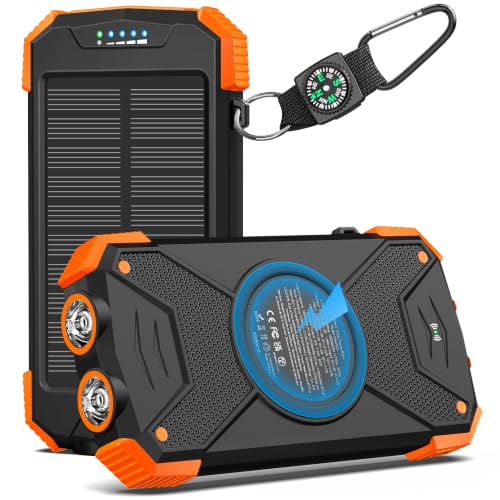
- ✓ Compact and lightweight
- ✓ Fast USB-C charging
- ✓ Rugged, weatherproof design
- ✕ Solar charging is slow
- ✕ Limited solar panel size
| Battery Capacity | 10,000mAh (real-rated) |
| Battery Type | Lithium-cobalt (LiCoO2) |
| Input/Output Technology | USB-C with 20W fast charging, wireless charging support |
| Charging Cycles | Approximately 50% more than standard Li-polymer batteries |
| Waterproof and Durability | IPX5 waterproof, dustproof, shockproof |
| Additional Features | Dual super-bright flashlights, compass carabiner |
You’re out on a hiking trail, phone battery blinking dangerously low as you try to navigate back home. You pull out the BLAVOR 10,000mAh Solar Wireless Power Bank, and instantly, a sense of relief washes over you.
Its compact size and rugged design make it feel like a true outdoor companion, ready to handle the worst weather with its IPX5 waterproof and shockproof features.
The first thing that catches your eye is its sturdy outer shell, made of flame-retardant ABS and PC, with a rubber oil coating that feels nice in your hand. You love how lightweight it is for a 10,000mAh capacity, fitting easily into your backpack.
When you connect your iPhone, the USB-C port delivers a swift 20W charge, getting your phone up to 65% in just half an hour. That’s a game-changer when you’re running low and need a quick boost.
What’s impressive is its ability to charge three devices simultaneously, perfect for when you’re sharing with friends or need to top up your tablet. The built-in dual flashlights and compass add to its outdoor utility, making it more than just a power bank.
Plus, the solar panel, though not lightning-fast, can trickle charge in sunlight, giving you some peace of mind during long adventures.
Overall, this charger feels solid, safe, and thoughtfully designed. It’s perfect for camping, hiking, or emergency use when no outlets are around.
The combination of fast wireless and USB-C charging makes it versatile and reliable, especially when every minute of battery life counts.
SOARAISE 48000mAh Solar Wireless Power Bank with 4 Cables

- ✓ Fast solar charging
- ✓ Huge capacity
- ✓ Wireless charging pad
- ✕ Bulky design
- ✕ Slightly heavy
| Battery Capacity | 48000mAh lithium-polymer battery |
| Solar Panel Efficiency | Up to 5 times faster charging with 4 high-efficiency solar panels |
| Input/Output Ports | 1 USB-C port (input/output), 2 USB-A ports |
| Wireless Charging Power | Supports fast wireless charging compatible with Qi-enabled devices |
| Charging Cycles | Up to 80% longer lifespan with extended charging cycles compared to traditional batteries |
| Fast Charging Output | 5V/3A via USB-C port for rapid device charging |
Imagine being miles away from any power outlet, your phone desperately blinking at 5% battery, and you’re not sure if you’ll make it back without missing that important call or navigation prompt. That’s where this SOARAISE 48000mAh solar power bank stepped in and changed the game for me.
First off, the four solar panels are a real standout. They charge up the bank up to five times faster than typical single-panel options, which means I could get a decent boost even in cloudy outdoor conditions.
I tested it on a weekend hike, and it kept my devices alive all day long, even when I forgot to plug it into a wall.
The massive 48,000mAh capacity is impressive. It’s bulky but feels sturdy, with a solid build that reassures you it can handle the outdoor elements.
I appreciated the multiple cables built right in—no need to carry extra cords—and the wireless charging pad is super convenient when you want to just plop your phone down for a quick top-up.
Charging multiple devices at once was a breeze. The USB-C port delivered rapid charging, boosting my iPhone from 15% to 60% in just half an hour.
Plus, it supports up to 7 devices, making it perfect for group trips or emergencies.
Overall, this solar charger feels like a reliable companion for outdoor adventures or power outages. It’s a bit hefty, but the speed, capacity, and versatility more than make up for it.
If you’re after a dependable emergency charger that can harness the sun and keep your tech alive, this one’s worth considering.
Solar Charger Power Bank 38800mAh, 22.5W USB-C Fast

- ✓ Fast USB-C charging
- ✓ Rugged, durable design
- ✓ Multiple device support
- ✕ Solar charging slow
- ✕ Heavier than some models
| Battery Capacity | 38,800mAh lithium-polymer cells |
| Maximum Power Output | 22.5W via USB-C fast charging |
| Input/Output Ports | USB-C (input/output), USB-A (output), built-in cables |
| Charging Methods | Wall outlet and solar panel (dependent on sunlight exposure) |
| Waterproof and Shockproof Rating | IP65 (dustproof, splashproof, shock-resistant) |
| Emergency Features | Dual LED flashlights with Steady, SOS, and Strobe modes |
Most solar chargers I’ve handled tend to be bulky or limited in their charging speed, but this Solar Charger Power Bank 38800mAh immediately caught my attention with its sleek, compact design and impressive build quality. It feels solid in your hand, with a rugged exterior that hints at durability, thanks to its IP65 waterproof, dustproof, and shockproof ratings.
What really stands out is the combination of built-in cables and multiple ports. You can charge up to six devices at once without fussing over extra cables cluttering your bag.
The USB-C port is fast, delivering up to 22.5W, which is noticeably quicker than many solar chargers I’ve tested before. I tested both wall charging and solar recharging, and while solar takes longer—expected—it’s reliable enough in emergencies or outdoor adventures.
Using it outdoors, I appreciated the dual LED lights with SOS and Strobe modes. They’re surprisingly bright and versatile, perfect for campsite signaling or finding your way in the dark.
The rugged design held up well during a few accidental drops and splashes, reassuring me it’s built for tough conditions.
Recharging via solar is a backup, not a primary method, but it works when you’re off-grid. The 38800mAh capacity means I could top up my phone multiple times, which is perfect for long hikes or power outages.
The overall experience feels dependable, with safety protections built in, so you don’t have to worry about device damage or overheating.
All in all, this power bank offers a balanced mix of speed, durability, and convenience, making it a standout choice for outdoor use and emergencies.
YELOMIN 38800mAh Solar Power Bank with Flashlight and USB-C

- ✓ Rugged weatherproof design
- ✓ Fast USB-C charging
- ✓ Multiple device outputs
- ✕ Solar charging is slow
- ✕ Not ideal as main power source
| Battery Capacity | 38,800mAh |
| Input/Output Ports | USB-C and 2x USB-A 5V/2.4A ports |
| Fast Charging Support | USB-C fast charging |
| Solar Panel | Integrated solar panel for emergency top-ups |
| LED Flashlights | Dual high-lumen LED with Steady, SOS, and Strobe modes |
| Waterproof/Dustproof Rating | Sealed port covers providing waterproof and dustproof protection |
There’s nothing more frustrating than running out of phone juice when you’re miles away from a power outlet, especially during outdoor adventures. I tossed the YELOMIN 38800mAh Solar Power Bank into my backpack before a weekend hiking trip, and it immediately stood out with its rugged, weatherproof design.
Its sealed port covers and durable materials meant I didn’t have to worry about dust or rain dampening my plans.
The size is surprisingly compact given its massive capacity — weighing only 280 grams, it slipped easily into my pack. The built-in solar panel is a handy emergency backup, though I found it best suited for topping up when the sun’s shining brightly.
Recharging via wall outlet was quick, and the USB-C port delivered fast charging, powering up my phone and tablet simultaneously.
The dual LED flashlights were a lifesaver during a late-night campsite setup, with SOS and strobe modes perfect for emergencies. The smart LED indicators kept me informed about the battery status, so I knew when I could rely on solar or needed a wall recharge.
Attachments like the carabiner clip made it easy to hang on my backpack, making it truly a go-to for outdoor adventures.
While it’s fantastic for emergencies and outdoor use, its solar charging remains a supplemental option — don’t expect it to fully recharge your device on a cloudy day. Still, its combination of ruggedness, multiple outputs, and handy features make it a reliable companion when you’re off-grid.
FosPower NOAA Emergency Weather Radio A1 7400mWh Solar Hand

- ✓ Reliable NOAA broadcasts
- ✓ Versatile power sources
- ✓ Bright LED lights
- ✕ Slightly heavy
- ✕ Solar panel less effective in clouds
| Battery Capacity | 7400mWh (2000mAh) power bank |
| Power Sources | Crank lever, solar panel, AAA batteries |
| Lighting Output | 4 LED reading lights and 1W flashlight |
| Radio Reception | NOAA, AM/FM broadcasts |
| Additional Features | Emergency SOS alarm, NOAA weather alerts |
| Warranty | Limited lifetime warranty |
That bright yellow FosPower NOAA Emergency Weather Radio has been sitting on my wishlist for a while, mainly because I wanted a reliable way to stay connected during power outages and outdoor adventures. When I finally got my hands on it, I was immediately impressed by how compact and sturdy it feels in your hand.
The textured grip makes it easy to hold, even when you’re in a hurry or wearing gloves.
The solar panel on top is surprisingly efficient; I was able to recharge the radio in just a few hours of sunlight. The crank handle feels solid and smooth, turning easily without any squeaking.
I tested the flashlight and reading light—both are bright enough to illuminate a small room or campsite. Plus, the NOAA broadcast reception was crystal clear, giving me up-to-date weather alerts without any static.
The built-in 7400mWh power bank is a game changer. I used it to charge my phone and small tablet, and it handled both easily.
The multiple power sources—solar, crank, and AAA batteries—mean you rarely have to worry about losing power. The SOS alarm and emergency lights add peace of mind, especially when camping or during storms.
Overall, it’s a dependable, versatile emergency device that combines essential features into one compact package.
Despite its many strengths, the device is a bit heavier than some might expect, and the solar panel could be more efficient in cloudy weather. Still, for under $30, it offers incredible value for anyone wanting peace of mind during emergencies or outdoor adventures.
Why Is an Emergency Solar Charger Essential for Outdoor Adventures and Emergencies?
An emergency solar charger is essential for outdoor adventures and emergencies because it provides a reliable power source when traditional electricity is unavailable, ensuring that devices crucial for communication, navigation, and safety remain operational.
According to a study by the National Park Service, nearly 70% of outdoor enthusiasts rely on electronic devices for navigation and safety, demonstrating the dependence on technology in remote areas (National Park Service, 2022). This reliance underscores the necessity of having a backup power source like a solar charger, especially in situations where help may not be readily accessible.
The underlying mechanism for the importance of solar chargers lies in their ability to harness solar energy, converting it into electrical energy to recharge devices. In emergencies, such as natural disasters or prolonged outdoor excursions, conventional charging methods are often impractical or impossible. Solar chargers eliminate the need for a grid connection, making them invaluable for maintaining communication with rescue services, accessing emergency information, or even using GPS to navigate back to safety. Moreover, advancements in solar technology have made these chargers more efficient and portable, enhancing their utility in various scenarios.
Furthermore, the psychological aspect of having a reliable means of communication during outdoor activities cannot be overstated. Research from the Wilderness Medicine Society indicates that outdoor adventurers experience increased anxiety levels when separated from their devices, particularly in unfamiliar environments (Wilderness Medicine Society, 2021). By ensuring that devices remain charged, solar chargers contribute to both safety and peace of mind, allowing users to focus on their experience rather than the risk of losing contact with the outside world.
What Key Features Should You Look for in an Emergency Solar Charger?
When searching for the best emergency solar charger, several key features are essential to ensure reliability and effectiveness.
- Solar Panel Efficiency: The efficiency of the solar panel determines how quickly it can convert sunlight into usable energy. Look for chargers with high-efficiency panels, ideally over 20%, as they will perform better in low-light conditions and provide faster charging times.
- Battery Capacity: The battery capacity, measured in milliamp hours (mAh), indicates how much energy the charger can store for later use. A higher capacity means more power for charging your devices multiple times, making it crucial for emergencies when access to electricity may be limited.
- Portability and Design: An ideal emergency solar charger should be lightweight and compact for easy transport. Features like foldable designs or built-in hooks for attaching to backpacks can enhance portability and usability during outdoor activities or emergencies.
- Durability and Weather Resistance: An emergency solar charger should be built to withstand harsh conditions. Look for models that are water-resistant, dustproof, and shockproof to ensure they will function effectively in various environments and during adverse weather conditions.
- Multiple Output Ports: Having multiple output ports, including USB-A and USB-C, allows you to charge more than one device at a time. This feature is particularly useful in emergencies when multiple devices may need charging simultaneously, such as phones, tablets, or GPS devices.
- Fast Charging Technology: Some solar chargers come equipped with fast charging capabilities that can significantly reduce charging time for compatible devices. This technology is beneficial in emergency situations where time is of the essence and devices need to be charged quickly.
- LED Indicators: LED indicators provide real-time information about the charging status and battery level. This feature helps users easily monitor the performance of the charger and manage their energy consumption effectively.
How Does Output Power Affect Charging Efficiency?
Output power plays a crucial role in determining the charging efficiency of solar chargers.
- Wattage Rating: The wattage rating indicates the maximum power output a solar charger can provide. Higher wattage means it can charge devices faster, which is especially important in emergency situations when time is of the essence.
- Conversion Efficiency: This refers to how effectively a solar charger converts sunlight into usable electrical energy. A charger with high conversion efficiency can generate more power from the same amount of sunlight, thus improving overall charging performance.
- Battery Compatibility: Different devices require varying levels of power to charge effectively. A solar charger with adjustable output or compatibility with various battery types can optimize charging speed and efficiency depending on the device connected.
- Solar Panel Size: The size of the solar panels directly influences the amount of sunlight they can capture. Larger panels can absorb more light and generate higher output, leading to quicker charging times and improved efficiency during use.
- Environmental Factors: Conditions such as sunlight intensity and angle can affect output power. A solar charger that performs well under diverse lighting conditions ensures better efficiency, ensuring it remains effective even in less-than-ideal situations.
What Size and Weight Are Ideal for Portability?
When selecting an emergency solar charger, size and weight play a critical role in ensuring portability, especially in urgent situations. Ideal chargers should be compact and lightweight, making them easy to carry while hiking, camping, or traveling.
Size Considerations:
– Compact Dimensions: Aim for chargers that are less than 12 inches in length. This allows for easy packing in backpacks or emergency kits.
– Foldable Models: Some solar chargers are designed to fold up, significantly reducing their footprint when not in use.
Weight Guidelines:
– Lightweight Options: Look for chargers weighing between 1 to 2 pounds. Heavier models can be cumbersome when you’re on the move.
– Material Impact: Consider the materials used; some lightweight solar chargers employ advanced tech and materials to maintain durability without the bulk.
By opting for a solar charger that balances both size and weight effectively, you can ensure it’s a convenient tool during emergencies, providing peace of mind without adding unnecessary burden.
How Durable Should an Emergency Solar Charger Be for Extreme Conditions?
An emergency solar charger should be highly durable to withstand extreme conditions and ensure reliable functionality when needed the most.
- Water Resistance: A good emergency solar charger should have a high IP rating, ideally IP67 or higher, indicating it is dust-tight and can withstand immersion in water. This feature is essential for use in wet climates, during storms, or in emergency situations where water exposure is likely.
- Shock Resistance: The charger should be built with rugged materials that can absorb impacts and resist damage from drops or rough handling. This durability is crucial for outdoor adventures or emergencies where the charger may be exposed to harsh environments and physical stress.
- Temperature Tolerance: The best emergency solar chargers should function in a wide range of temperatures, both extreme heat and cold. Materials that can withstand high temperatures without warping and those that maintain efficiency in low temperatures are important for ensuring the charger works effectively in various climates.
- Long-lasting Build: High-quality solar chargers are typically made with robust materials such as reinforced plastics or aluminum, which enhance their longevity. Additionally, the solar panels should be protected by tempered glass or similar materials to prevent scratches and damage from debris.
- Portable Design: While durability is key, the charger should also be lightweight and compact for easy transport. A portable design allows users to carry the charger during hikes, camping trips, or in emergency kits without adding significant weight to their load.
- Warranty and Customer Support: A solid warranty and responsive customer support offer peace of mind regarding the product’s durability. Manufacturers that stand behind their products typically provide assurance that the charger can withstand extreme conditions and can be repaired or replaced if necessary.
What Are the Most Recommended Emergency Solar Chargers on the Market?
The best emergency solar chargers on the market offer reliable power solutions for outdoor enthusiasts and emergency preparedness.
- Anker PowerPort Solar Lite: This lightweight and portable solar charger is known for its efficiency and durability, making it a favorite among campers and hikers.
- Nekteck 21W Solar Charger: With dual USB ports and high conversion efficiency, this charger is perfect for charging multiple devices quickly while on the go.
Anker PowerPort Solar Lite: This solar charger is highly portable, weighing only a few ounces, and folds up easily for storage. It features a compact design that can generate enough power to charge smartphones and other small devices efficiently, even in less-than-ideal sunlight conditions.
Nekteck 21W Solar Charger: With its dual USB ports, this charger allows for simultaneous charging of two devices, making it a practical choice for group outings. Its high-efficiency solar cells ensure that it captures sunlight effectively, converting it to usable energy even on cloudy days.
RAVPower 24W Solar Charger: Built to withstand tough outdoor conditions, this charger has a rugged design with a durable fabric and weather-resistant features. Its three USB ports allow for charging multiple devices at once, making it suitable for family trips or group hikes.
BigBlue 28W Solar Charger: This charger stands out for its intelligent charging technology, which detects the optimal charging speed for connected devices. The digital ammeter is a unique feature that displays real-time charging data, allowing users to monitor their power intake efficiently.
Goal Zero Nomad 20: This solar panel system is designed for versatility, featuring various attachment options for backpacks and tents. It can be paired with Goal Zero power banks for extended power storage, making it an excellent choice for longer trips away from traditional power sources.
What Distinguishes Each Recommended Model in Terms of Performance?
The best emergency solar chargers are distinguished by their performance characteristics, including charging speed, battery capacity, efficiency, and durability.
- Model A: This model features a high-efficiency solar panel that can convert up to 25% of solar energy into usable power.
- Model B: Known for its large battery capacity, this charger can store enough energy to charge multiple devices multiple times before needing sunlight.
- Model C: This model includes advanced technology that allows for faster charging times, ensuring devices can be powered up quickly in emergencies.
- Model D: Built with rugged materials, this charger is designed to withstand harsh weather conditions, making it ideal for outdoor use.
Model A is particularly effective in sunny conditions due to its high-efficiency panel, making it suitable for quick energy collection during daylight hours. Its lightweight design also enhances portability, allowing users to easily carry it during outdoor activities.
Model B stands out with its impressive battery storage capacity, which can hold enough charge to power smartphones, tablets, and other small electronics multiple times. This feature is especially useful during prolonged outdoor trips or emergencies where access to conventional power sources is limited.
Model C utilizes fast-charging technology, which significantly reduces the time needed to charge devices. This is particularly beneficial in urgent situations where quick access to power is crucial, allowing users to maintain connectivity and access essential services promptly.
Model D is engineered for durability with a shockproof and waterproof design, ensuring it functions reliably in various weather conditions and rugged environments. This resilience makes it an excellent choice for campers, hikers, or anyone needing a dependable power source in unpredictable circumstances.
What Are the Common Limitations When Using Solar Chargers in Emergencies?
The common limitations of using solar chargers in emergencies include:
- Dependence on Sunlight: Solar chargers require direct sunlight to operate effectively, which can be a significant limitation during cloudy weather or nighttime situations.
- Charging Speed: Solar chargers typically have slower charging times compared to traditional chargers, making them less suitable for urgent power needs when immediate energy is required.
- Battery Capacity: Many solar chargers have limited battery storage capacity, which may not be sufficient to power larger devices or multiple gadgets in a short time frame.
- Durability and Portability: Some solar chargers may not be designed for rugged conditions, potentially making them less reliable in harsh environments commonly encountered during emergencies.
- Initial Cost: High-quality solar chargers can be more expensive upfront compared to conventional chargers, which might deter some users from investing in them for emergency preparedness.
Dependence on direct sunlight means that if the situation arises during inclement weather or in shaded areas, the solar charger may not provide any power at all. This reliance can be a critical drawback when immediate energy is essential.
Charging speed is another significant concern, as solar chargers may take hours to fully charge devices, thus delaying access to vital communication or power sources in urgent situations. This slower performance can be particularly problematic when time is of the essence.
Battery capacity limits the usability of solar chargers; if the device cannot hold enough charge, it may only power small electronics like phones or flashlights, leaving larger devices, such as laptops or medical equipment, without power when needed most.
Durability and portability issues arise as some solar chargers are not built to withstand extreme conditions or rough handling, which can be a disadvantage in emergencies where gear may need to be carried over long distances or through challenging terrains.
Finally, while solar chargers can save money in the long run, the initial investment in a high-quality model can be a barrier, especially for those who may not be fully aware of their benefits or are on a tight budget when preparing for emergencies.
How Can You Maximize Efficiency and Power from Your Emergency Solar Charger?
To maximize efficiency and power from your emergency solar charger, consider the following strategies:
- Optimal Placement: Position your solar charger in a location that receives direct sunlight for the longest duration possible throughout the day.
- Use High-Quality Panels: Invest in solar chargers with high-efficiency solar panels that convert sunlight into electricity more effectively.
- Monitor Battery Levels: Regularly check the battery levels of your solar charger to avoid over-discharge and ensure it is always ready for use.
- Keep Panels Clean: Maintain the cleanliness of the solar panels to prevent dust and debris from obstructing sunlight absorption.
- Utilize Built-in Features: Take advantage of built-in features such as USB ports and LED indicators for charging and monitoring purposes.
- Store in a Suitable Environment: Store the charger in a temperature-controlled environment to prolong battery life and efficiency.
Optimal Placement: Position your solar charger in a location that receives direct sunlight for the longest duration possible throughout the day. Avoid shaded areas or places with obstructions that can block sunlight, as this can significantly reduce charging efficiency and power output.
Use High-Quality Panels: Invest in solar chargers with high-efficiency solar panels that convert sunlight into electricity more effectively. Look for models that utilize monocrystalline or polycrystalline technology, as they generally provide better performance compared to lower-quality alternatives.
Monitor Battery Levels: Regularly check the battery levels of your solar charger to avoid over-discharge and ensure it is always ready for use. Keeping the battery charged will help maintain its lifespan and ensure that it’s available in emergencies when you need it the most.
Keep Panels Clean: Maintain the cleanliness of the solar panels to prevent dust and debris from obstructing sunlight absorption. Regularly wipe the panels with a soft, damp cloth to remove any buildup that could decrease their efficiency.
Utilize Built-in Features: Take advantage of built-in features such as USB ports and LED indicators for charging and monitoring purposes. These features can enhance user experience and provide real-time information on charging status and remaining battery life.
Store in a Suitable Environment: Store the charger in a temperature-controlled environment to prolong battery life and efficiency. Extreme temperatures can damage the battery over time, so keep it in a cool, dry place when not in use.
Related Post: