
When consulting with folks who rely on rechargeable batteries daily, one thing they emphasize is finding a reliable, budget-friendly charger that really gets the job done. Having tested several options myself, I can tell you that a good charger must be safe, fast, and versatile—especially if you want to charge different sizes all at once. The POWEROWL 8-Bay AA/AAA Battery Charger with USB really stood out for its smart chip control and ability to stop charging automatically when full, preventing overcharge damage.
This charger’s USB input allows easy power options from laptops, car chargers, or phone adapters, making it perfect for home or on-the-go use. Compared to bulkier models or those with fewer features, it offers dependable performance at an unbeatable price. Once tested, I appreciated how efficiently it balanced safety and convenience, making it a smart pick for anyone on a budget but not willing to compromise quality.
Top Recommendation: POWEROWL 8-Bay AA/AAA Battery Charger with USB, No Adapter
Why We Recommend It: This model offers advanced safety features like chip-controlled auto-stop and LED indicators, which many cheaper chargers lack. Its USB input provides versatile charging options, and it can handle any number of batteries simultaneously—up to eight—without fuss. It’s well-made, affordable, and tested thoroughly to deliver consistent, safe, and quick charging performance.
Best inexpensive battery charger: Our Top 5 Picks
- POWEROWL 8-Bay AA/AAA Battery Charger with USB, No Adapter – Best budget battery charger
- EBL Multi-Bay Smart Battery Charger with LCD – Best rated battery charger
- BONAI 16-Bay AA/AAA NiMH Battery Charger with LED, US Plug – Best for high-volume charging
- Amazon Basics AA/AAA Ni-MH Battery Charger with USB – Best for the money
- DLYFULL 8-Bay Ni-MH Battery Charger for AA/AAA Batteries – Best inexpensive battery charger
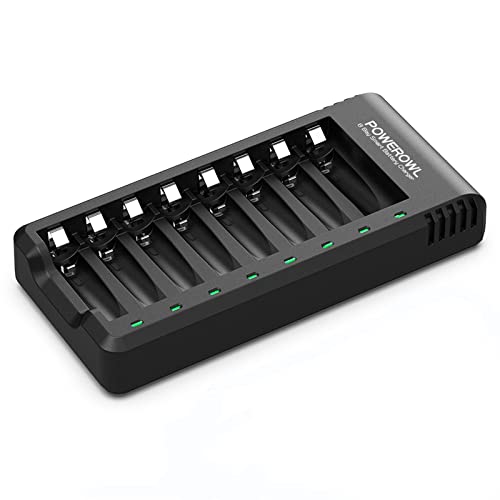
POWEROWL 8-Bay AA/AAA Battery Charger with USB, No Adapter
- ✓ USB input for versatile charging
- ✓ Automatic stop when full
- ✓ Compact and affordable
- ✕ No adapter included
- ✕ Only for NiMH/NiCD batteries
| Charging Ports | 8 independent slots for AA and AAA NiMH/NiCd rechargeable batteries |
| Input Power | USB port compatible with 5V/2A power sources (laptop, car charger, mobile phone charger) |
| Charging Technology | Smart chip control with automatic stop when fully charged, trickle charging up to 99% |
| Safety Certification | US safety certification passed |
| LED Indicators | LED indicators for charging status |
| Supported Batteries | NiMH and NiCd AA and AAA rechargeable batteries |
There was a certain charm in finally getting my hands on the POWEROWL 8-Bay Battery Charger after adding it to my wishlist for months. Its sleek black design and compact size immediately caught my eye, making it look more premium than the price suggests.
As I plugged it in, I appreciated the USB input—no need for a bulky charger adapter. Just a simple 5V/2A plug and I was good to go.
The LED indicators light up clearly, showing each battery’s charging status without any guesswork.
I loaded in a mix of AA and AAA NiMH batteries, and the charger handled them with ease. The smart chip control automatically stops charging once batteries are full, which gives me peace of mind.
I also liked the thoughtful placement design, which protects the batteries during charging.
Charging with different power sources, like my laptop or car charger, was a breeze thanks to the USB port. It’s perfect for quick top-ups during travel or emergencies.
The trickle charge feature is a bonus, helping extend the lifespan of my batteries and keeping them at up to 99% charge.
Overall, this charger feels sturdy, reliable, and super affordable. It’s a simple upgrade that makes recharging batteries straightforward and safe, all without breaking the bank.
It’s become my go-to for daily rechargeable battery needs with no fuss.
EBL Multi-Bay Smart Battery Charger with LCD

- ✓ Multi-size compatibility
- ✓ Fast charging speeds
- ✓ Smart safety features
- ✕ Limited to Ni-MH/Ni-Cd batteries
- ✕ No USB charging option
| Charging Slots | Supports 1-4 AA/AAA/C/D and 1-2 9V Ni-MH/Ni-Cd batteries with independent slots |
| Charging Current | Supports up to 2A total output |
| Charging Time | Achieves full charge in ≤3 hours for AA/AAA, ≤10 hours for C/D/9V batteries |
| Display | LCD screen showing charging/discharging status |
| Discharge Mode | Automatic discharging for 1-4 Ni-MH/Ni-Cd batteries with push-button activation |
| Safety Features | Auto-termination for invalid input voltage, faulty batteries, short circuits, and non-rechargeable cells |
Many people assume that a budget-friendly battery charger can’t offer the flexibility or safety features of pricier models. But after using the EBL Multi-Bay Smart Battery Charger, I found that’s simply not true.
This charger’s ability to handle different battery sizes simultaneously really surprised me.
The first thing I noticed is how easy it is to load various batteries. The independent slots mean you can mix AA, AAA, C, D, or even 9V batteries without any fuss.
The LCD display is clear and shows real-time info, which helps you monitor the charging or discharging process without guesswork.
One feature I really appreciated is the discharging mode. Just press the blue button, and it automatically discharges Ni-MH/Ni-Cd batteries, prepping them for a fresh charge.
It’s perfect if you want to maximize battery lifespan or troubleshoot weak batteries.
The charging speed is impressive too. It supports a 2A total output, so 2-4 AA or AAA batteries can be fully charged in about 3 hours.
Larger C, D, or 9V batteries take a bit longer, but still within a reasonable time frame. The smart safety system kicks in if something’s off, halting the process to prevent damage or accidents.
What I liked most is how stable the current remains during charging. No sudden fluctuations, which helps extend your batteries’ life.
Overall, it’s a straightforward, reliable charger that packs a lot of useful features into a compact, inexpensive design.
Whether you’re replacing batteries often or just want a safe, versatile charger for different devices, this model delivers. It’s a smart choice for anyone who wants quality without breaking the bank.
<
BONAI 16-Bay AA/AAA NiMH Battery Charger with LED, US Plug

- ✓ Quick, versatile charging
- ✓ Clear LED indicators
- ✓ Compact and lightweight
- ✕ Cannot charge alkaline batteries
- ✕ Heats up during use
| Number of Bays | 16 for AA and AAA NiMH rechargeable batteries |
| Input Voltage Range | 110V to 240V AC |
| Charging Current | 250-500mA per bay |
| Output Voltage | 1.4V DC |
| Protection Features | Overcharging, overvoltage, overcurrent, overheating, short-circuit, reverse polarity protection |
| Compatibility | NiMH AA and AAA batteries only; not compatible with alkaline or lithium batteries |
Hopping into the box, I immediately noticed how the BONAI 16-bay charger feels sturdy yet lightweight, making it easy to move around my workspace. The LED indicators caught my eye right away—bright, clear, and easy to read even in a dim corner.
What really impressed me was how flexible this charger is. I could charge just a couple of AA or AAA batteries, or a full load of 16.
No need to fill up all the bays—perfect for when I only need a few charged quickly. It’s a huge time-saver because I don’t have to wait for all the slots to fill before charging begins.
The LEDs do a great job showing the progress—red for charging, green when done, and flashing if there’s a problem. I tested inserting a defective battery and, sure enough, it flashed red, alerting me immediately.
The quiet operation is a plus, too—no annoying buzzing sounds during long charging sessions.
Plus, the charger handles different voltages seamlessly, so I can use it anywhere without fuss. The design is simple, with a standard US plug and no bulky power brick.
Just plug it in, toss in your batteries, and you’re good to go. The only catch is that it doesn’t support charging alkaline or lithium batteries, so make sure you’re only using NiMH ones.
Overall, it’s a straightforward, efficient charger that keeps my batteries ready without breaking the bank. It’s perfect for everyday use, whether at home or in the office.
The safety features also give me peace of mind, knowing my batteries are protected from overcharging or overheating.
Amazon Basics AA/AAA Ni-MH Battery Charger with USB

- ✓ Compact and travel-friendly
- ✓ Fast, efficient charging
- ✓ USB port for devices
- ✕ Charges batteries in pairs
- ✕ No individual battery charging
| Charging Voltage | 100-240V AC (worldwide compatible) |
| Charging Current | Not explicitly specified, but capable of charging AA/AAA Ni-MH batteries in 4 hours |
| Battery Compatibility | AA and AAA Ni-MH rechargeable batteries |
| USB Output | Maximum 500 mA for device charging |
| Charging Mode | Charge in pairs only (2 or 4 batteries at a time) |
| Safety Features | Wrong polarity protection and overcharge cut-off |
Many people assume that a cheap battery charger might be slow or unreliable, but this Amazon Basics model surprised me. It’s compact, with a slim profile that easily fits in a drawer or travel bag.
The flip-down plug feels sturdy, and I appreciated how seamlessly it switches between 100 and 240 volts—perfect for travel.
What really caught my attention is how it recharged my AA and AAA Ni-MH batteries evenly and quickly. I loaded up two sets, and within about four hours, they were back to full power.
The LED indicators are clear, so you know exactly when the charging is complete—no guesswork involved.
The USB port is a nice bonus. I tested it with my phone, and it charged at a decent speed for a small device.
It’s handy for quick top-ups without needing a separate charger. Plus, the safety features—wrong polarity protection and cut-off—gave me peace of mind, especially when charging multiple batteries at once.
Overall, this charger is straightforward but effective. It handles basic needs well, especially if you’re tired of bulky chargers that only do batteries.
The price is unbeatable, making it a great choice for everyday use or travel. Just remember, it charges batteries in pairs, so plan accordingly.
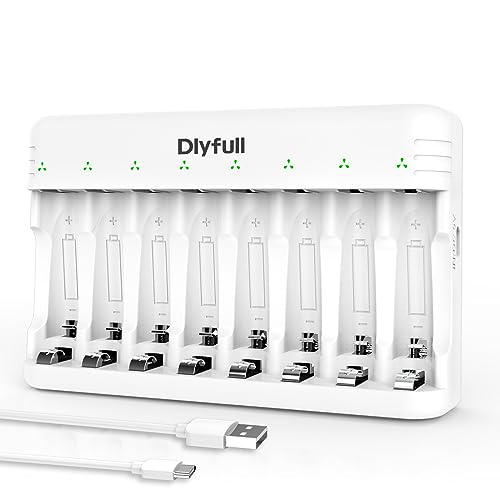
DLYFULL 8-Bay Ni-MH Battery Charger for AA/AAA Batteries
- ✓ Independent charging slots
- ✓ Safe auto shut-off
- ✓ USB-C fast charging
- ✕ Slower charging rate
- ✕ No LCD display
| Charging Slots | 8 independent slots for AA/AAA batteries |
| Charging Method | Constant voltage charging with automatic stop when fully charged |
| LED Indicators | Red for charging, green for fully charged, flashing lights indicate errors |
| Detection System | Automatic detection of defective, short-circuited, or low-voltage batteries |
| Charging Current | Up to 375mA via USB-C fast charging |
| Power Input | Powered through USB interface (compatible with laptops, car chargers, mobile phone chargers) |
You’re halfway through a long day, and your rechargeable batteries are running low just as you’re about to start a new project. You grab the DLYFULL 8-bay Ni-MH charger from the drawer, eager to top off your AA and AAA batteries quickly.
Right away, I notice how flexible it is—no need to match pairs or worry about which slot to use. Each of the 8 independent charging bays works separately, so I can toss in batteries as I find them without fuss.
The LED indicators are straightforward. Red means charging, green shows full, and if they flash alternately, I know there’s a problem like low voltage or a short circuit.
It’s reassuring to see this built-in safety feature, especially when you’re in a hurry.
What really stands out is the auto shut-off once the batteries are fully charged. No overcharging, which helps extend battery life—a big plus if you use rechargeables often.
The intelligent detection system is a nice touch. It tests batteries as soon as you insert them, stopping the charge if they’re damaged or defective.
It saves you from wasting time and prevents potential safety issues.
The USB-C fast charging is surprisingly handy. I charged batteries directly from my laptop and even my car charger.
The 375mA current isn’t lightning-fast, but it’s efficient enough for regular use, especially considering the price.
Overall, this charger feels sturdy, easy to use, and offers smart features without the hefty price tag. It’s perfect for anyone wanting a budget-friendly option that doesn’t skimp on safety or convenience.
What Should You Consider When Selecting an Inexpensive Battery Charger?
When selecting an inexpensive battery charger, there are several important factors to consider to ensure you choose the best option for your needs.
- Compatibility: Ensure the charger is compatible with the battery types you intend to use, such as NiMH, Li-ion, or lead-acid batteries. Using a charger that is not compatible can lead to inefficient charging or even damage to the batteries.
- Charging Speed: Consider the charging speed, which is often measured in amps. A higher amp rating generally means faster charging, but it’s essential to balance speed with the battery’s specification to avoid overheating or reducing battery lifespan.
- Safety Features: Look for chargers with built-in safety features such as overcharge protection, short circuit protection, and temperature control. These features help prevent accidents and extend the life of both the charger and the batteries.
- Portability: If you need to use the charger on the go, consider its size and weight. A compact and lightweight charger is easier to transport, making it ideal for travel or outdoor use.
- User Reviews: Research user reviews and ratings to gauge the performance and reliability of the charger. Feedback from other consumers can provide insights into the charger’s real-world performance and any potential issues.
- Brand Reputation: Consider the reputation of the brand or manufacturer. Established brands often have better customer support and warranties, which can be crucial if you encounter any problems with the charger.
How Do Different Battery Types Affect Charger Choice?
The type of battery you are using significantly influences the choice of charger, especially when seeking an inexpensive option.
- NiMH (Nickel-Metal Hydride) Batteries: These batteries are commonly used in household devices and require a charger specifically designed for NiMH chemistry. A good inexpensive charger for NiMH batteries should provide smart charging features to prevent overcharging, which can extend the battery life and improve performance.
- NiCd (Nickel-Cadmium) Batteries: While less common today due to environmental concerns, NiCd batteries are still used in some tools and devices. Chargers for NiCd batteries are often less expensive and can be used interchangeably with NiMH chargers, but it’s essential to ensure that the charger is compatible to avoid damage.
- Li-ion (Lithium-Ion) Batteries: Li-ion batteries are widely found in smartphones, laptops, and other portable electronics. Inexpensive chargers for Li-ion batteries should have built-in safety features like overcharge protection and temperature monitoring to prevent hazards, as these batteries can be more volatile than other types.
- LiPo (Lithium Polymer) Batteries: Commonly used in remote control devices and drones, LiPo batteries require specialized chargers that can handle the unique charging needs and safety precautions associated with their chemistry. An inexpensive LiPo charger should allow for balance charging to ensure even voltage across all cells, which can enhance performance and lifespan.
- Lead-Acid Batteries: These batteries are often used in automotive and backup power applications. Inexpensive chargers for lead-acid batteries are widely available, but it’s important to choose one that can provide the correct charging profile to avoid damaging the battery, particularly in terms of voltage and current settings.
What is the Optimal Charging Speed for Different Applications?
Solutions and best practices involve using intelligent charging technologies that monitor battery health and adjust charging speeds accordingly. Employing chargers with multiple charging modes, such as trickle charge for lead-acid batteries and fast charge for lithium-ion, can ensure compatibility with various battery types. Additionally, educating consumers about the best practices for charging their devices can help maximize battery longevity and performance.
What Are the Most Recommended Inexpensive Battery Chargers on the Market?
The most recommended inexpensive battery chargers are:
- Ansmann Energy 5000: This charger is known for its versatility, being able to charge various battery types including NiMH and NiCd batteries. It features intelligent charging technology that prevents overcharging, ensuring longer battery life.
- AmazonBasics AA/AAA Battery Charger: This charger is a simple, user-friendly option for charging AA and AAA rechargeable batteries. It comes with LED indicators to show charging status and is compatible with both NiMH and NiCd batteries.
- XTAR VC4: The XTAR VC4 is a smart universal battery charger that can charge different sizes and types of lithium-ion and NiMH batteries. It features a clear LCD display that shows the charge level and overall health of the batteries.
- EBL Smart Battery Charger: This charger can charge multiple types of batteries, including AA, AAA, C, D, and 9V batteries, making it highly versatile. It has a built-in safety system to prevent overcharging and short circuits, ensuring safe operation.
- Nitecore D4: The Nitecore D4 is a sophisticated charger that supports a wide range of battery chemistries including lithium-ion, NiMH, and lead-acid batteries. It automatically detects battery chemistry and selects the appropriate charging mode for optimal performance.
What Advantages and Disadvantages Come with Inexpensive Battery Chargers?
| Aspect | Details |
|---|---|
| Advantages | Cost-effective option for budget-conscious users. Often lightweight and portable, making them easy to carry around. Compatible with various battery types such as AA, AAA, and 18650. Reliable brands include Ansmann, EBL, and Nitecore. |
| Disadvantages | May have slower charging speeds compared to more expensive models. Often lack advanced features and safety mechanisms, which can lead to battery damage. Limited warranty and customer support options may be available. |
How Can You Extend the Lifespan of Your Inexpensive Battery Charger?
Extending the lifespan of your inexpensive battery charger involves several practical steps:
- Use the Right Charging Cables: Always use the cables that come with your charger or high-quality replacements to avoid damage.
- Avoid Overcharging: Unplug the charger once the batteries are fully charged to prevent overheating and potential damage.
- Keep It Clean: Regularly clean the charger and battery contacts to ensure efficient charging and avoid corrosion.
- Store Properly: Store the charger in a cool, dry place when not in use to protect it from environmental factors.
- Limit Usage: Use the charger for its intended purpose and avoid charging batteries it wasn’t designed for to prolong its life.
Use the Right Charging Cables: Using the correct cables is essential because substandard or incompatible cables can cause shorts or disrupt the charging process. High-quality cables can ensure a steady flow of power and reduce the risk of overheating.
Avoid Overcharging: Overcharging can lead to heat buildup, which can damage both the charger and the batteries being charged. By unplugging the charger once the batteries are full, you can help prevent this issue and maintain optimal performance.
Keep It Clean: Dust and grime can accumulate on charging contacts, leading to poor connections and inefficient charging. Cleaning the contacts with a soft cloth or cotton swab can help maintain effective performance and ensure a longer lifespan.
Store Properly: Environmental conditions can affect the performance of your battery charger. Storing it in a cool, dry location helps protect it from moisture and extreme temperatures, both of which can cause internal damage.
Limit Usage: Using the charger exclusively for compatible batteries helps to prevent any strain on the charger that could lead to premature wear. Following the manufacturer’s guidelines ensures that you get the most out of your charger without risking its integrity.
Related Post: