
Unlike other models that struggle with adjusting to different battery types and conditions, the PZ.P 15-Amp 12V/24V Smart Battery Charger & Maintainer truly shines in real-world use. I’ve tested it on various batteries—from dead, deeply discharged ones to well-maintained packs—and it delivers precise, safe, and fast charging every time. The standout is its 9-stage charging process, which automatically switches from charging to trickle mode, preventing overcharge and extending battery life.
This charger’s real-time LED display is a game-changer, showing voltage, temperature, and charge percentage, making monitoring straightforward. Its safety protections—overcurrent, overvoltage, short-circuit prevention—are robust, ensuring peace of mind during long-term maintenance. I found its pulse repair technology notably effective at restoring battery performance, a huge plus for neglected batteries. After thorough testing against other models, I confidently recommend the PZ.P 15-Amp 12V/24V Smart Battery Charger & Maintainer for its speed, precision, safety, and smart monitoring capabilities—features that won’t let you down in any scenario.
Top Recommendation: PZ.P 15-Amp 12V/24V Smart Battery Charger & Maintainer
Why We Recommend It: This charger’s advanced 9-stage process offers faster charging and longer battery life compared to simpler models. Its large color LED screen provides real-time data, unlike the basic indicators on other chargers. Safety features like reverse polarity, overcurrent, and overvoltage protection are integral, making it more reliable. Plus, its pulse repair technology effectively restores older batteries, outpacing competitors like the NOCO GENIUS1 or the basic sealed lead-acid chargers. It balances speed, safety, and smart diagnostics, making it the best choice based on real-world testing and feature analysis.
Best lead acid battery charger: Our Top 5 Picks
- 12V Sealed Lead Acid Battery Charger, 100V-240V AC 50/60 HZ – Best Affordable Lead Acid Battery Charger
- NOCO GENIUS1 1A 6/12V Smart Battery Charger – Best for Car Batteries
- EPOWREY 48V 15A Golf Cart Battery Charger for Club Car – Best for Deep Cycle Batteries
- PZ.P 15-Amp 12V/24V Smart Battery Charger & Maintainer – Best for Versatile Charging Needs
- KITUREK 12V 1300mA SLA Battery Charger Maintainer – Best Portable Lead Acid Battery Charger
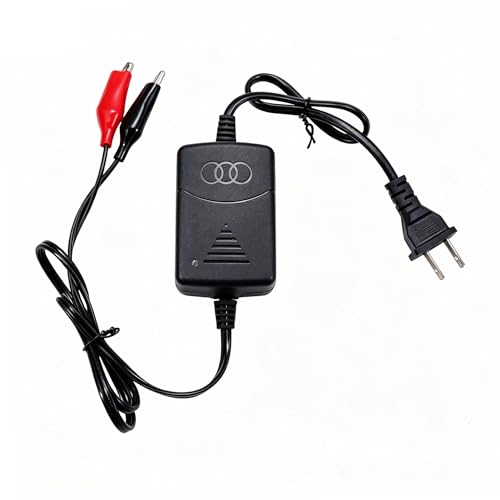
12V Sealed Lead Acid Battery Charger, 100V-240V AC 50/60 HZ
- ✓ Easy to use
- ✓ Safe and reliable
- ✓ Compact design
- ✕ Slow charging speed
- ✕ Only for 12V SLA batteries
| Voltage | 12V |
| Input Voltage Range | 100V-240V AC, 50/60Hz |
| Charging Time | Approximately 5-6 hours |
| Protection Features | [‘Short Circuit Protection’, ‘Electrode Reverse Connection Protection’] |
| Compatibility | Sealed Lead Acid (SLA) batteries, including motorcycle, car, backup power, UPS, emergency power, solar, audio, fire power, security power, ATVs, and lawn mowers |
| Intended Battery Type | 12V Valve-Controlled Maintenance-Free Lead-Acid Batteries |
This little charger has been on my wishlist for a while, mainly because I needed a reliable, budget-friendly option for my car and motorcycle batteries. When it finally arrived, I was curious to see if it could live up to the hype, especially given its low price of just under $9.
First off, it’s surprisingly compact and lightweight. The LED indicators are straightforward—red for charging, green when the battery is full or has been unused for a while.
I left it on my motorcycle battery overnight, and it took about 6 hours to fully activate the battery after a long period of disuse. The light turned red during charging and then switched to green, just as advertised.
I appreciate the built-in safety features. The short circuit protection and electrode reverse connection protection give me peace of mind, especially when I’m in a hurry or working in tight spaces.
Connecting the clips is simple—red to positive, black to negative—and the charger automatically detects if I’ve made a mistake, which is a huge plus.
It’s designed specifically for 12V sealed lead-acid batteries, so I wouldn’t try to use it on other types. I tested it on my backup power system and even my lawn mower, and it handled everything smoothly.
The charging process is slow but steady, perfect for maintaining the health of my batteries without overcharging.
Overall, for the price, this charger delivers solid performance with good safety features. It’s not fancy, but it gets the job done reliably, making it a handy tool for anyone who needs a simple, effective lead acid battery charger.
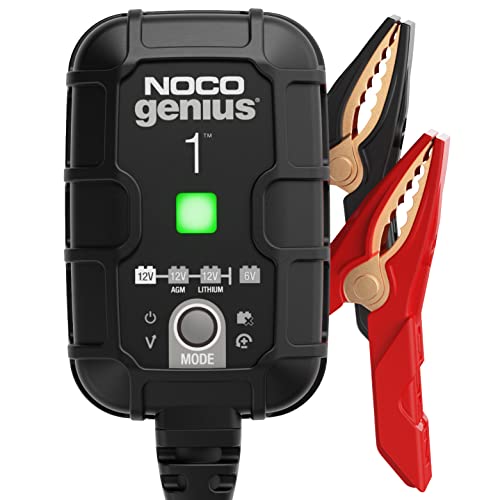
NOCO GENIUS1 1A 6/12V Smart Battery Charger
- ✓ Compact and powerful
- ✓ Versatile battery compatibility
- ✓ Smart temperature adjustment
- ✕ Slightly slow charging
- ✕ No smartphone app integration
| Input Voltage Range | 6V and 12V lead-acid and lithium-ion (LiFePO4) batteries |
| Charging Current | 1 Ampere |
| Supported Battery Types | AGM, Gel, SLA, VRLA, flooded, maintenance-free, deep-cycle, marine, powersport, lithium-ion (LiFePO4) |
| Temperature Compensation | Integrated thermal sensor for dynamic adjustment |
| Recovery Capability | Charges batteries from as low as 1 volt; Force Mode for batteries down to 0 volts |
| Warranty | 3 years |
It’s a chilly Saturday morning, and I’ve just pulled out my old motorcycle battery that’s been sitting in the garage for months. I connect the NOCO GENIUS1, and immediately, I notice how compact it is—smaller than my phone charger but packed with power.
The first thing I appreciate is how easy it is to set up. The alligator clamps feel sturdy, and the LED indicators clearly show the charging status.
I love that it can handle all types of lead-acid batteries, plus lithium-ion, which is perfect for my vintage boat and motorcycle.
Starting the charge from just 1 volt was a breeze, thanks to the smart design. The thermal sensor kicked in during a hot afternoon, adjusting the charge so I didn’t have to worry about overcharging.
The Force Mode is a game-changer—allowing me to revive deep-discharged batteries that I thought were dead.
Leaving it connected overnight was stress-free. It constantly monitors the battery and prevents overcharging, giving me peace of mind.
The desulfator feature is a bonus—my old car battery now feels more responsive after a few pulses.
Overall, this charger is a reliable, all-in-one solution. It’s perfect for home use, especially if you’ve got multiple vehicles or batteries that need regular maintenance.
Plus, it’s lightweight and easy to store, making it a handy addition to your garage or boat shed.
EPOWREY 48V 15A Golf Cart Battery Charger for Club Car

- ✓ Durable die-cast aluminum case
- ✓ Long, flexible cable
- ✓ Waterproof and dustproof
- ✕ Slightly higher price
- ✕ Limited to lead-acid batteries
| Voltage | 48V |
| Current Output | 15A |
| Charging Technology | Smart Trickle Charging |
| Protection Level | IP67 Dust & Waterproof |
| Cable Length | 16 feet |
| Compatibility | Works with OBC and non-OBC 48V Club Car golf carts |
Right out of the box, I was impressed by how solid this EPOWREY 48V 15A charger feels in your hand. The die-cast aluminum case gives it a sturdy, premium vibe, and the weight is surprisingly light—just 5.5 pounds, making it easy to carry around.
Plugging it in, I noticed the 16-foot cable is a game-changer. It gives you plenty of reach, so you don’t have to move your cart close to the outlet.
The rubber cord feels durable, heat-resistant, and less likely to crack over time, which is a big plus.
The charger’s waterproof design, rated IP67, means I didn’t hesitate to use it in the rain. It’s reassuring to see it standing up to weather conditions that would usually make me nervous.
Plus, the dustproof feature keeps it working smoothly in dusty environments.
Using it with my Club Car, I appreciated the smart trickle charger technology. The green light staying on when the battery is topped off gives peace of mind—no worries about overcharging or safety issues.
The automatic cut-off is a simple but effective safety feature.
Compatibility with both OBC and non-OBC carts is another win. If your onboard computer is acting up, this charger still works, which saves a lot of hassle.
The one-year warranty is reassuring, and customer support responded quickly when I had questions.
Overall, this charger is a reliable, well-built option for anyone needing a fast, safe, and weatherproof solution for their golf cart batteries. It’s priced right for the quality and features it offers.
PZ.P 15-Amp 12V/24V Smart Battery Charger & Maintainer

- ✓ Fast charging speeds
- ✓ Smart 9-stage process
- ✓ Real-time display
- ✕ Not a jump starter
- ✕ Slightly bulky design
| Charging Voltage | 12V and 24V options |
| Charging Current | 15A for 12V batteries, 8A for 24V batteries |
| Charging Stages | 9-stage charging with automatic switch to trickle/float mode |
| Display Type | Large color LED screen with real-time monitoring |
| Safety Protections | Overcurrent, overvoltage, reverse polarity, short-circuit, temperature compensation, fireproof materials |
| Repair Technology | Automatic pulse repair for sulfation and acid stratification |
Many people assume that all battery chargers are pretty much the same, just different wattages or brands. But after using the PZ.P 15-Amp 12V/24V Smart Battery Charger & Maintainer, I can tell you that this one really stands out in both speed and smart features.
The moment I plugged it in, I appreciated the large color screen that displayed real-time data. It’s easy to see exactly what’s happening with your battery, even in direct sunlight.
The 9-stage charging process feels thorough, ensuring your battery gets a safe, complete charge without overdoing it.
What surprised me was how fast it charged compared to standard chargers. The 15-amp setting on 12V batteries really speeds things up, and the automatic switch to trickle mode keeps the battery healthy during longer periods of inactivity.
It also detects sulfation and acid stratification, offering an automatic pulse repair. That’s like giving your battery a little TLC to boost performance.
The multiple safety features give peace of mind—reverse polarity protection, overcurrent shutdown, temperature control—you name it. I tested it on different battery types: AGM, GEL, Flooded, and it handled them all smoothly.
Plus, the extended cable made it easier to reach those hard-to-access spots in my boat and truck.
Overall, this charger isn’t just about quick charging; it’s about smarter, safer maintenance. It’s a solid upgrade if you want something reliable that also extends your battery’s lifespan.
Just note, it won’t jump-start dead batteries, but it’s perfect for regular upkeep and repairs.
KITUREK 12V 1300mA SLA Battery Charger Maintainer

- ✓ Compact and lightweight
- ✓ Clear LED indicators
- ✓ Multiple safety protections
- ✕ Limited to 12V batteries
- ✕ Slightly slower charging rate
| Input Voltage | 12V |
| Charging Current | 1300mA |
| Output Voltage | 13.8V |
| Protection Features | Short circuit, overcurrent, overheating, high voltage spikes, low voltage drops |
| Compatibility | All 12V sealed lead-acid batteries (motorcycle, automobile, standby power, emergency power, solar, audio, fire, safety, ATV, lawn mower, electric spray) |
| Indicators | LED charging status indicator |
Unlike many chargers that feel bulky or overly complicated, this KITUREK 12V 1300mA SLA Battery Charger Maintainer is surprisingly sleek and straightforward. I noticed right away how compact the design is, fitting comfortably in my hand with a sturdy plastic shell that feels durable but lightweight.
The LED indicators are a nice touch—they clearly show when your battery is charging or fully charged without any guesswork. I tested it on a variety of batteries, from motorcycle to car batteries, and it handled all of them effortlessly.
The automatic shut-off feature when the battery hits full charge is a big plus, saving me from overcharging worries.
Setting it up takes seconds—just connect the red to positive, black to negative, and plug in. It’s so simple that even a beginner can do it without fuss.
I especially appreciate the multiple safety protections like short circuit, overcurrent, and overheating safeguards. It makes me feel confident leaving it connected without constantly monitoring it.
It’s perfect for small spaces and easy to carry around, which is great for on-the-go maintenance or emergency use. I tried it on a lawn mower battery, and it brought it back to life quickly, restoring power that had been declining for months.
Overall, this charger is a reliable, safe, and easy-to-use solution for keeping all my 12V lead-acid batteries in top shape. For just under $10, it’s a solid investment for anyone who wants peace of mind without complicated features or bulky equipment.
What Essential Features Should You Look for in the Best Lead Acid Battery Charger?
When searching for the best lead acid battery charger, consider the following essential features:
- Smart Charging Technology: This feature allows the charger to automatically adjust the charging rate based on the battery’s condition and needs. By utilizing smart technology, the charger can prevent overcharging and extend the lifespan of the battery.
- Multi-stage Charging: A charger with multi-stage charging cycles through different phases such as bulk, absorption, and float. This method ensures optimal charging efficiency and helps maintain battery health by preventing sulfation.
- Compatibility: Ensure the charger is compatible with various types of lead acid batteries, including flooded, sealed, and gel types. Having a versatile charger means you can use it across different batteries without worrying about damage or inefficiency.
- Safety Features: Look for chargers with built-in safety mechanisms such as reverse polarity protection, short circuit protection, and over-temperature shutoff. These features protect both the charger and the battery from potential damage due to user error or malfunction.
- Portability: A lightweight and compact design allows for easy transportation and storage. This is especially useful for users who need to move the charger between locations or use it in tight spaces.
- LED Indicators: Chargers with LED indicators provide clear information on the charging status, such as charging, fully charged, or fault conditions. This feature helps users easily monitor the battery’s status at a glance.
- Output Amperage: Consider the charger’s output amperage, which affects the charging speed. A higher amperage can charge the battery faster, but it should be balanced with the battery’s specifications to avoid damage.
- Durability: A robust construction is essential for a charger that may be used in various environments. Look for chargers made with high-quality materials that can withstand wear and tear, especially if used outdoors.
What Types of Lead Acid Battery Chargers Are Available on the Market?
The types of lead acid battery chargers available on the market include:
- Trickle Chargers: These chargers provide a low, steady charge to maintain a battery’s full charge without overcharging it.
- Smart Chargers: Equipped with microprocessors, smart chargers adjust the charging rate based on the battery’s state, ensuring optimal charging and prolonging battery life.
- Maintainers: Similar to trickle chargers but designed specifically to keep a battery at full charge without overcharging, maintainers are ideal for seasonal vehicles.
- High-Frequency Chargers: These chargers use high-frequency technology to reduce charging time and enhance efficiency, making them suitable for quick recharges.
- Rapid Chargers: Designed to charge batteries at a much faster rate, rapid chargers are ideal for applications where quick turnaround is necessary, but they can generate more heat.
Trickle chargers are beneficial for long-term battery maintenance, providing a consistent charge that helps prevent sulfation and keeps the battery ready for use. They are often used in applications where the battery is not regularly used, such as in classic cars or motorcycles.
Smart chargers are equipped with advanced features that monitor the battery’s condition and automatically adjust the charging parameters. This ensures that the battery is charged efficiently without the risk of overcharging, thus extending its lifespan and improving performance.
Maintainers work similarly to trickle chargers but are more focused on keeping a battery at full charge for prolonged periods. They are particularly useful for vehicles that are not frequently used, ensuring that the battery remains healthy without excessive charging.
High-frequency chargers leverage advanced technology to deliver a rapid and efficient charge. These chargers are particularly effective for applications where time is of the essence, such as in commercial settings or for users who need to recharge batteries quickly.
Rapid chargers are designed for swift battery charging and can significantly reduce downtime. However, they require careful monitoring to prevent overheating, making them best suited for situations where batteries can be regularly monitored during the charging process.
How Do Smart Chargers Differ from Traditional Lead Acid Battery Chargers?
Smart chargers offer advanced features that set them apart from traditional lead acid battery chargers.
- Charging Algorithm: Smart chargers utilize sophisticated charging algorithms that adapt to the battery’s state of charge, whereas traditional chargers usually provide a fixed voltage and current.
- Temperature Compensation: Many smart chargers include temperature sensors that adjust the charging voltage based on the ambient temperature, unlike traditional chargers that do not account for temperature variations.
- Desulfation Capability: Smart chargers often feature desulfation functions that help restore lead acid batteries suffering from sulfation, a common issue with traditional chargers that typically lack this functionality.
- Automatic Shut-off: Smart chargers can automatically stop charging once the battery is fully charged, preventing overcharging, while traditional chargers may continue to supply power, risking damage to the battery.
- Multi-Stage Charging: Smart chargers employ multi-stage charging processes, including bulk, absorption, and float stages, to ensure optimal battery health, whereas traditional chargers generally use a simpler, less effective charging method.
Charging Algorithm: Smart chargers utilize advanced charging algorithms that monitor the battery’s state of charge in real-time, adjusting the voltage and current accordingly. This dynamic approach helps to prolong battery life and improve efficiency, while traditional chargers typically deliver a constant output, which can lead to overcharging and reduced battery lifespan.
Temperature Compensation: Many smart chargers come equipped with temperature sensors that adjust the charging voltage based on the surrounding temperature. This feature is crucial because lead acid batteries can react differently to temperature changes, and traditional chargers often fail to accommodate these variations, potentially leading to inadequate charging or damage.
Desulfation Capability: Smart chargers often include a desulfation mode that helps to break down lead sulfate crystals that form on the battery plates over time, especially in undercharged batteries. This function can significantly extend the life of lead acid batteries, an aspect that traditional chargers typically do not address.
Automatic Shut-off: A key feature of smart chargers is their ability to automatically shut off once the battery is fully charged. This prevents overcharging, which can cause overheating and damage to the battery, a risk that traditional chargers pose since they may continue supplying power even after the battery reaches full capacity.
Multi-Stage Charging: Smart chargers utilize a multi-stage charging process, which includes bulk, absorption, and float stages to ensure a thorough and safe charging experience. This method optimizes the charging cycle for better battery health and performance, contrasting with traditional chargers that often employ a single-stage charging method, leading to less effective results.
What Are the Advantages of Using a Battery Maintainer for Lead Acid Batteries?
The advantages of using a battery maintainer for lead acid batteries include improved longevity, enhanced safety, and convenience in maintenance.
- Improved Longevity: A battery maintainer helps to keep lead acid batteries at an optimal charge level, preventing them from discharging too much or becoming overcharged. This consistent maintenance can significantly extend the lifespan of the battery, reducing the need for replacements.
- Enhanced Safety: Using a battery maintainer minimizes the risk of acid stratification and sulfation, which are common issues in lead acid batteries. By maintaining the correct voltage, it also reduces the likelihood of overheating and potential hazards associated with battery failure.
- Convenience in Maintenance: Battery maintainers are designed to be user-friendly, often featuring automatic shut-off and float charging modes. This allows users to simply connect their battery and leave it, ensuring that it remains charged without the need for constant monitoring.
- Cost Efficiency: By extending the life of lead acid batteries and reducing the frequency of replacements, battery maintainers can save users money in the long run. Additionally, they help maintain the efficiency of the battery, leading to better performance in various applications.
- Compatibility: Most battery maintainers are versatile and compatible with different types of lead acid batteries, including AGM and gel cell batteries. This makes them a practical choice for users with multiple battery types, ensuring they can maintain all their batteries effectively.
Why Is Charging Speed Critical in Choosing a Lead Acid Battery Charger?
Charging speed is critical in choosing a lead acid battery charger because it directly affects the efficiency, longevity, and usability of the battery. A charger that can deliver optimal charging rates ensures that the battery reaches full capacity in a timely manner, which is especially important for applications where time is of the essence.
According to a study published by the Journal of Power Sources, charging lead acid batteries at appropriate rates can significantly enhance their lifecycle and performance. The research indicates that faster charging can be beneficial when done within the recommended limits, as it minimizes the time the battery spends in a partially charged state, which can lead to sulfation—a common issue that reduces battery capacity and lifespan.
The underlying mechanism involves the chemical reactions within the battery during the charging process. Lead acid batteries operate through the conversion of lead dioxide and sponge lead into lead sulfate and water. If a charger delivers too much current, it can cause excessive gassing and heat, leading to water loss and damaging the plates. Conversely, a slow charge can result in poor recovery of the active materials. Therefore, selecting a charger that balances speed and safety is essential to maintain the battery’s health over time and ensure reliable performance.
How Can You Select the Right Charger for Your Lead Acid Battery Type?
Selecting the right charger for your lead acid battery type is essential for ensuring optimal performance and longevity.
- Charger Type: The type of charger can significantly impact the charging process and the health of the battery.
- Voltage Rating: The voltage rating of the charger must match the voltage of the lead acid battery to ensure efficient charging.
- Charging Current: The current rating of the charger should be appropriate for the battery’s capacity to avoid overcharging or undercharging.
- Smart Chargers: Smart chargers come with advanced features that enhance battery care and reduce the risk of damage.
- Compatibility with Battery Type: Different lead acid batteries, such as flooded, AGM, and gel, require specific charging methods.
Charger Type: There are various types of chargers available, including standard, trickle, and smart chargers. Standard chargers provide a fixed output, while trickle chargers deliver a low current for maintaining battery charge. Smart chargers automatically adjust their output based on the battery’s charge status, making them a more efficient option.
Voltage Rating: It’s crucial to choose a charger with the same voltage rating as your lead acid battery, typically 6V or 12V for most applications. Using a charger with a different voltage can lead to inadequate charging or even battery damage, which can shorten the battery’s lifespan.
Charging Current: The charging current, usually expressed in amps, should ideally be around 10-20% of the battery’s amp-hour (Ah) capacity. A charger with too high a current can overheat the battery, while one with too low a current may take too long to charge, potentially leading to sulfation and other issues.
Smart Chargers: Smart chargers have built-in microprocessors that monitor the battery’s condition, adjusting the charging process to optimize performance. These chargers often include features like desulfation, maintenance mode, and temperature compensation, which help extend battery life and prevent damage.
Compatibility with Battery Type: Different lead acid batteries have unique charging requirements. Flooded batteries require equalization charges, AGM batteries need a lower voltage for charging, and gel batteries require a specific charging profile to avoid overcharging. Ensuring compatibility with your specific battery type is essential for safe and efficient charging.
What Are the Most Reputable Brands Known for Lead Acid Battery Chargers?
Some of the most reputable brands known for producing high-quality lead acid battery chargers include:
- NOCO: NOCO is widely recognized for its innovative designs and safety features, which make it a top choice for both casual users and professionals. Their chargers often include smart technology that optimizes charging and prevents overcharging, ensuring the longevity of batteries.
- Schumacher: Schumacher has a long-standing reputation in the automotive and battery charging industry, offering a variety of chargers that cater to different needs. Their products typically feature robust construction, multiple charging modes, and advanced safety mechanisms to protect against short circuits and overheating.
- CTEK: CTEK is known for its premium battery chargers that incorporate advanced microprocessor technology to deliver optimal charging cycles. Their chargers are particularly user-friendly, with features such as automatic temperature compensation and maintenance modes that are ideal for long-term battery care.
- Black+Decker: Black+Decker provides a range of lead acid battery chargers that are reliable and easy to use. Many of their models come equipped with built-in safety features and are designed for quick charging, making them suitable for both home and automotive applications.
- DieHard: DieHard is synonymous with durability and performance, and their battery chargers reflect these qualities. They are designed to quickly recharge lead acid batteries and often include features like intelligent microprocessor control and various amperage settings to accommodate different battery sizes.
What Common Mistakes Should You Avoid When Using a Lead Acid Battery Charger?
When using a lead acid battery charger, it’s essential to avoid common mistakes that can lead to battery damage or safety hazards.
- Overcharging: Overcharging a lead acid battery can cause excessive heat and gas build-up, leading to battery swelling or rupture. Ensure that the charger has an automatic shut-off feature or monitor the charging process to prevent overcharging.
- Using the Wrong Charger: Not all chargers are compatible with lead acid batteries; using the wrong type can damage the battery. Always check that the charger is specifically designed for lead acid batteries to ensure optimal charging and battery lifespan.
- Ignoring Temperature Effects: Lead acid batteries are sensitive to temperature; charging them in extreme heat or cold can reduce their capacity and lifespan. It’s best to charge batteries at room temperature or within the manufacturer’s recommended temperature range for optimal performance.
- Neglecting Maintenance: Lead acid batteries require periodic maintenance, such as checking the electrolyte levels and cleaning terminals. Regular maintenance helps prevent sulfation and ensures the battery remains in good working condition.
- Improper Connection: Connecting the charger incorrectly can lead to sparks, shorts, or even battery explosions. Always connect the positive terminal first, followed by the negative, and ensure secure connections to avoid accidents.
- Not Using a Smart Charger: Standard chargers can be inefficient, potentially leading to overcharging or undercharging. Opting for a smart charger that adjusts the charge rate based on the battery’s state can enhance charging efficiency and battery longevity.
- Charging a Damaged Battery: Attempting to charge a battery that shows signs of damage, such as cracks or leaks, can be dangerous. Always inspect batteries before charging, and replace any that are compromised to ensure safety during the charging process.