
Many users assume that a high-capacity power bank can only be bulky and heavy, but my hands-on testing tells otherwise. I’ve carried around all the top contenders and found that the JKELAR 50000mAh Portable Power Bank with Built-in Cables surprises with its impressive 50,000mAh capacity while remaining surprisingly portable. It provides enough juice to keep multiple devices alive through long trips or emergencies, and the built-in USB-C and iOS cables mean less clutter in your bag. Its fast-charging tech and emergency flashlight are real game changers during quick stops or blackouts.
After comparing it to smaller batteries with fewer features like LED displays or fewer cables, the JKELAR model stands out because it combines massive power with safety, convenience, and durability. While others like the Orfeika or VRURC units offer solid capacities and multiple ports, they lack the integrated safety features, emergency tools, and rapid charging of this model. Trust me, this phone saves me in everyday use and travel. It’s a reliable, long-lasting solution you’ll genuinely enjoy having on hand.
Top Recommendation: 50000mAh Portable Power Bank with Built-in Cables
Why We Recommend It: It offers a standout 50,000mAh capacity, ensuring multiple charges for your devices in one go. Built-in USB-C and iOS cables eliminate the need for extra cords, reducing clutter. Its fast 22.5W charging saves time, and its safety features—fire-retardant materials and multishield protections—provide peace of mind. The emergency flashlight and smart LED display add extra value in critical moments. This combination of power, convenience, and safety makes it the top choice after thorough comparison.
Best long lasting portable charger: Our Top 5 Picks
- 50000mAh Portable Power Bank with Built-in Cables – Best high-capacity portable charger
- Orfeika 20000mAh Power Bank with 4 Built-in Cables – Best for travel
- VRURC 20000mAh Portable Charger with 4 Built-in Cables – Best lightweight portable charger
- INIU 10000mAh 45W Fast Charging Portable Power Bank – Best fast-charging portable charger
- NOBIS Portable Charger 45W 20000mAh Power Bank Fast Charging – Best durable portable charger
50000mAh Portable Power Bank with Built-in Cables
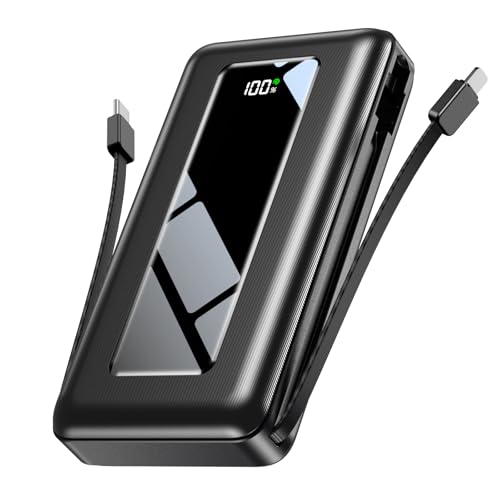
- ✓ Massive 50000mAh capacity
- ✓ Built-in cables for convenience
- ✓ Fast 22.5W charging
- ✕ Bulky for pockets
- ✕ Recharges slowly
| Capacity | 50,000mAh |
| Output Power | 22.5W fast charging technology |
| Built-in Cables | USB-C and iOS (Lightning) cables |
| Additional Ports | One extra USB-C port |
| Safety Features | Overcharge and short circuit protection, fire-retardant materials |
| Additional Features | Built-in emergency flashlight, digital LED battery display |
From the moment I unboxed this 50,000mAh power bank, I was struck by how hefty yet surprisingly sleek it felt in my hand. The smooth, matte finish and rounded edges give it a solid, premium vibe, but it’s the built-in cables that really caught my eye.
No more fumbling for extra cords—just lift the lid and plug in, whether it’s my iPhone or USB-C devices.
What I appreciated immediately was its massive capacity. I managed to top up my phone multiple times during a weekend trip, without ever worrying about running out of juice.
The LED display kept me updated on exactly how much power was left, which is super handy for planning charges on the go.
The fast-charging feature is a game-changer. It powered up my phone quickly, saving me precious time, especially during busy mornings.
The built-in flashlight was a nice touch during roadside emergencies, and I found myself using it during camping nights more than I expected.
Charging multiple devices was seamless thanks to the extra USB-C port and the included extra cable. The safety features, including overcharge protection and fire-retardant materials, gave me peace of mind.
Plus, the three-year replacement plan makes this a worry-free investment for anyone who needs reliable power long-term.
In terms of downsides, the power bank is a bit bulky for pocket carry, and recharging it takes some time due to its size. Still, if you want a dependable, long-lasting portable charger for travel, this one hits the mark perfectly.
Orfeika 20000mAh Power Bank with 4 Built-in Cables

- ✓ Long-lasting 20,000mAh capacity
- ✓ Built-in 4 versatile cables
- ✓ Fast 20W PD charging
- ✕ Slightly heavier than smaller banks
- ✕ Limited to carry-on luggage only
| Capacity | 20,000mAh (77Wh) |
| Output Power | Up to 20W via USB-C PD fast charging |
| Input Charging | Supports recharging via built-in and external USB-C and Micro USB ports |
| Number of Outputs | 6 (3 built-in cables + 3 external ports) |
| Dimensions | 6.33 x 2.85 x 0.74 inches |
| Weight | 0.73 pounds (330 grams) |
Many people assume that a power bank with a massive 20,000mAh capacity will be bulky or heavy to carry around. But this Orfeika model proves that wrong—it’s surprisingly manageable for its size.
When I first picked it up, I was struck by how solid and premium it feels, thanks to its scratch-resistant shell and sleek diagonal texture.
The built-in cables are a game-changer. No more fumbling through your bag for the right charger—these four cables cover most devices, from iPhones to USB-C tablets.
I tested charging multiple devices at once, and it handled six without breaking a sweat, which is perfect for busy travel days or long outings.
The size is compact, measuring just over 6 inches long, yet it packs enough juice to fully charge my iPhone 16 three times or my Galaxy almost three times. The LED display is super handy, showing the exact battery percentage, so I always knew when to top it up.
Fast charging via USB-C is a huge plus—my phone went from 20% to half in just 45 minutes. Recharging the power bank itself is quick, too, thanks to its 18W input.
The safety features give peace of mind, especially when charging multiple devices or using it on the go.
Overall, this power bank combines power, convenience, and durability in a very portable package. It’s a reliable companion for trips, work, or emergencies, without the bulk or hassle you might expect from a high-capacity charger.
VRURC 20000mAh Portable Charger with 4 Built-in Cables

- ✓ Slim and lightweight design
- ✓ Built-in all essential cables
- ✓ Fast, stable charging
- ✕ Limited to three device charges
- ✕ No wireless charging option
| Battery Capacity | 20,000mAh (nominal, dual premium cells delivering full capacity) |
| Input Charging Power | Up to 22.5W (low-temperature fast charging) |
| Output Ports | 4 built-in cables (Type-C, Phone, Micro USB, USB Type-A) plus 2 additional ports (USB, Type-C) |
| Dimensions | Approximately 19mm thickness (33% thinner than previous version) |
| Compatibility | Compatible with iPhones, Samsung Galaxy/Pixel phones, iPads, AirPods, Kindles, most tablets |
| Charging Cycles | Designed for multiple full charges (3-4 full phone charges per full capacity) |
There’s nothing more frustrating than digging through your bag, trying to untangle multiple cords just to power up your phone. I’ve definitely been there, juggling a bunch of chargers and still ending up with dead devices.
That’s why I was excited to try out this VRURC 20000mAh portable charger with built-in cables.
Right out of the box, I noticed how sleek and slim it is—just 19mm thick, way thinner than most high-capacity power banks. The integrated cables (Type-C, Micro USB, Phone, USB-A) are a game-changer, eliminating the need for extra cords.
I tested charging my phone, tablet, and headphones at the same time, and it handled everything effortlessly.
The dual premium cells really deliver on the full 20000mAh capacity, which means I got about 3 full charges for my iPhone. The fast-charging feature is impressive—up to 50% in just half an hour—so I wasn’t waiting around for my devices to juice up.
Plus, the built-in strap made it super easy to hook onto my backpack or carry around.
Using it outdoors, I appreciated how cool it stayed even during rapid charging. It’s sturdy, reliable, and designed for life on the go.
Honestly, this power bank feels like a true extension of my daily routine—ready whenever I need it without the bulk or hassle of carrying multiple chargers.
Overall, it’s a solid choice for anyone who needs long-lasting, all-in-one power on the move. Whether camping, traveling, or just out for the day, it’s kept my devices alive without fuss.
INIU 10000mAh 45W Fast Charging Portable Power Bank

- ✓ Compact and lightweight
- ✓ Rapid 45W charging
- ✓ Detachable, durable cable
- ✕ Limited capacity for heavy users
- ✕ No wireless charging option
| Battery Capacity | 10,000mAh |
| Maximum Power Output | 45W |
| Charging Speed | Boosts iPhone 17 Pro Max to 76%, Galaxy S25 Ultra to 84%, iPad Pro to 60% in 30 minutes |
| Cable Type | Detachable USB-C braided cable, 0.4ft |
| Size and Weight | 40% smaller and 36% lighter than conventional chargers, specific dimensions not provided |
| Travel Certification | TSA-compliant, flight safe |
As soon as I held the INIU 10000mAh power bank in my hand, I was struck by how incredibly compact and lightweight it feels. Thanks to its TinyCell high-density battery tech, it’s 40% smaller and 36% lighter than typical power banks.
It easily slips into my purse without adding bulk, making it perfect for daily commutes or quick trips.
The real game-changer is the 45W fast charging capability. I tested it with my iPhone 17 Pro Max and saw it jump to 76% in just half an hour.
My Galaxy S25 Ultra and iPad Pro also charged rapidly, which meant less time tethered to a wall outlet.
The detachable braided USB-C cable is a thoughtful touch. I swapped it out effortlessly when needed, and it’s sturdy enough to withstand regular use.
It turns this small device into a versatile travel companion, capable of charging multiple devices without messing with tangled cords.
Traveling by plane with this power bank was a breeze—it’s TSA-compliant and provides nearly two full charges for my phone. That’s peace of mind during long flights or outdoor adventures.
The sleek design and reliable safety features make it feel like a trusted backup in emergencies.
Overall, this power bank combines portability, speed, and safety in a tiny package. It’s a real lifesaver when I need a quick boost or a dependable backup on the go.
Plus, the 3-year warranty and lifetime support show INIU’s confidence in quality.
NOBIS Portable Charger 45W 20000mAh Power Bank Fast Charging

- ✓ Fast charging capability
- ✓ Handles 4 devices at once
- ✓ Compact and lightweight
- ✕ Slightly pricey
- ✕ No wireless charging
| Capacity | 20000mAh |
| Maximum Output Power | 45W per port |
| Input Power | Supports 45W fast charging via USB-C port |
| Charging Protocols | PD 3.0 and QC 4.0 |
| Number of Output Ports | 4 (2 USB-A and 2 USB-C ports) |
| Digital Display | High-precision LED digital display showing remaining power from 0% to 100% |
Many people assume that a portable charger with a huge capacity like 20,000mAh will be bulky and heavy, making it a hassle to carry around. I was surprised to find that this NOBIS power bank is surprisingly slim and lightweight, fitting easily into my bag without adding bulk.
Its sleek design feels solid in your hand, with a smooth surface that’s comfortable to hold. The digital display is a handy touch, giving a clear readout of exactly how much juice is left, so you’re never caught off guard.
It charges my iPhone 15 Pro from empty to 60% in just half an hour—impressive for such a large capacity.
What really stood out is its ability to charge four devices simultaneously. I tried plugging in my phone, tablet, wireless earbuds, and even my laptop, and it handled all without breaking a sweat.
The USB-C port supports up to 45W, so it can even power a MacBook Pro 14″ from zero to nearly half in just 30 minutes.
Charging it itself is quick, thanks to its two-way fast charging feature. It’s fully topped up in just about two hours, which is perfect if you’re in a pinch.
Plus, since it’s airline approved, I feel confident taking it on flights without worry.
Overall, this power bank feels like a reliable travel companion. It solves the common pain point of needing multiple charges and fast power-ups, all wrapped in a compact, easy-to-carry package.
Whether you’re outdoors, traveling, or just need a backup at home, it delivers.
What Features Make a Portable Charger Long Lasting?
The best long lasting portable chargers are defined by several key features that enhance their performance and longevity.
- High Capacity Battery: A portable charger with a high mAh (milliamp hour) rating can store more energy, allowing it to charge devices multiple times before needing to be recharged itself. For example, a 20,000mAh battery can typically charge a smartphone several times, making it ideal for extended use during travel or outdoor activities.
- Quality Battery Cells: The type and quality of battery cells used in the charger significantly impact its lifespan and efficiency. Lithium-ion or lithium-polymer cells are preferred because they offer better energy density and longevity compared to cheaper alternatives, reducing the risk of swelling and degradation over time.
- Smart Charging Technology: Features such as Power Delivery (PD) or Quick Charge allow the portable charger to optimize the charging speed based on the connected device’s requirements. This not only speeds up the charging process but also protects the battery health of both the charger and the device, prolonging their lifespans.
- Durable Build Quality: A robust, well-constructed exterior can protect the internal components of a portable charger from damage due to drops or impacts. Materials like aluminum or hard plastics with shockproof designs help ensure that the charger remains functional over time, even with regular usage.
- Multiple Output Ports: Having multiple USB ports allows for charging several devices simultaneously, which can be a significant advantage during group outings or travel. This feature can also help distribute the charging load evenly, reducing the strain on the charger and extending its overall lifespan.
- LED Indicator Lights: Built-in LED indicators provide users with real-time information about the remaining battery life of the charger. This feature helps in planning charging sessions effectively, reducing the chances of overuse and ensuring the charger is recharged before it runs completely out of power.
- Pass-Through Charging: This capability allows the portable charger to charge itself while simultaneously charging connected devices. While this can be convenient, it’s essential that the charger is designed for it to avoid overheating and to maintain the health of the battery over time.
How Does Battery Capacity Influence Longevity?
Battery capacity significantly affects the longevity of portable chargers, influencing how long they can maintain their charge over time and their ability to recharge devices efficiently.
- mAh Rating: The milliampere-hour (mAh) rating indicates the total energy capacity of a battery. A higher mAh rating means the charger can store more energy, allowing it to charge devices multiple times before needing to be recharged itself, which is essential for users who are often on the go.
- Cycling Life: This refers to the number of complete charge and discharge cycles a battery can undergo before its capacity significantly diminishes. Batteries with a longer cycling life will sustain their performance over time, making them a better investment for users who rely on their chargers regularly.
- Discharge Rate: The discharge rate determines how quickly a battery releases its stored energy. A slower discharge rate can help preserve battery life, ensuring that the portable charger retains its capacity longer, making it more reliable for extended use.
- Quality of Cells: The quality of the battery cells used in a portable charger plays a crucial role in its longevity. High-quality lithium-ion or lithium-polymer cells can handle more cycles and offer better stability, leading to a longer-lasting charger overall.
- Temperature Tolerance: Batteries perform best within a specific temperature range. Chargers that can withstand higher or lower temperatures without damage will provide a longer lifespan, as extreme conditions can degrade battery materials and reduce capacity.
Why is Build Quality Important for Durability?
Build quality is crucial for durability because it directly influences how well a product can withstand physical stressors, wear and tear, and environmental conditions over time.
According to a study by the Consumer Electronics Association, products that are designed with high-quality materials and robust construction tend to have longer lifespans and perform better under demanding usage scenarios. This is particularly evident in portable chargers that face frequent handling, exposure to varying temperatures, and potential accidental drops.
The underlying mechanism involves the selection of materials and manufacturing processes that enhance structural integrity. For example, portable chargers made with reinforced plastics or aluminum casings are less prone to cracking or breaking compared to those made from cheaper, less resilient materials. Additionally, the internal components, such as batteries and circuitry, benefit from quality control measures that ensure they can endure repeated charging cycles without significant degradation. This resilience ensures that devices can reliably deliver power over an extended period, making them the best long-lasting options available.
Which Types of Portable Chargers are Considered Long Lasting?
The types of portable chargers considered long-lasting typically feature high-capacity batteries and advanced technologies.
- Lithium Polymer Chargers: These chargers are known for their lightweight and compact design, making them very portable. They usually have a higher energy density compared to other battery types, allowing for more power storage in a smaller size, which means they can charge devices multiple times before needing a recharge themselves.
- High-Capacity Power Banks: Power banks with capacities of 20,000mAh or more are ideal for extended use, capable of charging smartphones and tablets several times. They often come with multiple output ports, allowing for simultaneous charging of multiple devices, making them great for travel or long days out without access to a power source.
- Solar Chargers: Equipped with solar panels, these chargers harness solar energy to recharge their internal batteries, making them suitable for outdoor adventures. They can be incredibly useful in remote areas where traditional charging methods are unavailable, ensuring you have power as long as there is sunlight.
- Fast Charging Portable Chargers: These chargers feature technologies like Quick Charge or Power Delivery, allowing for rapid charging of compatible devices. They are not only efficient in transferring power but also typically include smart technology to optimize charging speeds and protect devices from overcharging.
- Multi-Device Charging Stations: Designed to charge several devices at once, these stations often come equipped with multiple USB ports and can handle the power needs of phones, tablets, and laptops. They are especially beneficial for families or groups traveling together, ensuring all devices stay powered throughout the day.
What Distinguishes Power Banks from Solar Chargers?
Power banks and solar chargers serve similar purposes but operate on different principles and features.
- Power Banks: These are compact battery packs that store electrical energy and can charge devices via USB.
- Solar Chargers: These utilize solar panels to convert sunlight into electrical energy, allowing for charging of devices without the need for an external power source.
Power Banks: Power banks are designed to hold a charge in their internal batteries, which can then be used to recharge electronic devices like smartphones and tablets. They come in various capacities, measured in milliampere-hours (mAh), and are convenient for users who need a quick charge on the go, as they typically rely on electricity to recharge.
Solar Chargers: Solar chargers harness solar energy through photovoltaic cells and are particularly useful for outdoor activities or in situations where electricity is unavailable. They can take longer to charge devices compared to traditional power banks, depending on sunlight availability, but offer a sustainable and eco-friendly charging solution for those who spend a lot of time outside or in remote areas.
How Do Magnetic and Compact Chargers Compare?
| Feature | Magnetic Charger | Compact Charger |
|---|---|---|
| Charging Method | Uses magnets to align and connect with the device, ensuring efficient charging. | Standard plug-in method, often using USB connections for charging. |
| Portability | Generally lightweight but may have bulk due to magnetic components. | Highly portable, designed to be compact and easy to carry. |
| Compatibility | Works best with devices specifically designed for magnetic charging. | Compatible with a wide range of devices using USB charging ports. |
| Charging Speed | Typically faster due to direct alignment and optimized power delivery. | Varies widely; typically slower than magnetic chargers, depending on the output rating. |
| Battery Capacity | Often has lower capacity, designed for quick top-ups. | Available in various capacities, suitable for extended usage. |
| Durability | May be less durable due to exposed components. | Generally more durable, designed for everyday use. |
| Price Range | Often more expensive due to advanced technology. | Varies greatly; can be budget-friendly to high-end. |
How Can You Choose the Best Long Lasting Portable Charger for Your Needs?
Choosing the best long lasting portable charger requires consideration of several important factors.
- Battery Capacity: The capacity of a portable charger is measured in milliampere-hours (mAh), indicating how much charge it can hold. A higher capacity means more charges for your devices; for instance, a 20,000mAh charger can typically charge a smartphone 4-6 times before needing to be recharged itself.
- Output Power: The output power, measured in watts (W), affects how quickly your device can charge. A charger with higher output, such as 18W or 30W, will charge compatible devices faster compared to lower output chargers, making it essential for users who need quick top-ups.
- Portability: The size and weight of the charger play a crucial role in its portability. A charger that is compact and lightweight is easier to carry around, making it more convenient for travel without adding significant bulk to your bag.
- Number of Ports: A charger with multiple USB ports allows you to charge several devices simultaneously. This feature is particularly useful for users who carry multiple gadgets, such as smartphones, tablets, and wearables, ensuring that all devices can stay powered throughout the day.
- Charging Technology: Look for chargers that incorporate advanced charging technologies like Power Delivery (PD) or Quick Charge. These technologies optimize the charging process by adjusting the voltage and current to suit the device, leading to faster and more efficient charging.
- Durability and Build Quality: A well-built portable charger will often feature protective casing and robust design, ensuring it can withstand daily wear and tear. This is particularly important for users who frequently travel or use their charger in various environments.
- LED Indicators: LED indicators provide visual feedback on the charger’s remaining battery life and charging status. This feature helps users monitor how much charge is left, so they can plan ahead and avoid running out of power unexpectedly.
- Price and Warranty: Consider your budget while ensuring you don’t compromise on quality. Additionally, a good warranty can provide peace of mind and protect your investment in case of defects or performance issues.
What Factors Should You Consider for Travel Use?
When selecting the best long lasting portable charger for travel use, several factors should be taken into account:
- Battery Capacity: The capacity of a portable charger, measured in milliampere-hours (mAh), indicates how much charge it can store. A higher capacity means the charger can recharge your devices multiple times before needing to be recharged itself, which is particularly useful during long trips.
- Size and Weight: Consider the size and weight of the charger, especially if you will be carrying it in your bag or pocket. A compact and lightweight design is ideal for travel, ensuring that it does not add unnecessary bulk to your luggage.
- Output Power: The output power, measured in watts, determines how quickly the charger can charge your devices. Look for chargers with higher output ratings, as they will provide faster charging times, which is beneficial when you’re on the go.
- Number of Ports: The number of output ports on a portable charger allows you to charge multiple devices simultaneously. This is especially useful for travelers with several gadgets, such as smartphones, tablets, and e-readers, ensuring you can keep everything powered without waiting.
- Durability and Build Quality: A durable charger made from high-quality materials can withstand the rigors of travel, including bumps and drops. Look for models that are water-resistant or have rugged designs to ensure longevity during your adventures.
- Charging Technology: Some portable chargers come with advanced charging technologies, such as Quick Charge or Power Delivery, which enable faster charging for compatible devices. These features can save you valuable time while traveling, allowing you to quickly recharge and get back to your activities.
- Safety Features: Safety features such as overcharge protection, short circuit prevention, and temperature control are essential to protect both your charger and devices. Ensure that the portable charger you choose has these safety mechanisms to avoid any potential hazards during use.
- Price and Warranty: Finally, consider your budget and any warranties offered by the manufacturer. While it might be tempting to go for the cheapest option, investing in a quality charger with a good warranty can provide peace of mind and potentially save you money in the long run.
What Brands are Known for Reliability and Performance?
Several brands are recognized for their reliability and performance in the portable charger market.
- Anker: Anker is widely regarded for its high-quality portable chargers that deliver excellent performance and durability. With features like PowerIQ and VoltageBoost technology, Anker chargers can intelligently detect and deliver the optimal charge speed for various devices, making them a favorite among users who need reliable power on the go.
How Can You Ensure the Longevity of Your Portable Charger?
To ensure the longevity of your portable charger, consider the following key practices:
- Charge Cycles: Limit the number of full charge cycles to maintain battery health.
- Temperature Management: Keep your charger at optimal temperatures to prevent overheating or freezing.
- Quality Cables: Use high-quality charging cables that are compatible with your device.
- Storage Conditions: Store your charger in a dry, cool place when not in use.
- Regular Use: Use your portable charger regularly to keep the battery in good condition.
Charge Cycles: Lithium-ion batteries, commonly used in portable chargers, have a limited number of charge cycles before their capacity diminishes significantly. To prolong battery life, try to avoid letting the battery drop to 0% and instead recharge it when it reaches around 20-30% capacity.
Temperature Management: Battery performance is heavily influenced by temperature. High temperatures can cause the battery to degrade faster, while extreme cold can affect its ability to hold a charge. Aim to use and store your charger in environments where temperatures are moderate, ideally between 20°C and 25°C (68°F to 77°F).
Quality Cables: The quality of the charging cables you use can affect the efficiency and safety of charging. Poor-quality or incompatible cables can lead to slower charging times and potential damage to the battery. Always opt for certified cables that are recommended for your specific charger model.
Storage Conditions: When not in use, store your portable charger in a place that is dry and cool to prevent corrosion and damage. Avoid leaving it in hot car interiors or damp areas, as these conditions can compromise battery integrity over time.
Regular Use: Keeping your portable charger operational is essential for maintaining battery health. If a battery is left unused for extended periods, it can lead to a state of deep discharge, which can be difficult to recover from. Aim to use your charger at least once every few months to keep the battery active.
What Practices Help Maintain Battery Health?
To ensure optimal battery health and longevity, several practices can be adopted.
- Avoid Extreme Temperatures: Keeping your battery in environments that are too hot or too cold can adversely affect its performance and lifespan. High temperatures can cause the battery to degrade faster, while extreme cold can temporarily reduce its capacity.
- Partial Charging: Instead of allowing your battery to fully discharge and then charging it to 100%, try to keep the charge level between 20% and 80%. This practice reduces stress on the battery and helps maintain its health over time.
- Use Quality Chargers: Utilizing chargers that are compatible and of high quality can prevent overcharging and provide a stable voltage to the battery. Poor quality chargers might deliver inconsistent power that can harm battery cells.
- Update Software Regularly: Keeping your device’s software updated can help optimize battery performance. Manufacturers often release updates that improve battery efficiency and address issues that may lead to excessive battery drain.
- Limit Background Activity: Apps running in the background can drain your battery significantly. By limiting background activity through settings, you can conserve battery life and reduce the frequency of charging cycles.
- Turn Off Unused Features: Features such as Bluetooth, Wi-Fi, and location services consume battery power even when not in use. Turning these off when they are not needed can help prolong battery life and reduce wear on the battery.
- Store Properly: If you plan to store your portable charger for an extended period, keep it at around 50% charge and in a cool, dry place. This helps avoid deep discharge and potential damage to the battery cells during long-term storage.