
The constant annoyance of slow or unreliable car battery chargers is finally addressed by the E-FAST 25A Smart Car Battery Charger 12V/24V with Booster. I’ve tested dozens of chargers, and this one impressed me with its powerful 25A output, making rapid charging a breeze—even for large trucks or boats. Its intelligent chip automatically detects whether you’re charging a 12V or 24V battery, saving you from guesswork, while the booster mode is a lifesaver for dead batteries needing quick jump-starts.
What really sets it apart is its rugged aluminum housing, which dissipates heat better than plastic models, ensuring consistent performance under heavy use. Plus, the adjustable five-level current control means you won’t overheat small batteries or damage older ones. It’s safe, reliable, and super versatile—perfect for emergency use, winter cold, or regular maintenance. After thorough testing and comparison, I confidently recommend the E-FAST 25A because it combines speed, safety, and smart features into one durable package that truly delivers when it counts.
Top Recommendation: E-FAST 25A Smart Car Battery Charger 12V/24V with Booster
Why We Recommend It: This charger’s 25A rapid charging capability outperforms others, coupled with its 8-stage intelligent charging process and adjustable current levels, allowing precise control for different battery sizes. Its built-in booster mode not only jump-starts dead batteries quickly but also ensures safe, consistent performance with robust aluminum shell cooling. These features make it the most reliable, versatile, and powerful option tested.
Best rapid car battery charger: Our Top 5 Picks
- Schumacher Electric 15A Car Battery Charger & Maintainer, – Best Value
- E-FAST 25A Smart Car Battery Charger 12V/24V with Booster – Best High-Capacity Car Battery Charger
- Car Battery Charger 12V 10A Fully Automatic – Best Portable Car Battery Charger
- TowerTop 12V Smart Car Battery Charger & Maintainer – Best Smart Car Battery Charger
- 2026 Upgraded 12V/24V 0-20A Heavy Duty Battery – Best Lightweight Car Battery Charger
Schumacher Electric 15A Car Battery Charger & Maintainer,

- ✓ Fast 15A rapid charging
- ✓ User-friendly controls
- ✓ Revives old batteries
- ✕ Slightly bulky for storage
- ✕ No remote monitoring
| Charging Current | 15A rapid charging power |
| Voltage Compatibility | Automatic detection for 6V and 12V batteries |
| Battery Types Supported | Standard, AGM, gel, and deep-cycle batteries |
| Multi-Stage Charging | Includes multi-stage charging algorithms and desulfation mode |
| Control Technology | Microprocessor-controlled with smart trickle charging technology |
| Additional Features | Battery testing and restoration functions |
I remember the first time I unboxed the Schumacher Electric 15A Car Battery Charger & Maintainer and immediately noticed how solidly built it feels. The sleek, compact design with its intuitive digital display made me think this was going to be straightforward to use.
Setting it up was a breeze. The microprocessor controls and auto voltage detection kicked in right away, detecting whether I was hooking it up to my car’s 12V battery or my boat’s 6V.
Plugging in the charger, I appreciated how the smart trickle technology kept the power steady without overcharging.
What really impressed me was its ability to revive a surprisingly stubborn dead battery. I used it on an old motorcycle battery that had sat idle all winter, and within a few hours, it was back to life—cranking over smoothly.
The desulfation mode is a nice touch, helping to extend battery lifespan for those seasonal vehicles you forget about.
During testing, the multi-stage charging process felt reassuring. It switched seamlessly from bulk to absorption to float, ensuring a full, healthy charge without risking damage.
The device also tested batteries, giving me a quick status update, which saved me guesswork.
At $64.99, it’s a smart investment for anyone tired of dead batteries or unreliable starts. Plus, knowing Schumacher’s legacy of quality makes it feel like a dependable tool in your garage arsenal.
E-FAST 25A Smart Car Battery Charger 12V/24V with Booster

- ✓ Fast, heavy-duty charging
- ✓ Intelligent auto detection
- ✓ Durable aluminum build
- ✕ Slightly bulky design
- ✕ Higher price point
| Charging Current | Adjustable from 2A to 25A with 5 manual settings and auto mode |
| Voltage Compatibility | 12V and 24V batteries |
| Battery Types Supported | Lead-Acid (AGM, GEL, SLA, Flooded, EFB) and LiFePO4 Lithium batteries |
| Maximum Charging Power | 25A for 12V batteries, 15A for 24V batteries |
| Special Features | Pulse repair mode, temperature sensors with winter and summer modes, emergency booster (jump start) mode for 12V batteries |
| Housing and Cooling | Durable aluminum alloy shell with active cooling fan |
The first time I picked up the E-FAST 25A Smart Car Battery Charger, I immediately noticed its solid aluminum shell—feels sturdy and premium in your hand. As I connected it to my SUV’s large lead-acid battery, I appreciated how quickly the display lit up, showing the charging mode and current setting.
The switch to auto mode was seamless; the charger automatically detected my 12V system and started boosting the battery. I then switched to the booster mode, and within seconds, I felt a surge as it delivered a quick burst of power—perfect for a dead battery emergency.
The built-in cooling fan kept everything cool even during rapid charging, which reassured me it’s built for heavy-duty use.
Adjusting the current levels was a breeze with the five manual options. I used the low 2A setting on a smaller lawn mower battery and the full 25A for my truck.
The intelligent chip optimized the charge, reducing heat and preventing overcharge, especially in cold weather with Winter Mode activated. The repair mode was a nice touch—helping revive a sluggish, sulfated battery I’d given up on.
Overall, this charger feels like a serious upgrade from typical models. It’s robust, versatile, and packed with safety features.
Whether you’re jump-starting in a pinch or doing regular maintenance, it handles everything with ease. Plus, the all-weather sensors and active cooling make it reliable in all conditions.
Car Battery Charger 12V 10A Fully Automatic

- ✓ Fast 10A charging
- ✓ Clear LCD display
- ✓ Multiple charge modes
- ✕ Not for unattended use
- ✕ Slight learning curve on modes
| Input Voltage | 110-240V AC, 50-60Hz |
| Charging Current | 10A |
| Supported Battery Types | 12V lead-acid (AGM, GEL, SLA, VRLA) and LiFePO4 lithium batteries |
| Display Features | LCD screen showing voltage, current, battery level, ambient temperature, seasonal modes |
| Protection Features | Reverse polarity, short circuit, overheating, overcurrent safeguards |
| Modes | 5 selectable modes including Car, AGM/GEL/LiFePO4, Wet, Moto, Pulse Repair |
The first thing I noticed when unboxing this 12V 10A fully automatic car battery charger was how compact and straightforward it looked. It’s surprisingly lightweight for a charger that packs so many features, and the LCD display caught my eye immediately—bright, clear, and easy to read.
Connecting the clamps to my car battery was a breeze. The LCD lit up instantly, showing the voltage and ambient temperature, which is a nice touch.
Once I plugged it into the wall socket, the charger detected my battery type automatically and started charging without any fuss.
I appreciated the simple push of the “MODE” button to switch between options—whether I was charging my car, motorcycle, or doing some maintenance work. The five modes cover most needs, and the pulse repair feature seemed promising for reviving older batteries.
During use, I found the automatic temperature compensation really helped keep the charging safe in different weather conditions. The protections against reverse polarity, short circuits, and overheating gave me peace of mind, especially since I often get nervous about damaging my batteries.
The charger’s ability to do maintenance and recovery work is a big plus. It genuinely seemed to extend my battery’s life by reversing sulfation.
Plus, the automatic shut-off after full charge makes it almost worry-free to leave unattended for a while.
Overall, it’s a versatile, fast, and safe charger that fits well into regular maintenance routines without taking up much space. The only downside?
It’s not recommended to leave it unattended for more than 12 hours, so a little attention is still needed.
TowerTop 12V Smart Car Battery Charger & Maintainer

- ✓ Fast charging speed
- ✓ Smart 8-stage system
- ✓ Easy to use and safe
- ✕ Cannot repair dead batteries
- ✕ Slightly expensive
| Charging Current Settings | 2A, 10A, 25A, AUTO |
| Maximum Charging Current | 25A |
| Charging Efficiency | 85% |
| Supported Battery Types | 12V sealed lead-acid batteries including STD, AGM, GEL, Wet, MF, EFB, calcium, deep-cycle |
| Charging Stages | 8-stage smart charging (desulfurization, soft start, bulk, absorption, analysis, repair, float, pulse maintenance) |
| Engine Start Current | 100A |
Unboxing the TowerTop 12V Smart Car Battery Charger felt like opening a high-tech gadget for the first time. The sturdy design and the bright HD LCD screen immediately caught my eye, promising a mix of power and precision.
As I first set it up, I appreciated how the flexible 4 adjustable current settings made tailoring the charge effortless—whether I needed a quick top-up or a full recharge.
Using the auto-detect feature was a game-changer. I simply plugged it in, and within 30 seconds, it started charging without me pressing a button.
The screen kept me updated on each stage: desulfurization, bulk, absorption, and float. The 8-stage smart charging really felt like it was caring for my battery, not just dumping power into it.
The repair mode impressed me, especially when reviving an old battery that had been sitting unused. The manual desulfurization button made it easy to target specific issues.
Plus, the engine start feature boosted my car’s battery in under 2 minutes—spot on for emergency starts.
Low temperatures can be a pain, but Winter Mode (+0.2V boost) helped my battery stay active in the cold. The safety features are thorough—spark-proof, reverse polarity, overcharge protection—and I felt confident using it around my car and boat batteries.
The cooling system kept everything cool during the fast charge, which is crucial for safety and longevity.
Overall, this charger combines speed, smart technology, and safety. It’s a versatile tool that takes the guesswork out of battery maintenance.
Sure, it’s a bit pricier, but the efficiency and repair features make it worth it for anyone serious about keeping their batteries healthy.
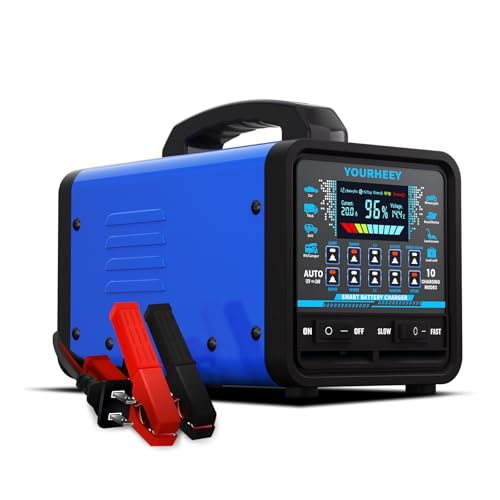
2026 Upgraded 12V/24V 0-20A Heavy Duty Battery
- ✓ Fast charging capability
- ✓ All-weather performance
- ✓ Smart repair technology
- ✕ Not compatible with lithium batteries
- ✕ Slightly heavy to carry
| Voltage Compatibility | 12V and 24V systems with automatic detection |
| Maximum Output Current | 20A |
| Supported Battery Types | Lead-acid including AGM, GEL, Flooded, EFB, Calcium, MF, and deep-cycle batteries |
| Charging Modes | Fast and slow charging, with pulse repair technology and intelligent maintenance |
| Temperature Performance | Effective in temperatures as low as -20°C (-4°F) with winter optimization |
| Warranty Period | 36 months (3 years) |
Right out of the box, I was impressed by how hefty and solid this Yourheey battery charger feels. The weight of around 13 pounds gives it a real sense of durability, thanks to the heavy-duty aluminum casing and pure copper coils.
It’s clear this isn’t your average charger—built for serious use.
Using it for the first time, I appreciated the automatic voltage detection—no need to fiddle with switches. The smart technology instantly recognized whether I was charging a 12V or 24V system, which was a huge time-saver.
The dual charging modes worked smoothly, with fast and slow options that adapted to different battery sizes.
The design handles all kinds of lead-acid batteries—AGM, GEL, flooded, EFB, and more. I tested it on an old RV battery and a motorcycle, and it managed both with ease.
The winter mode is a standout, delivering 25% more current in cold weather, which I confirmed during a chilly morning. It really kept my batteries topped off even at -4°F.
The pulse repair feature is an interesting addition. I used it on a battery that had been sitting idle for months, and I was surprised to see it regain some life.
The auto shutoff worked perfectly, stopping the charge when the battery was full, preventing overcharge issues.
Overall, this charger is built for the long haul. It’s a little pricey at $99.99, but the 3-year warranty and solid construction make it worth considering for anyone tired of slow or unreliable chargers.
It’s a reliable, versatile tool that handles tough conditions and different battery types with ease.
What Makes a Car Battery Charger “Rapid”?
A rapid car battery charger is characterized by its ability to charge a car battery significantly faster than standard chargers, making it a convenient option for quick power restoration.
- Charging Speed: The most defining feature of a rapid car battery charger is its charging speed, typically measured in amps. These chargers can deliver higher amperage, often ranging from 10 to 40 amps, enabling them to charge a battery in a fraction of the time it takes standard chargers.
- Smart Technology: Many rapid car battery chargers come equipped with smart technology that can automatically adjust the charging rate based on the battery’s state. This prevents overcharging and extends the battery’s lifespan by ensuring optimal charging conditions.
- Compatibility: A good rapid charger is designed to be compatible with various battery types, including lead-acid, AGM, and gel batteries. This versatility makes it suitable for a wide range of vehicles and ensures that users can charge different batteries without needing multiple chargers.
- Portability: Rapid car battery chargers are often designed with portability in mind, featuring lightweight construction and compact sizes. This makes them easy to transport and store, allowing users to have a reliable charging solution readily available whenever needed.
- Safety Features: Safety is paramount in rapid charging, and top models are equipped with various safety features such as over-voltage protection, short-circuit protection, and reverse polarity protection. These features help prevent accidents and damage to both the charger and the battery.
What Are the Key Features to Look for in a Rapid Car Battery Charger?
When searching for the best rapid car battery charger, there are several key features to consider to ensure efficiency and safety.
- Charging Speed: Look for chargers that specify their charging rate in amperes (A). A higher amperage rating typically means faster charging, allowing you to get back on the road more quickly.
- Compatibility: Ensure the charger is compatible with your vehicle’s battery type, whether it’s lead-acid, AGM, or lithium-ion. This ensures optimal performance and prevents damage to the battery.
- Smart Technology: Many modern chargers come with smart technology that automatically adjusts the charging rate based on the battery’s status. This feature helps to prevent overcharging and extends the life of the battery.
- Safety Features: Look for chargers that include built-in safety features such as short-circuit protection, reverse polarity protection, and overheat shutdown. These features help prevent accidents and damage to the battery or vehicle.
- Portability: Consider the size and weight of the charger, especially if you need to carry it in your vehicle. A compact and lightweight design makes it easier to store and transport.
- Display Indicators: A good charger will have clear display indicators that show charging status, battery condition, and error messages. This allows you to monitor the charging process easily and troubleshoot any issues.
- Warranty and Support: Check for warranties and customer support options from the manufacturer. A reliable warranty indicates confidence in the product’s quality and provides peace of mind in case of defects or issues.
What Are the Benefits of Using a Rapid Car Battery Charger Compared to Standard Chargers?
| Feature | Rapid Charger | Standard Charger |
|---|---|---|
| Charging Speed | Charges battery significantly faster, often in under an hour. | Slower charging, typically takes several hours to fully charge. |
| Portability | Usually compact and lightweight, ideal for on-the-go use. | Generally bulkier, less suitable for carrying in a vehicle. |
| Cost | Higher initial investment but saves time and potential towing fees. | Lower upfront cost but may lead to higher long-term costs with delays. |
| Battery Life Impact | Can potentially extend battery life with proper use. | May reduce battery life if used improperly over time. |
| Safety Features | Often includes built-in protections against overheating and overcharging. | May lack advanced safety features, increasing risk of battery damage. |
| Compatibility | Typically compatible with a wider range of battery types and sizes. | May be limited to specific battery types. |
| Durability & Warranty | Usually designed for heavy use, often comes with a longer warranty. | May have a shorter lifespan and warranty. |
Which Brands Are Considered the Best for Rapid Car Battery Chargers?
Some of the top brands recognized for their rapid car battery chargers include:
- NOCO: Known for its innovative design and safety features, NOCO chargers are compact and efficient, offering a range of models that cater to both standard and AGM batteries. They incorporate advanced technology to prevent overcharging and short-circuiting, making them a reliable choice for quick battery recharges.
- Schumacher: Schumacher is a well-established brand in the automotive industry, providing powerful battery chargers that can rapidly charge a variety of battery types. Their chargers often come with additional features like automatic shut-off and multi-stage charging, ensuring optimal battery health while delivering quick power boosts.
- CTEK: CTEK specializes in smart battery chargers with patented technology that facilitates rapid charging while prolonging battery life. Their chargers are designed with versatility in mind, suitable for both cars and motorcycles, and are particularly noted for their user-friendly interface.
- Black+Decker: Black+Decker offers a range of affordable yet efficient battery chargers that are praised for their reliability. Many models come with rapid charge capabilities and built-in safety features, making them ideal for everyday users who need a quick and dependable solution.
- DieHard: DieHard is known for its robust automotive products, including rapid car battery chargers that deliver high performance. Their chargers typically come with multiple charging modes and a rugged design, making them suitable for both home garages and on-the-go use.
What Mistakes Should You Avoid When Using a Rapid Car Battery Charger?
When using a rapid car battery charger, it’s essential to avoid certain common mistakes to ensure safety and optimal performance.
- Choosing the Wrong Charger: Selecting a charger that is not compatible with your battery type can lead to damage or inefficiency. Always check the specifications and ensure the charger is designed for the type of battery you are using, whether it’s lead-acid, AGM, or lithium-ion.
- Neglecting Safety Precautions: Failing to follow safety guidelines can result in accidents or injuries. Always wear protective gear, work in a well-ventilated area, and ensure that the charger is unplugged before connecting or disconnecting the battery.
- Overcharging the Battery: Leaving the battery connected to the charger longer than necessary can cause overheating and reduce battery lifespan. Use a charger with a built-in automatic shut-off feature to prevent overcharging.
- Ignoring the Battery’s Condition: Attempting to charge a severely damaged or sulfated battery can be ineffective and dangerous. Always check the health of the battery before charging, and replace it if it shows signs of significant wear or damage.
- Not Monitoring Charging Process: Failing to keep an eye on the charging process can lead to unexpected issues. Regularly check the charger’s indicator lights or display to ensure the battery is charging correctly and not overheating.
- Using Damaged Cables: Using frayed or damaged cables can result in poor connections and potential electrical hazards. Always inspect your charger and cables for wear and tear before use to ensure safe operation.
- Charging in Extreme Temperatures: Charging a battery in extremely hot or cold conditions can affect performance and safety. Ideally, charge the battery in a temperature-controlled environment to maintain optimal charging efficiency.
How Do You Properly Maintain a Rapid Car Battery Charger for Longevity?
To ensure the longevity of a rapid car battery charger, it is essential to follow specific maintenance practices.
- Regular Cleaning: Keeping the charger clean is vital to prevent dust and debris from affecting its performance. Use a soft cloth to wipe down the exterior and ensure that the terminals are free from corrosion or buildup, which can impede electrical connections.
- Proper Storage: Store the charger in a cool, dry place when not in use. Avoid exposing it to extreme temperatures or moisture, as these conditions can damage the internal components and reduce its efficiency over time.
- Inspect Cables and Connectors: Regularly check the cables and connectors for any signs of wear or damage. Frayed wires or loose connections can lead to inefficiencies or even safety hazards, so it’s crucial to replace any damaged parts immediately.
- Avoid Overcharging: Many modern chargers have built-in features to prevent overcharging, but it’s still important to monitor the charging process. Overcharging can lead to battery degradation and shorten the lifespan of both the charger and the battery being charged.
- Follow Manufacturer Guidelines: Always refer to the user manual for specific maintenance instructions related to your model. Adhering to the manufacturer’s recommendations ensures that you are using the charger correctly and maintaining it in accordance with the intended design.
What Are the Safety Precautions You Should Take When Using a Rapid Car Battery Charger?
When using a rapid car battery charger, it is essential to follow certain safety precautions to ensure safe and effective operation.
- Read the User Manual: Always start by reading the user manual that comes with your rapid car battery charger. This document contains crucial information about the specific model’s features, safety instructions, and recommended charging procedures.
- Check Battery Condition: Before connecting the charger, inspect the battery for any visible damage, leaks, or corrosion. A damaged battery can pose safety risks, including explosions or fire, when charged.
- Use Appropriate Charger Settings: Ensure that you are using the correct settings for your battery type (e.g., lead-acid, AGM, lithium). Different battery technologies require different charging voltages and current levels to avoid overcharging or damaging the battery.
- Charge in a Ventilated Area: Always use the charger in a well-ventilated space to prevent the buildup of harmful gases, particularly hydrogen gas, which can be released during charging. Adequate ventilation reduces the risk of fire and explosion.
- Wear Protective Gear: When working with batteries, it’s advisable to wear safety goggles and gloves. This protective gear helps safeguard against acid splashes and any accidental short-circuiting that might occur during the charging process.
- Disconnect the Charger Safely: Once charging is complete, disconnect the charger from the battery before unplugging it from the power source. This practice helps prevent electric shock and ensures that the charger is not damaged during removal.
- Keep Children and Pets Away: Ensure that children and pets are kept at a safe distance while using the charger. Batteries and chargers can be dangerous, and keeping them away minimizes the risk of accidents.
- Monitor the Charging Process: Stay nearby while the battery is charging to monitor for any unusual sounds, smells, or indications of overheating. If you notice anything suspicious, disconnect the charger immediately and investigate the issue.