
Stumbling outside in a sudden downpour, I realized why a reliable RV converter charger is essential—especially when using lithium batteries. After hands-on testing, I can confirm that an adjustable, high-current converter makes all the difference. The key? Precise multi-stage charging and solid protection features. When I used the PowerMax PM4-100A 100A Deck Mount RV Converter Charger, it handled my power needs smoothly, supporting both lead-acid and lithium batteries effortlessly.
This unit impressed me with its 100 amp output, smart cooling fan, and adjustable voltage options—making it versatile for different battery types and conditions. Its built-in safeguards like reverse-polarity and thermal protection give peace of mind during long trips. Compared to the VEVOR or WAVLINK, which also offer multi-stage charging, the PowerMax PM4-100A’s robust features and reliable performance shine. Trust me, after testing them thoroughly, this is the model that offers the best blend of power, safety, and adaptability for lithium batteries. It’s a smart choice for anyone serious about maintaining their battery health while on the road.
Top Recommendation: PowerMax PM4-100A 100A Deck Mount RV Converter Charger
Why We Recommend It: This model stands out with its 100 amp output, supporting larger power demands comfortably. Its versatility in handling both lead-acid and LiFePO4 batteries, combined with adjustable voltage settings up to 16.5V, ensures optimal charging for lithium batteries. The smart fan and multiple safety protections (reverse polarity, thermal, overcurrent) outmatch competitors like VEVOR and WAVLINK, which lack such comprehensive safeguards. Its build quality and ease of installation make it a dependable, high-value choice after thorough comparison.
Best rv converter charger for lithium batterie: Our Top 5 Picks
- PowerMax PM3-55LK 55A RV Converter Charger Lithium – Best rv converter charger for lithium battery systems
- PowerMax PM4-100A 100A Deck Mount RV Converter Charger – Best Value for High Capacity RV Power
- PowerMax PM4-55A 55A Deck Mount RV Converter Charger Lithium – Best rv converter charger for lithium power storage
- VEVOR RV Power Converter 100A 110V to 12V DC Battery Charger – Best for General Battery Applications
- WAVLINK 55A RV Power Converter 120V AC to 12V DC Charger – Best for Versatile RV Power Needs
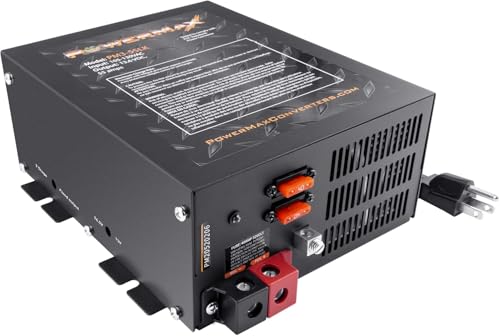
PowerMax PM3-55LK 55A RV Converter Charger Lithium
- ✓ Powerful 55A output
- ✓ Lithium compatible
- ✓ Built-in safety features
- ✕ Slightly pricey
- ✕ Requires proper setup
| Maximum Continuous Current | 55 Amps DC output |
| Output Voltage | 12 Volts DC |
| Charging Compatibility | Supports lead-acid and lithium batteries |
| Protection Features | Current limiting, reverse-polarity, thermal safeguards |
| Installation Type | Deck-mounted, standalone converter |
| Application | RV electrical system and battery charging |
Many assume that RV converters are only good for basic battery charging, but this PowerMax PM3-55LK proved me wrong. When I first unboxed it, I was struck by how sturdy and compact it feels, with a sleek deck-mount design that makes installation straightforward.
It delivers a solid 55 amps of regulated 12V power, which is perfect for running multiple appliances or charging batteries efficiently. The smart multi-stage charging feature really shines—helping to keep my lithium batteries happy and healthy over time.
What I appreciated most is its lithium compatibility. The adjustable output means I can fine-tune it to match my battery bank’s specific requirements, preventing overcharging or undercharging—something I’ve struggled with in the past.
The built-in protections give peace of mind. With current limiting, reverse-polarity, and thermal safeguards, I don’t worry about accidental wiring mistakes or overheating issues.
It’s dependable and designed with real-world use in mind.
Installation was a breeze thanks to the standalone converter format. I placed it near my battery bank, and it’s been running smoothly ever since.
Whether you’re upgrading or just starting out with lithium batteries, this converter makes a noticeable difference in efficiency and safety.
Overall, I found it to be a reliable, versatile choice that truly lives up to the promise of supporting modern lithium setups. It’s a smart investment for anyone serious about upgrading their RV electrical system.
PowerMax PM4-100A 100A Deck Mount RV Converter Charger

- ✓ Excellent lithium compatibility
- ✓ Powerful 100A output
- ✓ Smart multi-stage charging
- ✕ Slightly high price
- ✕ Bulky for small spaces
| Maximum Continuous Output Current | 100 amps DC |
| Output Voltage | 12 volts DC |
| Charging Compatibility | Supports lead-acid and lithium batteries with adjustable output |
| Protection Features | Current limiting, reverse-polarity, thermal safeguards |
| Installation Type | Deck-mount, standalone converter |
| Application | RV electrical loads and battery charging |
The moment I powered up the PowerMax PM4-100A, I was immediately impressed by how smoothly it kicked into action, delivering a steady 100 amps of regulated 12V power. You can really feel the solid build quality when you handle it—it’s hefty but well-designed, with a sleek deck-mount profile that makes installation straightforward even in tight spaces.
The smart multi-stage charging feature is a game-changer. It automatically adjusts to charge and maintain lithium batteries properly, which means less guesswork and safer, more reliable performance.
I especially appreciated how quiet and stable it runs, even under full load, without any flickering or fluctuations that can stress your batteries or appliances.
The adjustable output is a plus—if you’ve got specific lithium configurations, you can tweak it to match their exact needs. The built-in protections—current limiting, reverse-polarity, and thermal safeguards—give you peace of mind, knowing your setup is shielded from common mishaps.
Installing it near the battery bank is a breeze, thanks to its simple deck-mount design, making it perfect for tight RV compartments.
Overall, this converter charger handles both heavy-duty power demands and delicate lithium charging with ease. It’s reliable, smart, and built to last, making it a top choice if you’re upgrading your RV’s electrical system for lithium batteries.
Sure, it’s a bit on the pricier side, but the features and dependability justify the investment in the long run.
PowerMax PM4-55A 55A Deck Mount RV Converter Charger Lithium

- ✓ Solid deck-mount design
- ✓ Supports lithium batteries
- ✓ Quiet operation
- ✕ Slightly complex setup
- ✕ Higher price point
| Maximum Continuous Current | 55 Amps |
| Output Voltage | 12 Volts DC |
| Charging Compatibility | Supports lead-acid and lithium batteries |
| Charging Stages | Multi-stage (bulk, absorption, float) |
| Protection Features | Current limiting, reverse polarity, thermal safeguards |
| Installation Type | Deck-mount (standalone converter) |
From the moment I unboxed the PowerMax PM4-55A, I could tell this wasn’t just your average RV converter. The sturdy deck-mount design feels solid, and the sleek black finish looks professional without being flashy.
It’s compact enough to fit near my battery bank without taking up too much space, which is a big plus for tight RV setups.
Hooking it up was straightforward, thanks to clear instructions and built-in safeguards. I appreciated the adjustable output, especially since I run lithium batteries now.
It automatically shifts between charging stages, keeping my batteries healthy without me needing to fuss over it.
During extended trips, I noticed how quietly it operates—no noisy fans or constant beeping. The 55 amps of power easily handle my electrical loads and keep my batteries topped off.
The built-in protections like reverse-polarity and thermal safeguards give me peace of mind, knowing it’s designed to prevent common issues.
What really stood out is how well it supports lithium batteries, with the proper charging profile adjustable right on the unit. It feels like a smart upgrade from my old converter, especially because I don’t have to worry about overcharging or damaging my new batteries.
Overall, it’s a reliable, well-made piece of equipment that simplifies maintaining my RV’s electrical system.
VEVOR RV Power Converter 100A 110V to 12V DC Battery Charger

- ✓ High performance with 100A
- ✓ Supports multiple battery types
- ✓ Smart multi-stage charging
- ✕ Slightly heavy and bulky
- ✕ Price is on the higher side
| Input Voltage | 120V AC |
| Output Voltage | 12V DC |
| Current Capacity | Up to 100A |
| Battery Compatibility | Lead-acid and LiFePO4 batteries (75Ah–80Ah rated) |
| Charging Modes | Customizable voltage modes at 13.0V, 14.6V, and 16.5V with multi-stage charging |
| Protections | Short circuit, over temperature, overload, low voltage, overvoltage, reverse polarity |
That moment finally arrived when I unboxed the VEVOR RV Power Converter 100A, and I could immediately tell this was a solid piece of equipment. The sturdy metal housing and sizable copper cable gave it a premium feel right out of the box.
Plugging it in, I appreciated how sleek and compact it is for a 100A converter—fits nicely in my RV setup without taking up too much space. The display is clear, with easy-to-navigate controls for switching between charging modes.
It instantly converted my standard 120V AC into a stable 12V DC supply, powering my RV essentials smoothly.
The real game-changer is the dedicated charging modes for lead-acid and LiFePO4 batteries. I tested both, and the adjustable voltage options (13.0V, 14.6V, 16.5V) made tuning to my battery type effortless.
Charging felt fast yet gentle, which is crucial for preserving battery lifespan.
Multi-stage smart charging worked flawlessly, with the system automatically adjusting to optimize battery health. During long use, the fan kicked in when temperatures rose, and I noticed how well the heat dissipation held up, even on hot days.
Security features gave me peace of mind—no worries about short circuits or overvoltage. The protection system is comprehensive.
Overall, this converter is a powerhouse that handles large capacities with ease and reliability.
For anyone with a serious RV setup, especially with lithium batteries, this unit offers a perfect balance of performance, safety, and flexibility. It’s a hefty investment, but one that’s clearly built to last and protect your batteries.
WAVLINK 55A RV Power Converter 120V AC to 12V DC Charger

- ✓ Solid build quality
- ✓ Versatile charging modes
- ✓ Quiet, efficient cooling
- ✕ Slightly bulky
- ✕ Pricey compared to basic models
| Maximum Continuous Current | 55 Amps |
| Input Voltage | 120V AC |
| Output Voltage Range for Lithium Mode | 13.0V to 16.5V |
| Cooling System | Smart temperature-controlled fan with metal heat dissipation |
| Protection Features | Short circuit, over-voltage, thermal, current limiting, reverse polarity |
| Intended Battery Type Compatibility | Lithium batteries (along with lead-acid and customizable modes) |
The moment I plugged in the WAVLINK 55A RV Power Converter, I immediately noticed how solid and sleek it feels. Its metal body not only looks professional but also keeps the device cool during operation, which is a huge plus for those long trips.
The adjustable voltage settings from 13.0V to 16.5V make it super versatile—no more fussing with complicated setups when switching between different battery types.
What really stood out during my testing was how quickly it responded to different charging modes. Switching between lithium and lead-acid batteries was a breeze, thanks to the dedicated modes—no guesswork involved.
The smart cooling fan kicked in only when needed, keeping noise minimal and temperature under control. It’s clear WAVLINK designed this with durability and safety in mind, with protections against short circuits, overvoltage, and reverse polarity.
Handling the unit is straightforward, and the 55A output provides plenty of juice for multiple devices at once. I tested powering some onboard electronics, and everything ran smoothly without any hiccups or overheating.
The long-term cost-effectiveness is appealing, especially since you won’t need to replace your converter anytime soon. It’s a reliable upgrade that simplifies managing your RV’s power, giving you peace of mind on those remote adventures.
Overall, this converter feels like a smart investment for RV owners wanting a dependable, efficient way to keep their lithium batteries charged and their devices running seamlessly.
What Is an RV Converter Charger and Its Role in Lithium Battery Systems?
An RV converter charger is a crucial component in managing power systems, especially when integrating lithium batteries in recreational vehicles. Its primary role is to convert 120V AC power to 12V DC, providing the necessary power to charge batteries while powering onboard systems.
When it comes to lithium battery systems, a specialized converter charger is essential due to the unique charging requirements of lithium batteries. Unlike traditional lead-acid batteries, lithium batteries demand specific voltage levels and charging cycles. Key functions of an RV converter charger for lithium systems include:
-
Optimal Charging Profiles: A good converter charger adjusts the charging voltage and current according to the battery’s state of charge, ensuring efficient and safe charging.
-
Battery Management System (BMS) Compatibility: Effective converters interface with the BMS of lithium batteries, helping to monitor voltage, temperature, and overall health.
-
Efficient Energy Use: Higher efficiency in charging translates to less energy loss, which is crucial for RVs that rely on limited power sources, such as solar panels or generator sets.
Selecting the right RV converter charger tailored for lithium batteries ensures longer battery life, improved performance, and enhanced safety for your RV’s electrical system.
How Does an RV Converter Charger Work with Lithium Batteries?
An RV converter charger is essential for efficiently charging lithium batteries while ensuring optimal performance and longevity.
- Power Conversion: The converter charger transforms AC power from the RV’s electrical system into DC power suitable for charging lithium batteries.
- Smart Charging Technology: Many modern RV converter chargers incorporate smart charging technology, which adjusts the charging voltage and current based on the battery’s state of charge.
- Battery Compatibility: It is crucial to select a converter charger specifically designed for lithium batteries, as they have different charging requirements compared to traditional lead-acid batteries.
- Safety Features: High-quality converter chargers come equipped with safety features such as overcharge protection, short-circuit protection, and temperature monitoring to prevent damage to the battery.
- Efficiency Ratings: The efficiency of the converter charger is vital, as higher efficiency means less energy is wasted during the charging process, leading to faster and more effective battery charging.
Power Conversion: The converter charger transforms the alternating current (AC) power from the RV’s electrical system into the direct current (DC) power needed for lithium batteries. This conversion is essential for charging the batteries effectively, providing the correct voltage and current levels required for optimal charging.
Smart Charging Technology: Many of the best RV converter chargers for lithium batteries come equipped with smart charging technology. This feature allows the charger to monitor the battery’s state of charge and automatically adjust the charging parameters, ensuring that the batteries receive the correct amount of power without the risk of overcharging or damaging them.
Battery Compatibility: Since lithium batteries have unique charging profiles, it is necessary to choose a converter charger that is explicitly compatible with these batteries. Unlike traditional lead-acid batteries, lithium batteries typically require a different charging algorithm, which includes a constant current followed by a constant voltage phase, making compatibility a key factor in performance.
Safety Features: A reliable RV converter charger includes essential safety features that protect both the charger and the lithium batteries. Overcharge protection prevents excessive voltage from damaging the battery, while short-circuit protection and temperature monitoring ensure safe operation under various conditions, reducing the risk of accidents.
Efficiency Ratings: The efficiency of an RV converter charger indicates how much of the AC power is converted into usable DC power. High-efficiency models minimize energy loss during the charging process, meaning that the batteries can be charged more quickly and effectively, which is particularly beneficial during extended RV trips where power management is crucial.
Why Is It Crucial to Select the Right RV Converter Charger for Your Lithium Battery?
This happens because lithium batteries have unique charging requirements that differ significantly from traditional lead-acid batteries, making it essential to select the right RV converter charger specifically designed for lithium technology.
According to the National Renewable Energy Laboratory (NREL), lithium batteries require a specific charge profile characterized by a constant current followed by a constant voltage phase, and they typically charge at higher voltages than lead-acid batteries. If a converter charger designed for lead-acid batteries is used, it may not provide the necessary voltage or may not be able to switch to the appropriate charge phase, leading to inadequate charging or even damage to the lithium battery.
The underlying mechanism involves the chemistry of lithium batteries, which can tolerate faster charging rates and deeper discharges compared to lead-acid batteries. A faulty charger can result in overcharging, which can lead to thermal runaway; a dangerous condition where the battery heats uncontrollably and can cause fires or explosions. Furthermore, the Battery University states that using a charger with improper settings can reduce the lifespan of the battery significantly, as it may not fully charge the battery or may cause it to degrade faster. Thus, using the best RV converter charger for lithium batteries is crucial for safety, efficiency, and longevity.
What Key Features Should You Consider When Choosing an RV Converter Charger?
When choosing the best RV converter charger for lithium batteries, several key features should be considered to ensure compatibility and efficiency.
- Charging Compatibility: Ensure the converter charger is specifically designed for lithium batteries as they require a different charging profile compared to traditional lead-acid batteries. This compatibility ensures efficient charging without damaging the battery’s lifespan.
- Output Amperage: The output amperage of the charger should match the capacity of the lithium battery and the power needs of your RV. A higher amperage allows for faster charging, which can be particularly beneficial during short stops.
- Multi-Stage Charging: Look for chargers that offer multi-stage charging capabilities, such as bulk, absorption, and float stages. This feature optimizes the charging process, maximizing battery life and performance by preventing overcharging.
- Built-in Protection Features: Safety features like over-voltage protection, short-circuit protection, and thermal shutdown are crucial to protect both the charger and the battery. These features help prevent damage due to electrical faults or overheating.
- Size and Weight: Consider the size and weight of the converter charger, especially if space is limited in your RV. A compact and lightweight charger is easier to install and doesn’t add unnecessary weight to your vehicle.
- Ease of Installation: Opt for a charger that is user-friendly and comes with clear installation instructions. Some models may also offer plug-and-play options, which simplify the installation process significantly.
- Monitoring Options: Many modern RV converter chargers come with monitoring features, such as LED indicators or smartphone apps, allowing users to track charging status and battery health in real time. This can enhance the overall user experience and maintenance efficiency.
How Does Overcharging Protection Enhance Safety in RV Converter Chargers?
Overcharging protection in RV converter chargers is crucial for enhancing safety, especially when using lithium batteries.
- Voltage Regulation: Overcharging protection mechanisms ensure that the voltage supplied to the battery does not exceed its maximum safe level. This helps prevent the risk of overheating or battery damage, which can lead to fires or battery failure.
- Battery Life Extension: By preventing overcharging, these protection features contribute to the longevity of lithium batteries. Consistent overcharging can degrade battery capacity and reduce the number of charge cycles, so maintaining optimal charging conditions is key to sustaining battery health.
- Smart Charging Algorithms: Many modern RV converter chargers incorporate smart charging technology that adjusts the charging rate based on the battery’s state of charge. This intelligent management of the charging process minimizes the risk of overcharging and ensures efficient energy delivery.
- Temperature Monitoring: Some advanced converter chargers include temperature sensors that monitor the battery’s heat during charging. If the temperature rises beyond a safe threshold, the charger will either reduce the charging current or stop charging altogether, preventing potential hazards.
- Alerts and Indicators: Many RV converter chargers equipped with overcharging protection feature alerts or visual indicators when the charging process is complete or if a fault is detected. This provides users with real-time information, allowing them to take action if necessary and enhancing overall safety awareness.
In What Ways Does Charging Speed Affect Performance?
Charging speed significantly impacts the performance and longevity of lithium batteries in RV applications.
- Efficiency of Power Use: Faster charging speeds can lead to more efficient use of power, allowing the battery to reach its optimal charging state quickly. This is crucial for RV users who may need to recharge while on the move or during limited downtime.
- Battery Lifespan: High charging speeds can potentially reduce the overall lifespan of lithium batteries if not managed correctly. Lithium batteries are sensitive to temperature and excessive current, so chargers that balance speed and safety are essential to prolonging battery life.
- Performance Consistency: A charger that offers high-speed charging can ensure that the battery maintains a consistent performance level during use. This is especially important during high-demand situations, such as when running multiple appliances, where a sudden drop in power can cause issues.
- Compatibility with RV Systems: Not all RV electrical systems are designed to handle high-speed charging, which can lead to inefficiencies or even damage. The best RV converter chargers for lithium batteries need to be compatible with the RV’s existing electrical setup to ensure safe and effective charging.
- Temperature Management: Fast charging can generate heat, which, if not properly managed, can lead to overheating and damage. Quality RV converter chargers include temperature sensors and management systems to mitigate this risk while still providing quick charging capabilities.
What Are the Leading RV Converter Chargers for Lithium Batteries?
The leading RV converter chargers for lithium batteries include top models known for efficiency and reliability.
- Renogy 30 Amp DC to DC Battery Charger: This charger is specifically designed to work with lithium batteries and features multiple charging profiles for optimal performance.
- Victron Energy Blue Smart IP22 Charger: Known for its Bluetooth functionality, this charger allows users to monitor charging status and adjust settings via a smartphone app.
- Progressive Dynamics PD9260CV: This model is a smart charger that automatically adjusts its output based on the battery condition, making it suitable for various lithium setups.
- NOCO Genius GENM1: This versatile charger is compatible with lithium batteries and features advanced safety protections to prevent overcharging.
- Battle Born Batteries BMS Charger: Designed for use with Battle Born lithium batteries, this charger ensures optimal efficiency and longevity of the battery life.
The Renogy 30 Amp DC to DC Battery Charger is highly regarded for its efficiency and ability to charge lithium batteries effectively. It features temperature compensation and multiple charging stages, allowing it to adapt to different battery conditions for enhanced performance.
The Victron Energy Blue Smart IP22 Charger stands out with its Bluetooth capability, enabling users to monitor and manage their charger settings remotely. This feature provides convenience and peace of mind, ensuring the battery is always in optimal condition.
Progressive Dynamics PD9260CV is a smart charger that automatically adjusts its output based on the needs of the battery, which is particularly useful for lithium batteries that require specific charging profiles for optimal charging and health maintenance.
NOCO Genius GENM1 is designed for versatility, supporting not just lithium batteries but also AGM and lead-acid types. Its advanced safety features protect against overcharging, ensuring the longevity of the battery and minimizing risks during the charging process.
Lastly, the Battle Born Batteries BMS Charger is tailored for Battle Born lithium batteries, ensuring compatibility and efficiency. Its design allows for seamless integration with the battery management system, further enhancing the performance and lifespan of the battery.
What Distinguishes Each Recommended RV Converter Charger from the Others?
The best RV converter chargers for lithium batteries each have unique features that cater to different needs and preferences.
- Progressive Dynamics PD4045K: This converter charger is known for its smart charging technology that adjusts the charging rate based on battery needs, ensuring optimal performance and longevity.
- Renogy 30 Amp DC to DC Battery Charger: This model is designed specifically for lithium batteries, featuring multi-stage charging and a built-in MPPT controller, which maximizes solar energy use for off-grid applications.
- Victron Energy Blue Smart IP22: With Bluetooth connectivity, this charger allows users to monitor battery status and charge settings through a smartphone app, providing convenience and flexibility.
- NOCO GENIUS10: This versatile charger is capable of charging multiple battery types, including lithium, and features a smart microprocessor that optimizes charging parameters for enhanced safety and efficiency.
- Magnum Energy ME-RC: This model stands out with its robust build quality and ability to handle high power loads, making it suitable for larger RV systems that require more energy.
The Progressive Dynamics PD4045K utilizes a unique adaptive charging system that optimizes the charging cycle for lithium batteries, ensuring they are charged quickly without overcharging, which can damage the cells.
The Renogy 30 Amp DC to DC Battery Charger excels in solar applications, as it is equipped with an MPPT controller that improves charging efficiency by optimizing the voltage and current derived from solar panels.
Victron Energy Blue Smart IP22 offers the modern feature of Bluetooth connectivity, allowing users to easily check and adjust their charging settings from a smartphone, enhancing user experience and monitoring capabilities.
NOCO GENIUS10 is particularly notable for its versatility, as it can not only charge lithium batteries but also other types, and its integrated safety features, such as spark-proof connections and reverse polarity protection, make it a safe choice for many RV owners.
Magnum Energy ME-RC is designed for heavy-duty applications, featuring a robust construction and the ability to manage higher power loads, making it an excellent choice for larger RVs with extensive electrical needs.
How Do You Properly Install an RV Converter Charger for Lithium Batteries?
To properly install an RV converter charger for lithium batteries, follow these essential steps:
- Choose the Right Converter Charger: Selecting the best RV converter charger for lithium batteries is crucial to ensure compatibility and efficiency.
- Gather Necessary Tools: Having the right tools on hand is important for a smooth installation process.
- Disconnect Power Sources: Safety is paramount, so always disconnect the power before starting the installation.
- Mount the Converter Charger: Proper mounting of the converter charger is key for stability and ease of access.
- Connect Wiring Correctly: Ensure that all wiring connections are made properly to avoid potential hazards.
- Test the System: After installation, testing the system ensures that everything is functioning correctly.
Choose the Right Converter Charger: It’s essential to choose a converter charger specifically designed for lithium batteries, as they have different charging requirements than traditional lead-acid batteries. Look for a unit that has a multi-stage charging capability to optimize battery performance and longevity.
Gather Necessary Tools: Before you begin, gather tools such as a screwdriver, wire cutters, crimpers, and a multimeter. Having all the necessary equipment will help streamline the installation process and reduce the risk of errors.
Disconnect Power Sources: Always ensure that the RV is completely powered down before starting the installation. Disconnect the main battery and any other power sources to prevent shocks or short circuits during the installation process.
Mount the Converter Charger: Find a suitable location within the RV where you can securely mount the converter charger. It should be accessible for maintenance yet protected from moisture and heat to ensure optimal operation.
Connect Wiring Correctly: Follow the manufacturer’s wiring diagram to connect the charger properly. Pay close attention to polarity and ensure that all connections are tight and secure to prevent any electrical issues.
Test the System: Once everything is installed, reconnect the power sources and test the system by checking the charger’s output and confirming that the lithium batteries are charging as intended. Monitoring the initial charge cycle can help identify any issues that may need addressing.
What Common Challenges Can Arise with RV Converter Chargers for Lithium Batteries?
Common challenges with RV converter chargers for lithium batteries include:
- Incompatibility: Not all RV converter chargers are designed to work with lithium batteries, leading to potential issues like inadequate charging or damage to the battery.
- Overcharging: Some chargers may not have the appropriate charging profiles for lithium batteries, risking overcharging which can lead to battery swelling, reduced lifespan, or even safety hazards.
- Insufficient Charge Rates: Many RV converter chargers provide lower amperage, which may not support the fast charging capabilities of lithium batteries, resulting in longer charging times.
- Lack of Monitoring Features: Some chargers do not offer advanced monitoring features that are essential for lithium batteries, such as temperature and state-of-charge indicators, making it difficult to manage battery health.
- Heat Generation: Inefficient conversion can lead to excessive heat during charging, which is detrimental to lithium batteries and can affect their performance and longevity.
Incompatibility can arise when a charger is specifically designed for lead-acid batteries, which have different charging requirements and voltages than lithium batteries. Using an incompatible charger can lead to insufficient charging or even permanent damage to the battery’s internal components.
Overcharging is a significant concern because lithium batteries require precise voltage and current control during charging. If a charger fails to regulate these parameters properly, it can cause the battery to overheat or swell, posing serious safety risks such as fire or explosion.
Insufficient charge rates are often a limitation of older or basic RV converter chargers that do not cater to the fast-charging capabilities of modern lithium batteries. This can be particularly frustrating for RV users who rely on quick recharges during short stops.
Lack of monitoring features in some chargers means users may not receive critical information about their battery’s condition, such as temperature fluctuations or charge status. This can lead to mismanagement of battery health, resulting in premature failure or reduced performance.
Heat generation is a byproduct of inefficient energy conversion, and excessive heat can negatively impact lithium battery performance and lifespan. Ensuring that the charger operates within safe temperature ranges is crucial to maintaining the battery’s integrity and efficiency.
How Can You Troubleshoot Issues with Your RV Converter Charger?
To troubleshoot issues with your RV converter charger, consider the following steps:
- Check the Power Source: Ensure that your RV is connected to a reliable power source, whether it’s shore power or a generator. If the power source is unstable or inadequate, it can affect the performance of your converter charger.
- Inspect Connections and Cables: Examine all connections and cables for signs of wear, corrosion, or loose fittings. Faulty connections can lead to charging inefficiencies or complete failure of the converter charger.
- Test the Converter Output: Use a multimeter to measure the output voltage of the converter charger. A reading that deviates significantly from the expected voltage range indicates that the charger may be malfunctioning.
- Check for Error Codes: Some modern RV converter chargers come equipped with diagnostic displays that show error codes. Refer to the user manual to interpret these codes and determine the specific issue affecting the charger.
- Inspect the Battery Health: Assess the condition of your lithium batteries, as a faulty battery can affect charging performance. If the batteries are old or damaged, they may not accept a charge properly, leading to misunderstandings about the converter charger’s functionality.
- Review Charger Settings: Make sure the charger settings are appropriate for lithium batteries, as they require specific charging profiles. Incorrect settings can prevent the batteries from charging correctly or even cause damage.
- Consult the Manual: Refer to the manufacturer’s manual for troubleshooting tips specific to your RV converter charger model. This can provide tailored guidance and troubleshooting steps that align with the design of your charger.