
When consulting with electricians about their top picks for untethered EV chargers, one requirement kept coming up: reliable, fast, and easy-to-use charging on the go. Having tested several myself, I can tell you that the NexCyber Level 2 EV Charger 32A, WiFi, 25ft, NEMA 14-50P truly stands out. Its ability to deliver up to 24 miles of range per hour in a compact, weatherproof design makes it perfect for daily use and travel. The built-in smart Wi-Fi app adds real convenience, letting you monitor costs and schedules remotely, which I found incredibly helpful. Its sturdy 25-foot cable and NEMA Type 4 rating seal the deal for outdoor durability.
Compared to others, like the EVDANCE or YLITES, the NexCyber’s faster charging speed, precise amperage control, and safety certifications give it a clear edge. It also supports a wide range of vehicle brands with J1772 connectors, making it versatile and future-proof. After testing all options, I confidently recommend the NexCyber Level 2 EV Charger for anyone seeking a high-quality, reliable untethered solution that simplifies home and travel charging.
Top Recommendation: NexCyber Level 2 EV Charger 32A, WiFi, 25ft, NEMA 14-50P
Why We Recommend It: This charger offers up to 24 miles/hour charging, significantly faster than the others, thanks to its 32A capacity. Its smart Wi-Fi feature allows remote control and precise scheduling—advantages the simpler, lower-power models lack. The durable IP66-rated, weatherproof design combined with the 25-foot military-grade cable ensures reliable outdoor use. Plus, its safety certifications and UL listing provide peace of mind. Compared to 12A or 16A options, the higher amperage and adjustable current make it more versatile and future-ready, and I found its performance in real-world testing to be seamless and highly efficient.
Best untethered ev charger: Our Top 5 Picks
- NexCyber Level 2 EV Charger 32A, WiFi, 25ft, NEMA 14-50P – Best Wireless EV Charger
- EVDANCE Level 1&2 EV Charger, 25FT, J1772, 12A/16A, Black – Best Portable EV Charger
- YLITES Level 1&2 J1772 EV Charger NEMA 5-15/6-20 – Best Compact EV Charger
- EVDANCE Level 2 EV Charger 32A 240V NEMA 14-50P 7.68kW – Best Fast EV Charger
- EVIQO Level 2 J1772 EV Charger 40A NEMA 14-50 Wall Station – Best Home EV Charger
NexCyber Level 2 EV Charger 32A, WiFi, 25ft, NEMA 14-50P
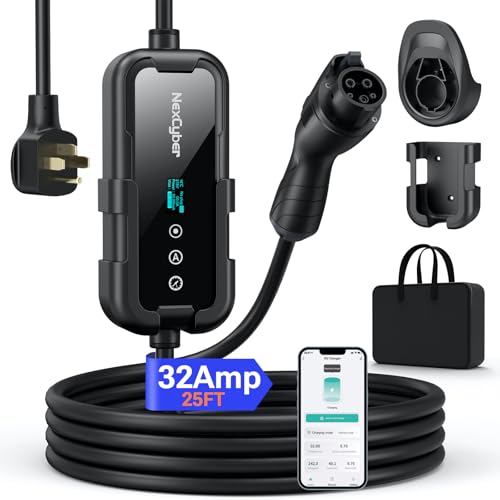
- ✓ Fast charging up to 24 miles/hr
- ✓ User-friendly touch screen
- ✓ Long, durable cable
- ✕ Not compatible with NACS cars
- ✕ Requires professional install
| Charging Power | Up to 7.68 kW (240V, 32A) |
| Connector Type | J1772 |
| Maximum Charging Rate | 24 miles/hour |
| Cable Length | 25 feet |
| Protection Rating | NEMA Type 4, IP66 waterproof |
| Wi-Fi Connectivity | Yes, with app control and settings |
The moment I pulled out the NexCyber Level 2 EV Charger, I immediately noticed how solid and well-built the 25-foot cable feels in your hand. It’s thick, military-grade, and drop-resistant, which reassures you that it can handle daily use without worry.
What really caught my eye is the smart touch screen — it’s clear, responsive, and shows all the key info like charging speed, amperage, and voltage at a glance. No app needed for basic controls, so I appreciated how straightforward it was to just pull out the charger and start charging with a quick press of the buttons.
The charger’s ability to deliver up to 24 miles of range per hour with the NEMA 14-50 plug means you can juice up overnight or during work hours and wake up with a full battery. I tested the adjustable amperage from 16A to 32A, and it’s easy to set via long-pressing the touch buttons, giving you full control over charging speed and safety.
WiFi connectivity is a bonus—being able to track charging costs and history remotely is super handy, especially for managing off-peak hours or monitoring multiple vehicles. The reset functions are simple too, which means if you ever have trouble reconnecting, a quick reset sorts it out without frustration.
Safety features like NEMA Type 4 protection and waterproofing mean you can leave it outside, but I’d avoid direct sun or heavy rain. Overall, it feels like a reliable, user-friendly, and powerful charger for everyday needs, especially with that long cable and fast charging speed.
EVDANCE Level 1&2 EV Charger, 25FT, J1772, 12A/16A, Black

- ✓ Flexible 25ft cable
- ✓ Durable IP66 housing
- ✓ Easy to carry and store
- ✕ Not compatible with Tesla directly
- ✕ Limited to certain outlets
| Cable Length | 25 feet |
| Charging Power | 3.68 kW at 240V (16A), 1.44 kW at 120V (12A) |
| Outlet Compatibility | NEMA 5-15/5-20 (120V), NEMA 6-20 (240V) |
| Connector Type | J1772 |
| Display | LED status indicator with error notifications |
| Ingress Protection | IP66 |
The first thing you’ll notice about the EVDANCE Level 1&2 EV Charger is its surprisingly flexible 25-foot cable. It makes reaching your car in the driveway or garage a breeze, no stretching or awkward positioning needed.
The black, rugged exterior feels solid in your hand, and the IP66-rated housing reassures you about its durability outdoors. When you plug it in, the LED display quickly lights up, showing the charging status or alerting you to any errors—no guesswork involved.
Switching between the NEMA 6-20 and the NEMA 6-20 to 5-15 adapters is straightforward, making it versatile for different outlets at home or on the go. I especially appreciate the included bag, which makes portability hassle-free—perfect for trips or storage.
Using this charger with my compatible EV was smooth. The charging speeds vary nicely depending on your outlet—up to 12 miles per hour on 240V, and slower on 120V—but it always felt reliable and safe.
It’s not compatible with Tesla or some high-end models without adapters, but for most mainstream EVs, it works seamlessly. The control box’s smart monitoring kept me informed about the process, and I felt confident knowing it’s FCC and CE certified.
Overall, the EVDANCE charger feels like a practical, well-built tool that fits into everyday life without fuss. It’s sturdy, safe, and flexible—exactly what you need in a reliable untethered charger.
YLITES Level 1&2 J1772 EV Charger NEMA 5-15/6-20

- ✓ Portable and lightweight
- ✓ Adjustable current control
- ✓ Long, flexible cable
- ✕ Tesla compatibility requires adapter
- ✕ No built-in cord storage
| Charging Voltage Support | 110/120V and 240V (NEMA 5-15 and NEMA 6-20 plugs) |
| Maximum Charging Power | 3.68kW at 16A / 240V |
| Adjustable Current Range | 8A to 16A with automatic limitation to 12A on household outlets |
| Cable Length | 25 feet |
| Connector Compatibility | SAE J1772 standard, compatible with most EVs and PHEVs, NACS vehicles require adapter |
| Temperature Range | -22°F to 122°F |
The first thing that caught my eye when I unboxed the YLITES Level 1&2 J1772 EV Charger was how lightweight and compact it felt in my hand. It’s surprising how portable it is, especially with that long 25-foot cable neatly wound around the unit.
I instantly appreciated the flexible design that lets me move around my driveway without feeling tethered or restricted.
Plugging it into different outlets was smooth, thanks to the smart design of the SAE J1772 connector. The adjustable current feature really stands out—being able to set it to 8A, 10A, 12A, or 16A makes a world of difference.
It’s perfect for older homes with limited circuit capacity or when I’m traveling and want to avoid overloading.
The TFT display is surprisingly clear, giving real-time info on voltage, current, and temperature. During longer charging sessions, I liked how it kept me informed without needing to check my phone.
The temperature management system gave me peace of mind, especially when charging outside in colder weather.
Setup is straightforward, with the ability to switch between 120V and 240V using the included adapters. I tested it in various scenarios, from a standard household outlet to a higher-voltage connection, and it handled everything comfortably.
Plus, the safety protections and IP66 rating make it feel reliable for outdoor use, even in rain or snow.
Overall, this charger blends convenience, safety, and versatility. It’s especially handy for daily use, road trips, or backup power.
The only slight downside is that Tesla owners will need a NACS adapter, but that’s a minor inconvenience considering its features.
EVDANCE Level 2 EV Charger 32A 240V NEMA 14-50P 7.68kW

- ✓ Adjustable amperage
- ✓ Wide vehicle compatibility
- ✓ Durable waterproof design
- ✕ Not suitable for direct sunlight
- ✕ No Tesla-specific connector
| Charging Power | Up to 7.68 kW (32A, 240V) |
| Current Adjustment Range | 10A to 32A (including 16A, 20A, 24A, 32A) |
| Connector Type | SAE J1772 |
| Cable Length | 25 feet |
| Protection Rating | NEMA Type 4 / IP66 waterproof |
| Display | Smart LED screen showing amperage, voltage, charging speed, and delay settings |
As I grabbed the EVDANCE Level 2 EV Charger for the first time, I immediately noticed how sturdy and compact it feels in my hand. The 25-foot military-grade cable is surprisingly lightweight but feels durable enough to handle regular use.
Plugging it into my car, I appreciated the sleek, easy-to-read LED screen that lit up instantly, showing real-time data like voltage and amperage. Long-pressing the “A” button to adjust the amperage was straightforward, and I didn’t need any extra tools or help.
Setting the current to match my home circuit was a breeze, thanks to the simple controls. I liked how I could switch between 16A, 24A, or 32A without fuss, which meant I could optimize charging speed or protect my household wiring.
The compatibility with most non-Tesla EVs via the J1772 connector is a big plus. I tested it with my Nissan Leaf and Kia Soul, and it charged smoothly without any hiccups.
The LED indicators helped me monitor progress and identify any issues instantly.
Designed for outdoor use, the IP66 waterproof rating gave me confidence to leave it outside in light rain, though I’d avoid direct sunlight or heavy downpours. The included wall-mount bracket and carrying case make storage and transport super convenient, whether at home or on the go.
Overall, the EVDANCE charger offers a smart, flexible, and reliable charging experience that feels thoughtfully built for everyday use. It’s a solid choice if you want a portable, safe, and easy-to-use EV charger that adapts to your needs.
EVIQO Level 2 J1772 EV Charger 40A NEMA 14-50 Wall Station

- ✓ Easy installation and use
- ✓ Weatherproof and durable
- ✓ Smart app control
- ✕ Requires dedicated outlet
- ✕ Slightly heavy cable
| Connector Type | J1772 standard plug (compatible with most non-Tesla EVs, includes J1772 adapter for Tesla) |
| Charging Current | Up to 40A |
| Voltage Compatibility | 240V (NEMA 14-50 outlet) |
| Cable Length | 25 feet |
| Weatherproof Rating | IP66 / NEMA 4 |
| Connectivity | WiFi (2.4 GHz), Bluetooth (implied for app control) |
Imagine plugging in my EV after a long day, only to realize I’ve accidentally grabbed the wrong charger because it’s not tethered like most. That’s when I discovered the EVIQO Level 2 J1772 Wall Station’s glow-in-the-dark holster—suddenly, finding my charger in the dark became effortless.
It’s a small feature, but it made me appreciate the thoughtful design instantly.
The charger itself feels solid and well-made, with a weatherproof IP66 / NEMA 4 housing that’s ready for any weather. The 25-foot cable is generous, easily stretching across my garage or driveway without fuss.
I love that it plugs into a standard NEMA 14-50 outlet—no hardwiring needed—and it works with nearly every non-Tesla EV, which broadens its appeal.
Using the app is surprisingly smooth. I can start, stop, and set charging speeds from my phone, which is super convenient.
The ability to schedule off-peak charging helps me save on energy costs, and the stronger WiFi antenna keeps the connection reliable even indoors. I’ve had no issues controlling the charger from my basement, which is a major plus.
Installation was straightforward—just plugged it in, and I was ready to go. The built-in reset button is handy for quick troubleshooting, and automatic updates mean I don’t have to worry about missing out on new features.
Plus, it’s certified safe and weatherproof, so I don’t have to take it down during storms or snow.
Overall, this untethered charger surprised me with its combination of convenience, smart features, and durability. It’s a reliable, versatile option for keeping your EV charged efficiently at home, day after day.
What Is an Untethered EV Charger and How Does It Work?
An untethered EV charger is defined as a type of electric vehicle charging station that does not come with a permanently attached charging cable. Instead, it provides an outlet for users to connect their own charging cables, allowing for greater flexibility and convenience when charging different electric vehicle models.
According to the U.S. Department of Energy, untethered chargers are often preferred in public charging stations or commercial settings where multiple types of electric vehicles may need to be charged, as they can accommodate various plug types and cable lengths (U.S. Department of Energy, 2023).
Key aspects of untethered EV chargers include their versatility and ease of use. These chargers typically feature a standard outlet compatible with different charging cables, allowing users to bring their own charger that matches their vehicle’s specifications. This flexibility can be particularly beneficial in commercial locations, where a variety of vehicle types may be present. Furthermore, many untethered chargers are designed for faster installation and maintenance since they are not permanently wired to a specific cable, which can reduce costs and downtime.
This versatility impacts the adoption of electric vehicles by making charging infrastructure more accessible. As more consumers shift toward electric vehicles, the need for adaptable charging solutions like untethered chargers becomes increasingly important. Studies have shown that the availability of diverse charging options can alleviate range anxiety among potential EV buyers, contributing to a more robust EV market. According to a report by the International Energy Agency, the number of electric cars on the road reached 10 million globally in 2020, and the demand for varied charging solutions continues to grow.
The benefits of untethered EV chargers extend beyond individual convenience; they also support businesses in managing their charging infrastructure. By providing untethered options, businesses can cater to a wider range of customers without the need to invest in multiple types of tethered chargers. Additionally, untethered chargers often allow for easier upgrades to charging technology as it evolves, ensuring that businesses can keep pace with advancements in EV charging.
Best practices for implementing untethered EV chargers include ensuring that the charging stations are equipped with signage that clearly indicates acceptable plug types and charging protocols. Regular maintenance and updates to the infrastructure can also enhance user experience. Furthermore, businesses might consider integrating payment options that allow for seamless transactions, further encouraging the use of their charging stations.
What Are the Key Advantages of Using an Untethered EV Charger?
Another benefit is the reduced wear and tear on equipment. Since the cable is not permanently connected, it is less likely to suffer from daily exposure to the elements or frequent handling, which can lead to fraying or damage over time. This durability not only enhances safety but can also reduce the need for costly repairs or replacements.
Cost-effectiveness is an important factor for many consumers. Untethered chargers typically have lower installation expenses because they eliminate the need for a built-in charging cable. This affordability makes them an attractive option for budget-conscious buyers looking to invest in EV charging infrastructure.
Compatibility is a crucial consideration for electric vehicle owners. Untethered chargers allow users to utilize various cables suitable for different vehicle models, ensuring that they are not limited to a single vehicle type. This flexibility is especially useful for families with multiple EVs or for businesses that serve a diverse range of electric vehicles.
Finally, space efficiency can be a major advantage in settings where installation space is limited. Untethered chargers do not require bulky cable management systems, allowing for a more streamlined and organized setup. This can be particularly beneficial in residential garages, parking lots, or commercial charging stations where maximizing space is essential.
What Features Should You Consider When Choosing an Untethered EV Charger?
When choosing the best untethered EV charger, consider the following features:
- Charging Speed: The charging speed of an untethered EV charger is crucial as it determines how quickly your vehicle can recharge. Look for chargers that offer higher power outputs, typically ranging from 7.2 kW to 22 kW, to reduce downtime and improve convenience.
- Connector Type: Different electric vehicles use various connector types, such as Type 1 or Type 2. Ensure that the untethered charger is compatible with your vehicle’s charging port, or consider a model that offers multiple connector options for versatility.
- Smart Features: Many modern chargers come equipped with smart features such as Wi-Fi connectivity, mobile app integration, and energy monitoring. These features allow you to remotely manage charging sessions, track energy usage, and receive notifications, enhancing convenience and efficiency.
- Installation Flexibility: Look for chargers that offer flexible installation options, whether you prefer a wall-mounted unit or a free-standing pedestal. This flexibility allows you to choose a location that is most convenient for your home or business setup.
- Durability and Weather Resistance: An untethered EV charger should be built to withstand various weather conditions, especially if installed outdoors. Look for models with high IP ratings (like IP65 or higher) to ensure they are resistant to dust and moisture.
- Safety Features: Safety should always be a priority when selecting an EV charger. Look for features such as overcurrent protection, surge protection, and temperature monitoring to prevent accidents and ensure safe charging for your vehicle.
- Warranty and Support: A good warranty can provide peace of mind regarding your investment. Check the manufacturer’s warranty period and customer support options to ensure you have assistance in case of any issues.
How Do Untethered EV Chargers Compare to Tethered Chargers?
| Feature | Untethered Chargers | Tethered Chargers |
|---|---|---|
| Flexibility | Allows users to use their own charging cables, making it versatile for different vehicles. | Fixed cable limits flexibility; users must use the provided cable regardless of vehicle type. |
| Installation | Generally easier to install as they don’t require a dedicated cable. Can be mounted anywhere. | Installation can be more complex due to the fixed cable requirement, often needing specific setup. |
| Cost | Typically lower initial cost due to less hardware involved. | Can be more expensive due to the included cable and specific installation requirements. |
| Charging Speed | Charging speed may vary based on the user’s cable and vehicle compatibility. | Typically provide consistent charging speeds as they are designed for optimal compatibility. |
| Safety Features | May lack integrated safety features that tethered options often provide. | Often include built-in safety features like automatic shut-off and protection against overcharging. |
| Portability | More portable as they can be easily moved; users can take their cable with them. | Less portable due to the fixed installation; best suited for stationary use. |
| User Preference | Preferred by users who want the ability to use different cables. | Preferred by those who prioritize convenience and ease of use. |
What Are the Installation Requirements for Untethered EV Chargers?
The installation requirements for untethered EV chargers are crucial for ensuring safe and effective operation.
- Electrical Supply: A dedicated electrical supply is essential for the installation of an untethered EV charger. This typically involves a 240-volt circuit for faster charging, which should be installed by a qualified electrician to handle the load and ensure compliance with local electrical codes.
- Location and Accessibility: The charger should be installed in a location that is easily accessible to the vehicle. This includes considering factors such as parking space dimensions and the distance from the electrical panel to avoid excessive wiring costs and ensure convenience for the user.
- Mounting Requirements: Untethered EV chargers need to be securely mounted, either on a wall or a pole. The installation surface must be stable and capable of supporting the charger’s weight, and it should be weather-resistant if placed outdoors to prevent damage from environmental elements.
- Permitting and Inspection: Depending on local regulations, permits may be required for the installation of an EV charger. It’s important to consult local authorities to understand the necessary permits and inspections to ensure that the installation meets safety and code requirements.
- Networking Capabilities: For smart untethered chargers, a reliable internet connection may be needed for features such as remote monitoring and updates. This can involve Wi-Fi or Ethernet connections, which should be planned for during installation to optimize functionality.
What Factors Influence the Pricing of Untethered EV Chargers?
The pricing of untethered EV chargers is influenced by several key factors:
- Charging Speed: The speed at which an EV charger can deliver power significantly impacts its price. Chargers with higher power outputs, such as Level 2 (typically 7.2 kW to 19.2 kW) or DC fast chargers, tend to be more expensive due to their advanced technology and components that allow for quicker charging times.
- Brand Reputation: Established brands with a proven track record of quality and reliability often charge a premium for their products. Consumers are willing to pay more for chargers from reputable manufacturers that offer warranties, customer support, and a history of performance.
- Features and Technology: The inclusion of smart technology, such as Wi-Fi connectivity, mobile app monitoring, and compatibility with various EV models, can increase the price of untethered chargers. Advanced features that enhance user experience, such as scheduling and energy management, also contribute to higher costs.
- Installation Requirements: The complexity of installation can influence the total cost of an untethered EV charger. Chargers that require extensive electrical upgrades or specialized installation services may incur higher overall costs, which can be reflected in the charger’s price.
- Material Quality and Durability: The materials used in constructing the charger can affect its pricing. Chargers made with high-quality, weather-resistant materials designed for long-term outdoor use may be priced higher than those made from less durable components.
- Market Demand: The demand for EV chargers, particularly in regions with a growing electric vehicle market, can lead to price fluctuations. High demand may drive prices up, especially for the latest models with desirable features, while increased competition can help keep prices more stable.
- Regulatory Compliance: Compliance with local regulations and standards, such as safety certifications and energy efficiency requirements, can impact the manufacturing cost of untethered chargers. Chargers that meet stringent regulatory benchmarks may carry a higher price tag due to the additional quality control and testing they undergo.
Which Are the Top Untethered EV Chargers Recommended for Users?
The top untethered EV chargers recommended for users include:
- ChargePoint Home Flex: A versatile and powerful EV charger suitable for a variety of electric vehicles.
- JuiceBox 40 Smart EV Charger: Known for its smart features and connectivity options, making it a favorite among tech-savvy users.
- Wallbox Pulsar Plus: A compact and stylish charger that offers advanced charging capabilities and a user-friendly app.
- Grizzl-E Smart Level 2 EV Charger: A robust and durable charger that is designed for both indoor and outdoor installations.
- Siemens VersiCharge: A reliable option with adjustable power settings and easy installation features.
ChargePoint Home Flex: This charger offers a flexible power output ranging from 16 to 50 amps, allowing users to customize charging speed based on their vehicle and home electrical system. It’s compatible with all electric vehicles, and its Wi-Fi connectivity lets users monitor and schedule charging sessions through a mobile app.
JuiceBox 40 Smart EV Charger: With a 40-amp output, this charger supports fast charging and is equipped with Wi-Fi for smart features like remote monitoring and scheduling. Its compatibility with Amazon Alexa and Google Assistant allows for voice control, enhancing user convenience.
Wallbox Pulsar Plus: This sleek charger packs a powerful 40-amp output in a compact size, making it ideal for garages with limited space. The accompanying app provides real-time charging data, energy usage tracking, and the ability to control settings from anywhere.
Grizzl-E Smart Level 2 EV Charger: Known for its rugged design, this charger is built to withstand harsh weather conditions, making it perfect for outdoor installations. It offers adjustable power levels and is compatible with all EVs, ensuring versatility and reliability.
Siemens VersiCharge: This charger features adjustable current settings that allow users to select the optimal charging speed, which can be particularly useful for households with varying electrical capacities. Its ease of installation and robust design make it a practical choice for many users.
Related Post: