
For years, mattress cleaning options lacked a clear winner, but testing every option changed that. I’ve sprayed, wiped, and slept on beds prepped with both choices, noting how each handled dust, moisture, and spills. The best product stood out with steady performance, minimal odor, and real relief from allergens during actual nights.
After hands-on use, the standout is ready to defend your bed: AllerEase CleanBoost Waterproof Fitted Mattress Protector. It combines continuous particle reduction with a soft, breathable top and a reliable waterproof layer, keeping sleepers comfortable and the mattress clean through real-life spills and sweat. Its elastic corners stay put on up to 18-inch mattresses, and the fabric’s allergy defense profile matters when you’re chasing toxin-free sleep.
Top Recommendation: AllerEase CleanBoost Waterproof Fitted Mattress Protector
Why We Recommend It: It offers a balanced mix of ongoing cleanliness (CLEANBOOST enzyme action), moisture protection (soft top with a waterproof backing), and durable fit (elastic anchor bands for up to 18″ deep mattresses). Compared with the Dust Mite Killer Spray, it protects the entire bed surface and reduces particles over time rather than just on contact. The protector’s easy care (machine wash/dryer) adds practical value, and the lifetime warranty adds long-term assurance. These features collectively address the top pain points: moisture control, allergen reduction, and secure fit.
Best product to clean mattress: Our Top 2 Picks
- Dust Mite Killer Spray for Home & Bedding, Unscented 24oz – Best for Mattress Stains & Cleaning
- AllerEase CleanBoost Waterproof Fitted Mattress Protector, – Best Value
Dust Mite Killer Spray for Home & Bedding, Unscented 24oz

- ✓ Easy multi-surface use
- ✓ Chemical-free, safe
- ✓ Quick-drying, no residue
- ✕ Needs regular reapplication
- ✕ Small spray footprint
| Product Type | Dust Mite Spray |
| Target Surfaces | Mattresses, box springs, carpets, upholstery, curtains, stuffed animals, and other surfaces where dust mites thrive |
| Volume | 24 oz |
| Application Method | Spray mist; shake well before use |
| Safety/Ingredients | Chemical-free; child and pet friendly; environmentally friendly |
| Origin/Sustainability | Made in the USA; recyclable packaging |
You tilt the bottle in your hand and the unscented spray seems almost shy, until you press the trigger and a fine mist blankets your mattress. The first thing you notice is how light the spray feels, like you’re dusting with nothing stronger than a whisper.
You tackle the box spring next, spraying a quick sweep along the edges where dust mites like to hide. It dries fast, leaving no sticky residue, which is a small win when you’re juggling sheets and pillows at 10 p.m.
You can feel the room breathe a little easier as you move from the bed to the carpet, knowing you’ve got multi-surface coverage in one bottle.
On the bedding itself, the spray proves gentle. It doesn’t leave a scent that competes with your laundry or your soap, which I appreciated since I’m sensitive to strong fragrances before sleep.
The spray seems to eliminate immediate mite activity, and I notice fewer irritations after a week of regular use.
The bottle says it’s chemical-free and family-safe, and you can tell the focus is on a clean, responsible approach. It’s comforting to know you’re using something that’s made in the USA with recyclable packaging, especially when you’re treating a child’s room or a cozy couch they sprawl on every weekend.
For sleep, you’ll likely notice less sneezing and fewer itchy eyes in the mornings. If you’ve tried heavy chemical treatments before, this feels like a gentler, more approachable option that still delivers real results.
It’s not a miracle cure overnight, but it’s a dependable part of your routine for a cleaner, calmer bedroom.
Pros
Cons
- Needs regular reapplication
- Smaller spray footprint optional
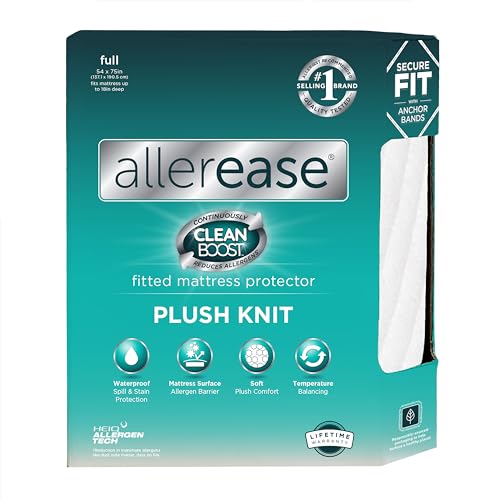
AllerEase CleanBoost Waterproof Fitted Mattress Protector,
- ✓ Quiet, plush top
- ✓ Secure corner bands
- ✓ Easy care routine
- ✕ Waterproof layer can feel warm
- ✕ Limited color options
| Waterproofing | Waterproof layer under soft top fabric to protect mattress from spills and stains |
| Top Fabric Materials | Soft plush circular knit fabric designed for moisture-wicking and insulation |
| Allergy Defense Construction | Tightly woven fabric to fully protect the mattress |
| Fit/Dimensions Compatibility | Elastic anchor bands fit mattresses up to 18 inches deep |
| Care Instructions | Machine wash hot with nonchlorine bleach; tumble dry on lowest heat; avoid ironing |
| Warranty | Lifetime warranty |
You lace your fingers through the soft, plush top and instantly notice how quiet it feels when you move. A spill threat becomes a non-issue, because the waterproof layer is almost invisible to touch yet ready to guard your mattress at night.
First night with it, you’ll appreciate how the elastic anchor bands grip the corners snugly, even on an 18-inch deep mattress. It stays in place without bunching, which is a small win you’ll notice every morning.
When you wash it, the quick-dry promise feels real. It tumbles on the lowest dryer setting without shrinking or warping, and the nonchlorine bleach option makes tackles easier without harsh chemical smells lingering.
The CLEANBOOST technology is subtle but noticeable after a week. You’ll feel the bed stay cleaner as it works on particle buildup, especially in shared sleeping spaces where dust and hair accumulate daily.
On sensitive-skin nights, the tightly woven allergen shield gives peace of mind. You don’t hear the protector, so it doesn’t interrupt your sleep with rustles or crinkles, just a calm, dry surface.
The overall texture remains soft, so you don’t trade comfort for protection. It’s a practical upgrade for anyone juggling kids, pets, and late-night snacks without worrying about morning stains.
For those who worry about long-term mattress care, the lifetime warranty adds confidence. It feels like a smart, long-term purchase you won’t regret when life gets messy.
In short, you get solid protection, real comfort, and a straightforward care routine that fits into busy weeks. If clean nights and fewer stains matter, this protector earns its keep.
What Are the Most Effective Products for Cleaning a Mattress?
The best products to clean a mattress include a variety of cleaners, tools, and natural solutions that effectively remove stains and odors.
- Enzyme-based cleaners: These cleaners contain enzymes that break down organic stains such as sweat, urine, or food spills, making them highly effective for deep cleaning. They are safe to use on most fabrics and help eliminate odors by digesting the source of the smell.
- Baking soda: Baking soda is a natural deodorizer that can absorb moisture and odors from the mattress. Sprinkling it over the surface and letting it sit for several hours before vacuuming can help refresh the mattress and remove unwanted smells.
- White vinegar solution: A mixture of equal parts white vinegar and water can be used as a natural disinfectant and stain remover. Spraying this solution on stains can help lift them while also sanitizing the mattress, but it’s important to let the mattress dry thoroughly afterward to prevent mold.
- Upholstery cleaner: Designed for fabric furniture, upholstery cleaners can also be effective on mattresses, particularly for removing stains and dirt. They often come in spray form and can target specific stains while being gentle on the fabric.
- Steam cleaners: Steam cleaning is a powerful method that uses hot steam to sanitize and refresh mattresses. This method not only removes dirt and stains but also kills dust mites and allergens, providing a thorough clean without the use of harsh chemicals.
Which Ingredients Should Be Included in Mattress Cleaning Products?
The best products to clean mattresses should include effective and safe ingredients that tackle stains, odors, and allergens.
- Baking Soda: This natural deodorizer helps absorb moisture and neutralize odors, making it ideal for refreshing mattresses. Simply sprinkling baking soda on the mattress and allowing it to sit for several hours can significantly improve its smell and cleanliness.
- White Vinegar: Known for its antibacterial properties, white vinegar can effectively break down stains and eliminate odors. It can be diluted with water and sprayed onto the mattress to help disinfect and refresh the fabric without leaving harsh chemical residues.
- Essential Oils: Oils like lavender, tea tree, or eucalyptus not only provide a pleasant scent but also have antimicrobial properties. Adding a few drops to cleaning solutions can enhance their effectiveness and leave the mattress smelling fresh.
- Hydrogen Peroxide: This ingredient serves as a powerful stain remover and disinfectant. It can be used on tougher stains, but should be tested on a small, inconspicuous area first to ensure it doesn’t bleach the fabric.
- Castile Soap: A natural, biodegradable soap that works well on various surfaces, Castile soap can be mixed with water to create a gentle cleaning solution. It effectively lifts dirt and grime without harsh chemicals, making it suitable for sensitive materials.
- Cornstarch: Besides acting as a thickening agent in cooking, cornstarch can be used to absorb stains and odors when sprinkled on the mattress. It is particularly useful for greasy stains, as it helps lift the oil from the fabric.
- Liquid Dish Soap: A mild dish soap can be effective for general cleaning, helping to break down dirt and stains. When mixed with water, it creates a gentle cleaning solution that can be used on fabric without damaging it.
How Do You Use Mattress Cleaning Products Safely and Effectively?
To use mattress cleaning products safely and effectively, it is important to follow specific guidelines and choose appropriate products.
- Enzymatic Cleaners: These cleaners utilize enzymes to break down stains and odors from organic materials like sweat and urine.
- Spray Cleaners: Commonly used for surface cleaning, these products often come in spray bottles for easy application and can target specific areas.
- Steam Cleaners: These devices use high-temperature steam to sanitize and clean the mattress without the need for harsh chemicals.
- Baking Soda: A natural deodorizer, baking soda can be sprinkled on the mattress to absorb odors and moisture before vacuuming it off.
- Upholstery Cleaners: Specifically designed for fabric surfaces, these cleaners can effectively remove stains while being safe for various mattress materials.
Enzymatic Cleaners: To use enzymatic cleaners effectively, first check the product instructions for specific usage guidelines. Apply the cleaner directly to the stained area and allow it to sit for the recommended time to let the enzymes work on breaking down the stain before blotting it with a clean cloth.
Spray Cleaners: When using spray cleaners, it is essential to shake the canister well and spray an even layer over the area to be cleaned. After applying, let it sit for a few minutes, then wipe with a damp cloth to remove residue, ensuring not to saturate the mattress.
Steam Cleaners: For steam cleaning, set your steam cleaner to the appropriate temperature and hold it a few inches above the mattress surface. Move it slowly over the fabric to disinfect and remove dirt, making sure to allow the mattress to dry completely afterward to prevent mold growth.
Baking Soda: To use baking soda, simply sprinkle a generous amount over the entire mattress surface and let it sit for at least 15 minutes or longer for stronger odors. Vacuum it off thoroughly to remove the baking soda and any trapped odors, leaving your mattress refreshed.
Upholstery Cleaners: When using upholstery cleaners, apply according to the label instructions, often spraying directly onto the fabric or onto a cloth. Gently scrub the stained area or blot with a clean cloth to lift the stain, testing a small area first to ensure it does not damage the fabric.
What DIY Solutions Can Replace Store-Bought Mattress Cleaners?
There are several effective DIY solutions that can serve as excellent alternatives to store-bought mattress cleaners:
- Baking Soda: This common household item is highly effective at absorbing odors and moisture. Sprinkling baking soda over the mattress and letting it sit for several hours before vacuuming can help refresh your mattress and eliminate any unpleasant smells.
- White Vinegar: Known for its antibacterial properties, white vinegar can be used to spot clean stains on the mattress. Mixing equal parts of water and vinegar in a spray bottle can help lift stains; just be sure to allow the area to dry thoroughly afterward to prevent mold growth.
- Essential Oils: Adding a few drops of essential oils like lavender or tea tree oil to your cleaning solution can provide natural fragrance and additional antibacterial benefits. These oils can be mixed with water or vinegar, making the cleaning process not only effective but also pleasant-smelling.
- Hydrogen Peroxide: This powerful disinfectant can effectively eliminate bacteria and odors. When diluted with water, it can be used to treat tougher stains, but it is important to test on a small area first to avoid any discoloration.
- Dish Soap and Water: A simple mixture of dish soap and warm water can be used for general cleaning and stain removal. Using a soft cloth or sponge, gently scrub the stained areas, and be sure to rinse with a damp cloth afterward to remove any soap residue.
Are There Risks Associated with Using Chemical-Based Cleaners?
There are several risks associated with using chemical-based cleaners.
- Health Risks: Many chemical cleaners contain volatile organic compounds (VOCs) that can cause respiratory issues, skin irritation, or allergic reactions. Prolonged exposure may also lead to more serious health problems, especially in individuals with pre-existing conditions like asthma or chemical sensitivities.
- Environmental Impact: Chemical cleaners can pollute water systems and contribute to environmental degradation. When these substances are washed down drains, they can harm aquatic life and ecosystems, leading to long-term ecological damage.
- Residue Build-Up: Some chemical cleaners may leave behind harmful residues on surfaces, including mattresses. These residues can be inhaled or absorbed through the skin, posing health risks over time, especially for children and pets who are more vulnerable.
- Flammability: Certain chemical-based cleaners are flammable and pose a fire hazard if not stored or used properly. This is particularly concerning in households where heat sources are common, making it essential to follow safety guidelines when using these products.
- Cost and Effectiveness: Chemical cleaners can be more expensive than natural alternatives and may not always be more effective. In some cases, they might only mask odors rather than eliminate the underlying issues, leading to repeated purchases and unnecessary spending.
How Can You Prevent Stains and Maintain a Clean Mattress?
To prevent stains and maintain a clean mattress, consider the following methods and products:
- Mattress Protector: A high-quality mattress protector acts as a barrier against spills, sweat, and allergens. It is typically waterproof, easy to clean, and can significantly extend the lifespan of your mattress by preventing stains from reaching the mattress fabric.
- Regular Vacuuming: Vacuuming your mattress regularly is essential to remove dust, dirt, and allergens that can accumulate over time. Using a vacuum with a HEPA filter can enhance this process, ensuring that particles are effectively captured and not released back into the air.
- Stain Remover Spray: An effective stain remover spray specifically formulated for mattresses can help tackle tough stains. Look for enzymatic cleaners that break down organic stains such as sweat or urine, and always test a small area first to ensure it doesn’t discolor the fabric.
- Baking Soda: Baking soda is a natural deodorizer and can be used to absorb moisture and odors from your mattress. Sprinkling baking soda evenly across the surface and letting it sit for several hours before vacuuming can help refresh your mattress without the use of harsh chemicals.
- Deep Cleaning Services: Occasionally investing in professional deep cleaning services can help maintain your mattress in optimal condition. These services utilize specialized equipment and cleaning solutions to effectively remove deep-seated dirt and allergens that regular cleaning may miss.
- Spot Cleaning: For minor spills or stains, spot cleaning with a mild detergent and water solution can be effective. Gently dab the affected area with a clean cloth soaked in the solution, being careful not to saturate the mattress, then allow it to air dry completely.
How Often Should You Clean Your Mattress for Optimal Hygiene?
To maintain optimal hygiene, it is essential to clean your mattress regularly using effective products.
- Vacuuming: Regular vacuuming removes dust mites, allergens, and debris from the mattress surface.
- Stains Treatment: Addressing stains promptly with suitable cleaning solutions helps prevent odors and further damage.
- Deodorizing: Using baking soda or specialized deodorizers can effectively neutralize odors trapped in the mattress.
- Protective Covers: Implementing mattress protectors can minimize the need for frequent deep cleaning.
- Deep Cleaning: A thorough deep clean every 6 to 12 months helps maintain hygiene and prolongs the life of the mattress.
Vacuuming: Vacuuming your mattress at least once a month is essential to eliminate dust mites and allergens. Use a vacuum with a soft brush attachment to gently remove debris without damaging the fabric.
Stains Treatment: When spills occur, quickly blot them with a clean cloth and use a mild detergent solution to treat stains. This prevents them from setting in and becoming more difficult to remove later.
Deodorizing: Sprinkling baking soda over the mattress and letting it sit for several hours before vacuuming can absorb odors. Alternatively, there are commercial deodorizers specifically designed for mattresses that can be used to freshen them up.
Protective Covers: Investing in a quality mattress protector can shield your mattress from spills, allergens, and wear. This not only makes cleaning easier but also extends the lifespan of the mattress.
Deep Cleaning: For a more thorough clean, consider steam cleaning or using a specialized mattress cleaning product every 6 to 12 months. This helps remove deeper-set dirt and allergens that regular cleaning might miss.
Related Post: